Guest Post: Bastard out of Nevis: Lin-Manuel Miranda’s “Hamilton”

We are pleased to feature a guest post from Benjamin Carp (@bencarp), the Daniel M. Lyons Professor of American History at Brooklyn College, CUNY. Carp is the author of both Defiance of the Patriots: The Boston Tea Party and the Making of America and Rebels Rising: Cities and the American Revolution.

“I want the historians to respect this.” –Lin-Manuel Miranda, according to Ron Chernow

Alexander Hamilton, by John Trumbull (after painting by Giuseppe Ceracchi, 1801); National Portrait Gallery, Smithsonian Institution; Gift of Henry Cabot Lodge

In the lobby of the Public Theater, two statues flanked the doorway—the likenesses of Alexander Hamilton and Aaron Burr stretched out their arms and aimed their dueling pistols at one another, and it was hard not to feel as if I was standing in the middle. Lin-Manuel Miranda, the son of Puerto Rican immigrants, wrote the musical Hamilton and stars in the title role. He portrays the first Secretary of the Treasury as a “bastard, orphan, son of a whore and a Scotsman” and an immigrant striver made good; throughout his career, Hamilton is arrogant about his talents but perpetually insecure about his place. As told by Miranda, Hamilton is both self-made and self-unmade, wry and seductive and yet constantly raging against anyone who might hold him back. Continue reading
Q&A with Stephen R. Berry, Author of A Path in the Mighty Waters

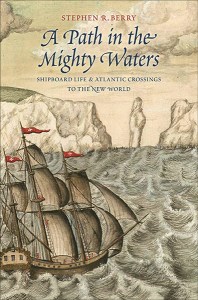
9780300204230The following is an interview with Stephen R. Berry, an Associate Professor of History at Simmons College. My review of Berry’s recently-released book, A Path in the Mighty Waters: Shipboard Life and Atlantic Crossings to the New World (New Haven: Yale University Press, 2015) appeared on the blog yesterday. Today, he agreed to answer some follow-up questions about his book and his future research plans. Continue reading
Tempests and Tedium in the Transatlantic: Shipboard Life in the 18th Century

Stephen R. Berry, A Path in the Mighty Waters: Shipboard Life in Atlantic Crossings to the New World. New Haven: Yale University Press, 2015.

9780300204230When colonial Georgia was founded in 1732, it carved out a brand new space in the New World. The founders’ intentions were in part for it to serve as a charitable colony, where Britons from overcrowded debtor’s prisons could start anew. It also carved out an English space to serve as a geographic barrier between wealthy South Carolina and rival Spanish Florida. But, as Stephen R. Berry demonstrates in this highly original new study, colonies were not the only spaces that were created and negotiated as the Atlantic World expanded. The ocean, and indeed the ships that carried passengers to and from the New World should also be viewed as spaces in their own right.

Continue reading

Guest Post: William Black, Gordon Wood’s Notecards and the Two Presentisms

Today we are pleased to have a guest post from William R. Black (@w_r_black), a PhD student of history at Rice University. His research examines how Cumberland Presbyterians dealt with slavery, sectionalism, theological controversy, and professionalization in the nineteenth century.

blogsize-obama-gordon-woodGordon Wood riled up the #twitterstorians with a review of his advisor Bernard Bailyn’s latest book, Sometimes an Art: Nine Essays on History. Much of the review is not so much about Bailyn as it is about later generations of historians, who (according to Wood) have abandoned narrative history for “fragmentary,” obscure monographs on subaltern peoples. Wood attacks these historians for being “anachronistic—condemning the past for not being more like the present.” He continues: Continue reading

State Lotteries in the Early Republic: Or What I Learned from John Oliver

John_Oliver_Lottery.png.CROP.promo-mediumlargeI originally planned to title this post: “Do I have to thank John Oliver in my dissertation acknowledgments?” In the first season finale of his HBO show, Last Week Tonight, Oliver did a segment on state lotteries (NSFW, crude language), many of which fund education. In the final chapter of my dissertation, I devote a decent chunk of space discussing lotteries to fund schools in the critical period and early republic. If anything makes my research cool to non-academics, it’s that I can relate some of it to this John Oliver bit. Continue reading

Murder!: Entangled History, String Theory, and Narrative

Murder!: Entangled History, String Theory, and Narrative

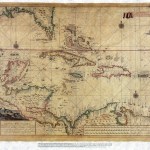
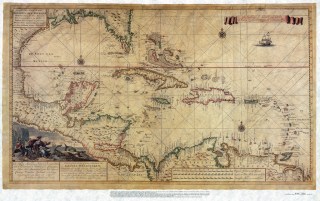
caribmap

On a dark and stormy night in July of 1729, a vicious murder occurred in the port city of Veracruz. Okay, I don’t actually know if it was stormy on that night, nor was the murder particularly vicious but, for narrative effect, bear with me. On the evening in question, a Dominican priest accompanied by an entourage of the town’s residents walked to the trading factory of the British South Sea Company to pay the factors a visit. According to Inquisition records, as the group approached the factory, shots were fired from within the building, and the Dominican priest fell dead. The man who fired the fatal shots—William Booth[1]—claimed that he had not recognized the priest and fired in self-defense. As Booth argued, marauders frequently roamed the streets after dark and he assumed the visitors wanted to rob him. Booth was sentenced to five years hard labor in North Africa—a veritable death sentence—and the South Sea Company’s factory in Veracruz barely survived the incident, which reached the diplomatic tables of Europe.[2] Continue reading

The Week in Early American History

TWEAHOn to the links! Continue reading

Bernard Bailyn’s Last Act?: An Interview with the Harvard Historian on His New Book

Bernard Bailyn’s contribution to our understanding of early American history is so vast that it’s easy to forget he’s still publishing books. His writings on the American Revolution, begun in the 1960s, remain required reading for any doctoral student studying for orals. And even since retiring from Harvard a quarter century ago, he’s continued to influence the field, perhaps nowhere more than through his promotion of Atlantic history.
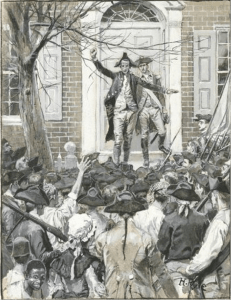
Yet even at 92, Bailyn isn’t finished. His new book, Sometimes An Art: Nine Essays on History (Knopf), can be read in a number of ways: as an introduction to his vast corpus of work; a chance to respond to his critics; a reflection on the meaning of history; and, perhaps, a summing up of sorts. “It reflects some of my own work over the years,” Bailyn told me during an interview from Boston. The essays he’s chosen to include, dating from 1954 to 2007, have only appeared in either obscure publications or dated back issues of prominent journals. But in one way or another, he said, they “concentrate on certain major themes” in all his work. Continue reading

Guest Post: [Enter Catchy Title Here]: Working towards a Book Title

Today’s guest poster, Christopher Minty, is a Bernard and Irene Schwartz Postdoctoral Fellow at the New-York Historical Society and Eugene Lang College at The New School for Liberal Arts. He received his PhD from the University of Stirling. His current book project examines the role of popular partisanship and its effects on New Yorkers’ allegiances on the eve of the American Revolution. He is also the author of two previous guest posts at The Junto, “The Problem of Loyalism before the American Revolution” and “Working on the Papers of Francis Bernard.”

UntitledI like eye-catching book titles. Who doesn’t, right? A good title should run of the tongue without too much fuss, while also championing the main argument(s) of the book. Recent books with titles that caught my eye include Benjamin Irvin’s Clothed in Robes of Sovereignty, Jessica Roney’s Governed by a Spirit of Opposition, and Albrecht Koschnik’s “Let a Common Interest Bind Us Together.” To be sure, there are others, and they are held together by a common thread: Despite looking at different periods with different objectives, each title offers a snapshot of what the reader can expect to find. Continue reading