Roundtable: The History of Childhood & Youth: Vanessa Holden

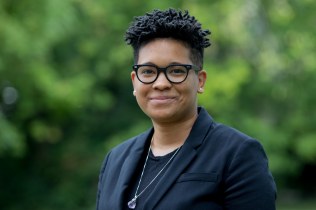
Venessa Holden 2017 - Edited-0496If you missed the first two posts in our new roundtable series on the history of childhood and youth, click here. On Mondays, Wednesdays, and Fridays for the next few weeks, stop by to read about challenges and realities of researching and teaching childhood and youth across vast early America.

We are thrilled to have The Junto’s very own Dr. Vanessa M Holden join the roundtable today to discuss her work on African American children, free and enslaved. Dr. Holden is an assistant professor of History and African American and Africana Studies at the University of Kentucky. Dr. Holden’s current book project, tentatively titled, Surviving Southampton: Gender, Community, Resistance and Survival During the Southampton Rebellion of 1831(University of Illinois Press), explores the contributions that African American women and children, free and enslaved, made to the Southampton Rebellion of 1831, also called Nat Turner’s Rebellion. Dr. Holden’s work and writing has been published in Slavery and Abolition: A Journal of Slave and Post-Slave Studies, Perspectives on History, Process: A Blog for American History, and The Rumpus. She also blogs for Black Perspectives. In addition to her work on enslaved women and slave rebellion, Dr. Holden also co-organizes the Queering Slavery Working Group with Jessica Marie Johnson (Johns Hopkins University). Her second project, Forming Intimacies: Queer Kinship and Resistance in the Antebellum American Atlantic, will focus on same gender loving individuals and American slavery. Follow her on Twitter @drvholden Continue reading

Review of What the Constitution Means to Me

Today’s guest review is by Hannah Farber, an assistant professor at Columbia University. Her scholarship has appeared in the New England Quarterly, Early American Studies and the Journal of the Early Republic; she is at work on a monograph on marine insurance, tentatively titled Underwriters of the United States.

What the Constitution Means to Me, a play currently running at the New York Theater Workshop offers a hopeful, accessible, and sophisticated vision of a renewal of American Constitutional life.

Continue reading

Roundtable: The History of Childhood & Youth: Crystal Webster

WebsterIf you missed our first post on Friday in our new roundtable series on the history of childhood and youth with Bianca Premo, click here! On Mondays, Wednesdays, and Fridays for the next few weeks, stop by to read about challenges and realities of researching and teaching childhood and youth across vast early America.
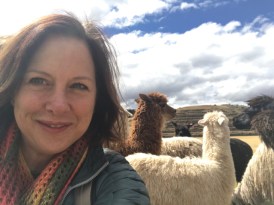

Today, Dr. Crystal Lynn Webster joins us to discuss her work on nineteenth-century African American women and children. Dr. Webster is an Assistant Professor of History at the University of Texas at San Antonio. She received her PhD from the W.E.B. Du Bois Department of African American Studies at University of Massachusetts Amherst and was previously a long-term Mellon dissertation fellow at the Library Company of Philadelphia (2016-17) program in African American history. Her current book project, Beyond the Boundaries of Childhood: Northern African American Children’s Cultural and Political Resistance, examines the lives of Black children in the antebellum North and their experiences in juvenile reformatories, orphanages, schools, as well as their role in emerging social movements concerning race and childhood. Her research has been funded by the Library Company of Philadelphia, American Antiquarian Society, Massachusetts Historical Society, and the University of Massachusetts Amherst, and she has received first place writing awards from the National Council for Black Studies and the Association of Black Women Historians. Continue reading

Roundtable: The History of Childhood & Youth: Bianca Premo

Photo - 1 (4)The history of childhood and youth in vast early America is a nascent but burgeoning field of inquiry that brings together historians of politics, society, slavery, race, and gender. Over the next three weeks, The Junto will feature a roundtable series with some of the most prominent historians of childhood and youth around the Atlantic as well as emerging scholars in the field. We’ll discuss the challenges and realities of researching and teaching childhood and youth across vast early America.

Today, we are kicking off this roundtable series with an interview of Bianca Premo, a pioneer in the study of children as actors in historical processes. Professor of History at Florida International University in Miami, Dr. Premo is the author of the Enlightenment on Trial: Ordinary Litigants and Colonialism in the Spanish Empire (Oxford University Press, 2017), Children of the Father King, Youth, Adult Authority and Legal Minority in Colonial Lima (University of North Carolina Press, 2005), and co-editor of Raising an Empire: Children in Early Modern Iberia and Colonial Latin America (University of New Mexico, 2007).  She has also written various articles and chapters on children in Latin American history. In addition to a longstanding fascination with childhood and the law, she is increasingly interested in twentieth-century notions of medical subjectivity and age. Continue reading

Call for Papers: Zones and Lines, Water and Land: New Conversations on Borders

Dates: 22-24 May, 2019
Location: Cardiff University, Wales, United Kingdom

In the early modern world, no less than today, borders were contested spaces that fostered opportunity on one hand and anxiety on the other. New technologies expanded the reach and scale of maritime enterprises and empires even as control of coastlines and blue-water spaces remained elusive. European interest in a path to the “western sea” focused North and South American colonists’ attention westward to what turned out to be the landlocked interior of massive continents governed and defended by Native peoples already there. Marshes and mountains, estuaries and arid zones, lakes, rivers, fisheries, and forests shaped the movement, experiences, and encounters of Native Americans, Europeans, and Africans who lived in or entered particular spaces. Two distinct and usually separate lines of scholarship examine these spaces of border contest: inland “frontier” studies and maritime/Atlantic history. This conference invites participants to continue a conversation about the landed and aquatic frontiers of borderlands and maritime history to investigate in a broadly comparative framework how early modern actors defined, defied, and took advantage of borders, be they on land or on water. The organisers hope attendees will simultaneously consider how a variety of actors imagined, pictured, and mapped these spaces. This event provides a forum to explore topics including, but not limited to, port cities, divided, middle, and Native grounds, saltwater frontiers, migration, diaspora, epistemology, and settler colonialism. The co-organisers are historians of the Atlantic World, but welcome proposals from other geographies and fields. They are delighted that Dr Lissa Wadewitz, author of The Nature of Borders: Salmon, Boundaries, and Bandits on the Salish Sea, will deliver the keynote address. Continue reading

Guest Post: Fashion from Japan and France: Nightgowns in Colonial Brazil

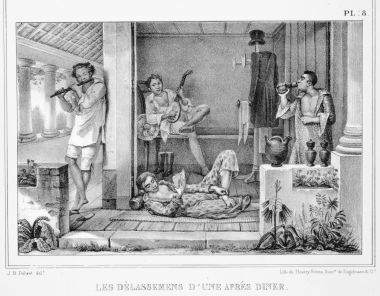
Le_diner._Les_dèlassemens_d'une_aprés_diner

Jean-Baptiste Debret, “Les dèlassemens d’une aprés diner,” from Voyage Pittoresque et Historique au Brésil, vol. 2 (Paris: Firmin Didot Frerès, 1835)

Today’s guest post comes from Rachel Zimmerman (Ph.D., University of Delaware), Assistant Professor of Art History at Colorado State University-Pueblo. She has been studying the art and architecture of the Brazilian town of Minas Gerais since her first trip to the region in 2006. She began examining consumption in colonial Brazil for her dissertation, “Global Luxuries at Home: The Material Possessions of an Elite Family in Eighteenth-Century Minas Gerais, Brazil,” and is continuing research for a book project on elite material culture in the city of Mariana. Follow her work here.

According to the early nineteenth-century English merchant John Luccock, it was customary for Brazilian men to discard stiff outer layers when at home and wear only a cotton shirt, often unbuttoned, knee-length breeches, and clogs.[1] Brazilian standards of decorum permitted informal dress in domestic settings, even when receiving guests. Examination of colonial-era probate inventories from Minas Gerais, the gold mining district, reveals that a small number of educated elite men transformed their state of undress from ordinary to stylish with the addition of a nightgown. Continue reading

Q&A with L.H. Roper

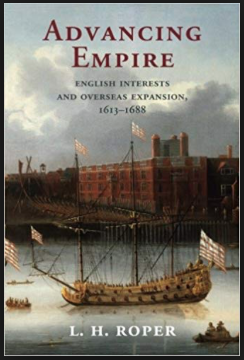
Today at The Junto, L.H. Roper, professor of history at the State University of New York at New Paltz and coeditor in chief of the Journal of Early American History, joins us to discuss his new book, Advancing Empire: English Interest in Overseas Expansion, 1613-1688. In the book, Roper explores the role of private interest in the establishment of a global English empire during the seventeenth century. With chapters that span America, Africa, and Asia, Roper’s work challenges us to think more critically about state versus individual initiative and emphasizes continuity across a wide geographic scope. The book came out last year and has received attention and praise in several notable reviews, which can be found here, here, and here. Continue reading

Q&A with Sari Altschuler, Author of The Medical Imagination

Sari Altschuler is an assistant professor of English, associate director of the Humanities Center, and founding director of the minor in Health, Humanities, and Society at Northeastern University. Her book The Medical Imagination: Literature and Health in the Early United States was recently published with the University of Pennsylvania Press (2018), and her work has appeared in leading literary journals, including American LiteratureAmerican Literary History, and PMLA, as well as the Journal of the Early Republic and the medical journal the Lancet. She serves on the advisory board of American Quarterly and the editorial board of Early American Literature and recently coedited a special of Early American Literature (2017) on early American disability studies with Cristobal Silva.
JUNTO: As you know, The Junto is always interested in the experiences of junior scholars who have turned their dissertations into first books. How did your project and theorization of imaginative experimentation change over time?

SARI ALTSCHULER: Great question! This book is very different from my dissertation—but I had to write the dissertation in order to even begin to understand what was going on. The dissertation was about the collaborations of specific doctors and writers in Philadelphia. It was, in some ways, a very narrow and defined topic, which was good for a dissertation. But, when I started to think about what The Medical Imagination might be as a book, I wanted to do something more ambitious. In the dissertation I figured out that these doctors and writers were working together—in conversation—but for the book I wanted to understand the broader intellectual practice in which they were engaging. That’s how imaginative experimentation came to be at the center of the project. It’s an idea I only really began to think about as I finished the dissertation. Continue reading

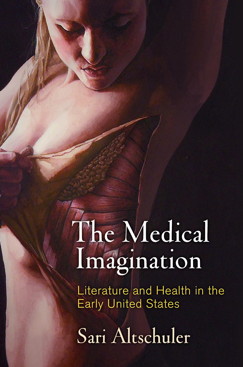
Review: Sari Altschuler, The Medical Imagination

Sari Altschuler, The Medical Imagination: Literature and Health in the Early United States (Philadelphia: University of Pennsylvania Press, 2018)

Today Laurel Daen reviews Sari Altschuler’s The Medical Imagination. Laurel Daen is the 2018-2020 NEH Postdoctoral Fellow at the Omohundro Institute of Early American History and Culture. Her current book project is about disability, authority, and the formation of the American nation state. Laurel received her PhD from William & Mary in 2016 and was an NEH Long-term Fellow at the Massachusetts Historical Society from 2017-2018.

In the early American republic, physicians wrote poetry to try out their medical theories, writers formulated concepts that made their way into medical texts, and everyday people viewed the disciplines of medicine and literature as fundamentally intertwined. Medicine and literature were mutually constitutive and reinforcing, Sari Altschuler explains in The Medical Imagination, and their relationship was seen as crucial to the production of medical knowledge. For example, medical educators urged their students to read and write fiction with the insistence that these practices would cultivate their “microscopic eye” or ability to detect and decipher disease (4). In addition, many doctors, writers, and doctor-writers used literary forms to conduct medical research, especially about topics that were difficult to test empirically. How, for instance, was one to evaluate the workings of sympathy, the universal force commonly understood to link body part to body part in a functioning human body and person to person in a functioning society? It was through literature that early national physicians and writers engaged with these types of questions, cultivating their skills in “imaginative experimentation”—or use of the imagination to craft and assess models of health (8). Continue reading

Puerto Rico and the Regional Caribbean

For early Americanists, the past two decades have seen an increase in scholarship connecting the early modern Caribbean to colonial North America. The Caribbean adds significant depth and dimension to discussions of race, slavery, diplomacy, capitalism, gender, and imperial competition by expanding the historiographies and archival resources common to early American scholarship. Yet, when a colleague stopped by my office asking for readings on seventeenth-century Puerto Rico to assign for a class, I drew a blank. Despite the excellent scholarship on colonial Puerto Rico written in Spanish, English-language scholarship focuses primarily on the nineteenth and twentieth centuries.[1]

What made this worse was that last Thursday was the one-year anniversary of Hurricane Maria’s landfall in Puerto Rico. And, while the devastation and continued struggles on the island garner on-going media attention, the anniversary set me thinking about the place of the Caribbean in our scholarship and our teaching. It seems that, despite increased attention to the Caribbean within the field of vast early America, not all Caribbeans are created equal. And that unevenness demands our attention. Continue reading