 The Junto is happy to present the second episode of “The JuntoCast,” our new monthly podcast featuring Juntoists discussing issues related to early American history, academia, pedagogy, and public history.
In our second episode, Kenneth Owen, Michael D. Hattem, Roy Rogers, and Eric Herschthal use the recent MCEAS conference, “The American Revolution Reborn,” as a springboard to launch into a discussion on questions of periodization, Atlantic and global contexts, the limits of “republicanism,” and the value of recovering “lived experience.”
You can click here to listen to the mp3 in a new window or right-click to download and save for later. You can also subscribe to the podcast in iTunes. Continue reading
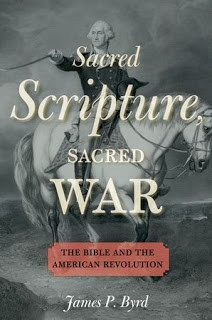 “The Revolution may be the most important event in American history,” James P. Byrd reminds us. Many of the readers of this blog will likely agree with him in that. Fewer, perhaps, will agree with one of the central arguments of his (very) recent Sacred Scripture, Sacred War: The Bible and the American Revolution that “the Bible was arguably its [the Revolution’s] most influential book.”[1] At the recent
  One of the biggest difficulties I find in teaching the American Revolution is explaining to my students the large time gaps between so many of the most seminal events of the Revolution. The popular narrative of the Revolution has a tendency to conflate the Stamp Act with the Declaration of Independence with the Constitution, with perhaps a quick pause to celebrate Washington’s victory at Yorktown. Yet if the Stamp Act crisis happened today, it would be 2024 before we reached the Declaration of Independence, and 2035 before the Constitutional Convention met.
 Happy Summer to all of our readers. Another week has come and gone, and we’re back with the latest installment of This Week in Early American History. Feel free to weigh in on posted links or share any interesting stories and newsworthy items we might’ve missed. Let’s jump right into it: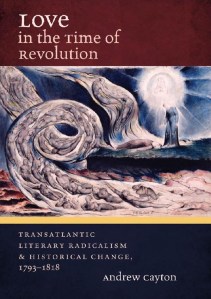
 This year’s annual meeting of the Omohundro Institute for Early American History and Culture was hosted with panache by Philip Morgan at Johns Hopkins University. It was apt that it took place in Baltimore, the birthplace of Ron Hoffman, whom the conference honoured as he steps down from a long tenure presiding over the institute. At the closing roundtable, a number of senior scholars movingly—and
  Looking forward to attending one of the largest conferences on the American Revolution in a generation this week in Philadelphia, I thought I would take a moment to reflect on the title of the conference—”
 The Junto