Edinburgh’s Early Americans

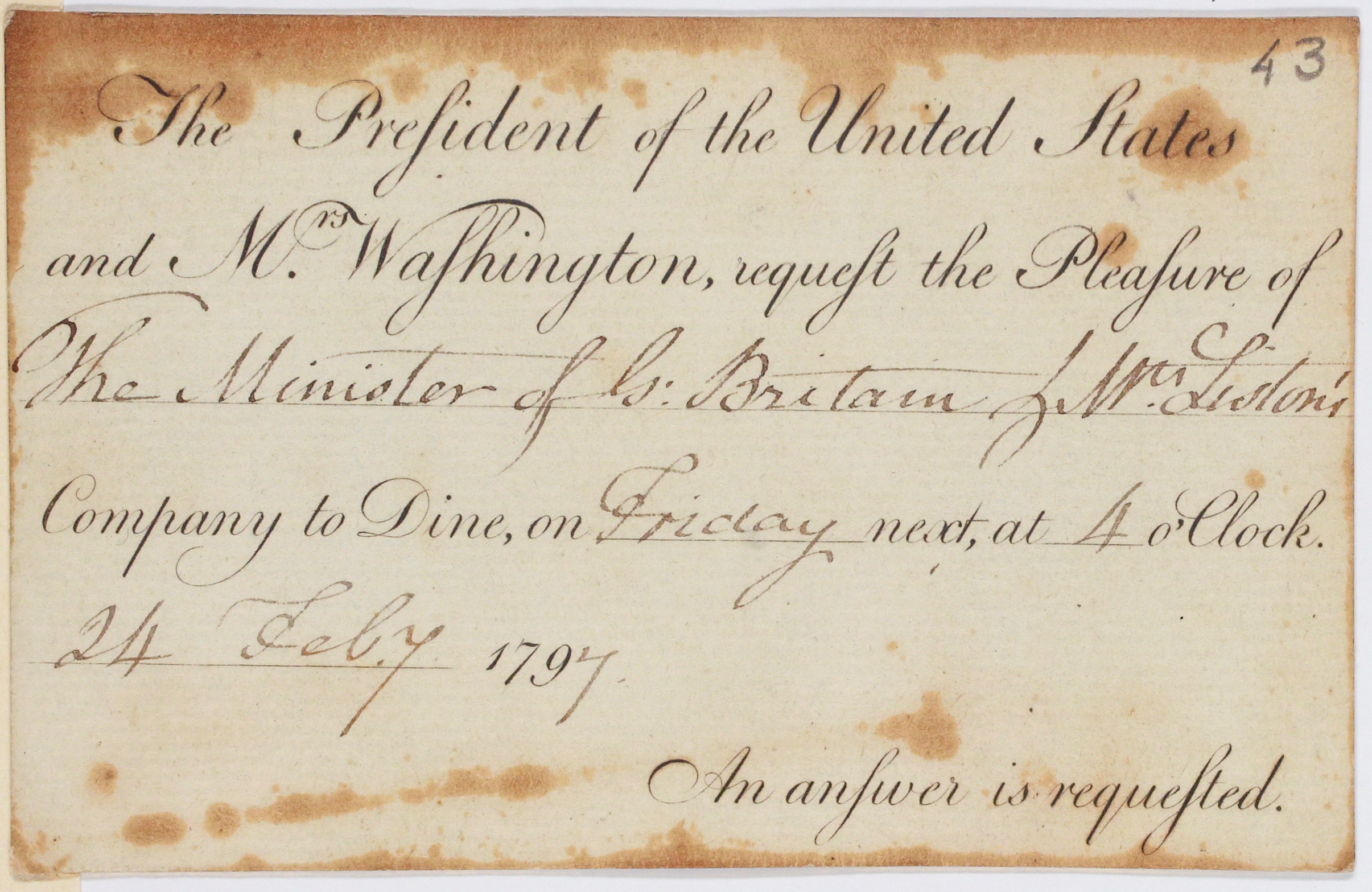
Invitation from the President of the United States to Robert and Henrietta Liston, 1797 (NLS shelfmark: MS.5590 f. 43)

Invitation from the President of the United States to Robert and Henrietta Liston, 1797 (NLS shelfmark: MS.5590 f. 43)

With all eyes on Scotland this week, The Junto chats with Dora Petherbridge, International Collections Curator (U.S. & Commonwealth) at the National Library of Scotland. To learn about George Washington’s Edinburgh connection, and how NLS is “collecting the Referendum” for history, read on. Continue reading

The Week in Early American History

TWEAHWe begin this Week in Early American History with James Oakes’ powerful and timely reflection on white abolitionism. “The Real Problem with White Abolitionists,” Oakes argues, is that “even the most radical abolitionists betrayed a blind faith in the magical healing powers of a free market in labor. Scarcely a single theme of the broader antislavery argument strayed far from the premise.”
Continue reading

Guest Post: Thomas Jefferson and Public Historiography

I’m pleased to introduce today’s guest poster, Matthew Crow, a regular commenter here at The Junto, who received his PhD at UCLA in 2011 and now teaches at Hobart and William Smith Colleges in New York.

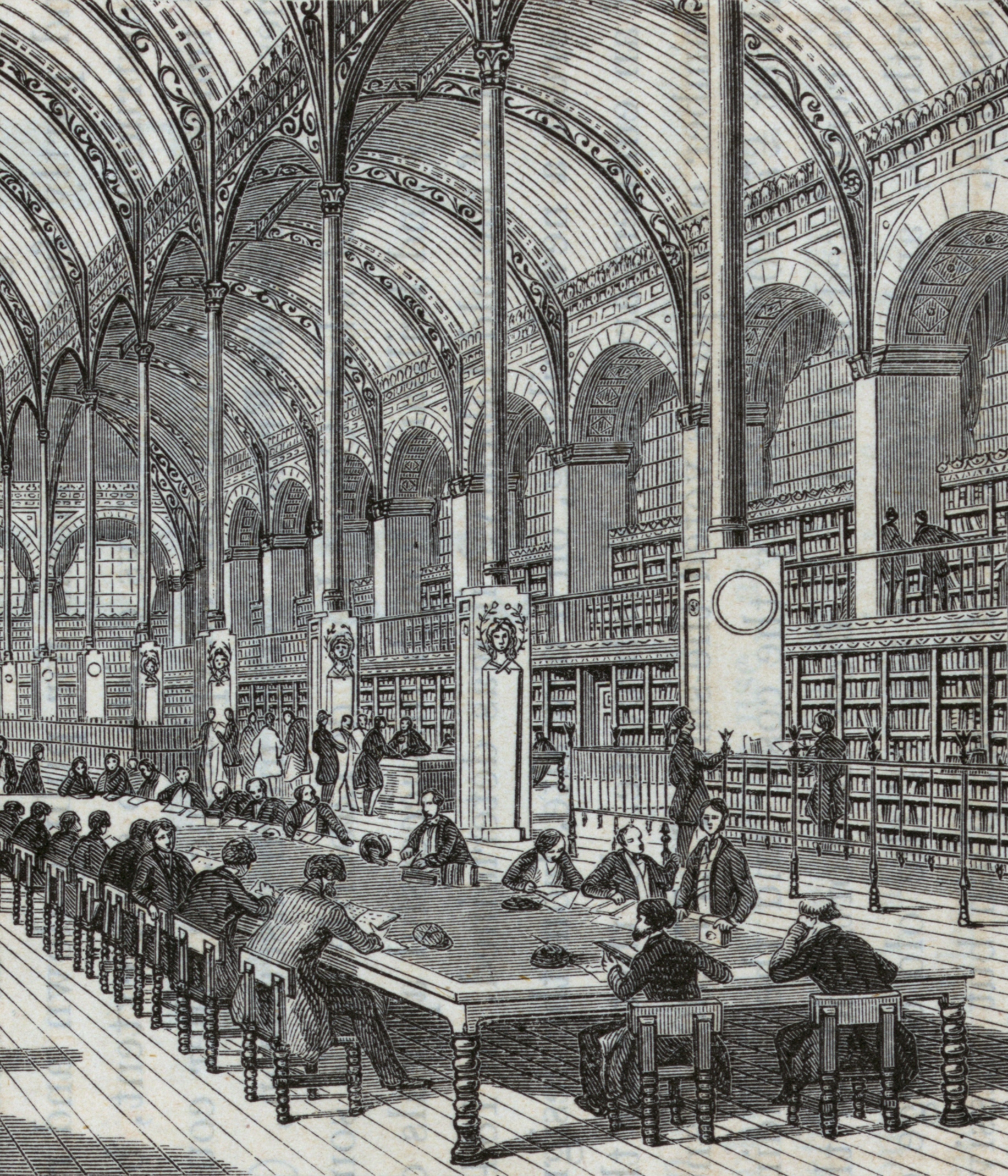
Bibliothèque_Sainte-Geneviève_1859In his compendium of global archival practices, Memoirs of Libraries, Edward Edwards developed a history of how various peoples had organized their relationship to their pasts. For Edwards, political emancipation in the wake of the great revolutions required broadening public availability of the historical documents archived by the state. Continue reading

The Documentary Record on Fire and Reading Intentionality

NewYorkCapitolFireRemains

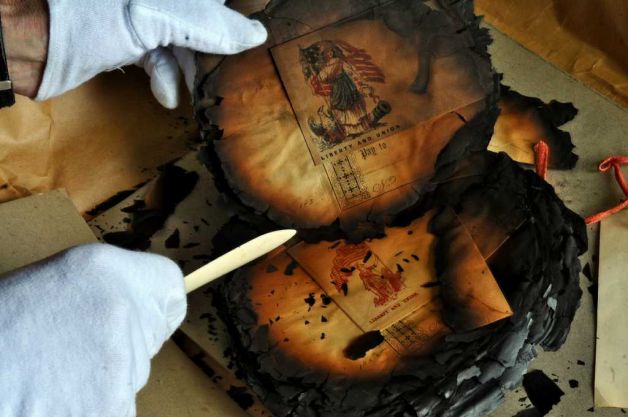
On March 29, 1911, a fire tore through the New York State Capitol Building. From the third floor of the Assembly Library, where books and papers served as kindling, it shot up to the capitol’s iconic towers. By the early morning, much of the building was in ruins, and many of the books and manuscript papers housed within it reduced to melted ink and char.

Anyone who’s used the Papers of Sir William Johnson knows the fire well. Every other page is a reminder of the embers that destroyed letters, accounts, conference minutes. It’s also a reminder that the current documentary record has been shaped in ways that—while often times hidden away—were also bright and fiery and loud. Continue reading

Benjamin Franklin and “our Seamen who were Prisoners in England”

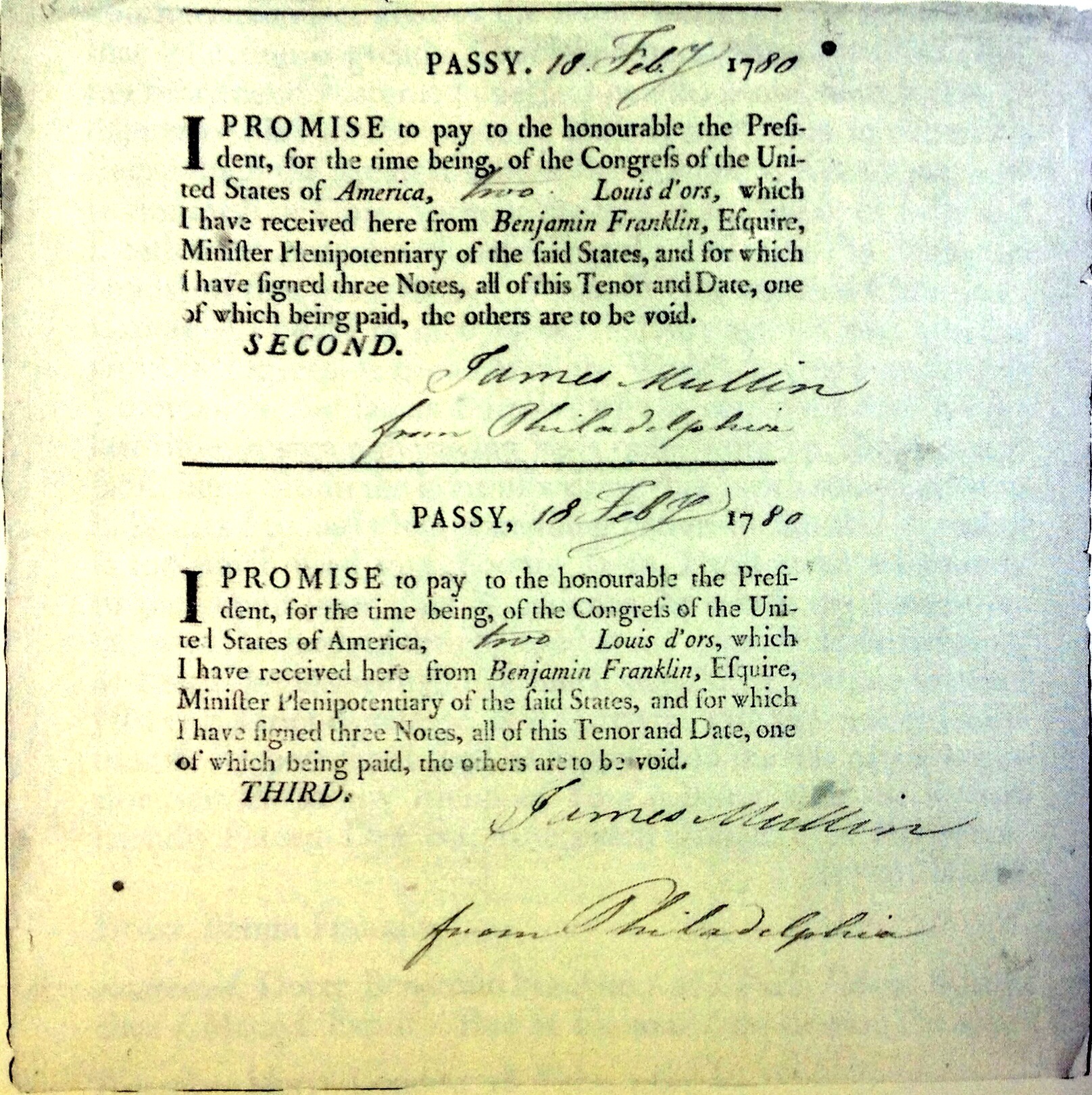
Papers of Benjamin Franklin, 31: 497.Earlier this week, I found myself sitting at my desk at the Franklin Papers faced with photostat copies of an “Alphabetical List of Escaped Prisoners” and a huge pile of promissory notes printed in triplicate by Franklin himself on the press he kept at his home in Passy, a suburb outside Paris. While I was going through them, I could not help but think back to the recent events surrounding the return of U.S. Army Sergeant, Bowe Bergdahl, the last remaining prisoner of the nation’s longest continuous period of war since the American Revolution. Politics aside, the Bergdahl affair speaks to the importance placed on coming to the aid of Americans detained in wartime. And what I had before me at my desk spoke to the same during the War for Independence. These men—largely privateersmen who had been captured on the high seas by the British and transported to English prisons—were among the very first Americans imprisoned on foreign soil during wartime and these documents reveal an often untold story about how the United States government and Benjamin Franklin dealt with this new problem.

Continue reading

Sinews of Power and Those Power Forgot

A Call to the Most Bland and Boring Pieces of Paper You’ve Ever Skipped Over in the Archives
VouchersReceipts

Vouchers! Receipts! Bills of exchange!

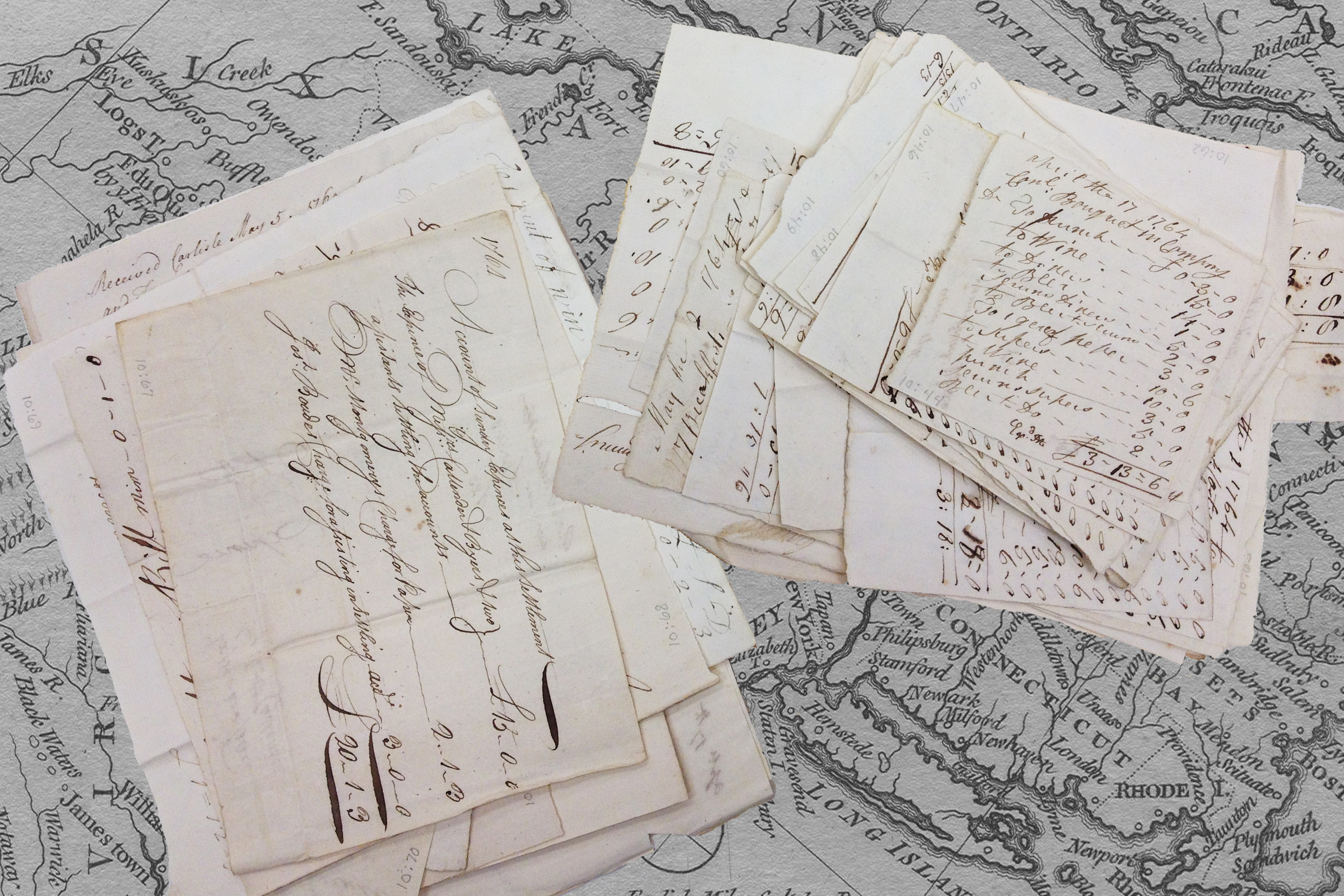
The paperwork of empire, particularly that of credit and finance, is probably not what gets most of us up in the morning. In the archives, we skip over the dull sections of the finding aids—warrants, no thanks!—and instead dive into correspondence and maps and bound volumes and clippings. The more adventurous of us might even call up account books—but those individual receipts? They’re lucky if we ever take them out of the box.

And why would we? Unless we live in a world of down-and-dirty finance or economics or material culture, they seem not only besides the point, but, even more, incredibly hollow. What do we get from reading a quick statement that someone was eventually paid for delivering a barrel of pickled cabbage in 1760? Especially when we can read in frantic detail the correspondence about how that barrel fell into the Mohawk River, burst open, got hauled back onto a bateau, arrived at Fort Stanwix, was re-opened, reeked, was declared unfit for consumption, continued to reek, was declared fit for consumption, reeked some more, ordered northward to Oswego, reeked still, and finally was delivered to a garrison comprised mostly of Germans who (our correspondents assumed) would think they’d been gifted sauerkraut.[1]

It’s the correspondence, we might argue, that gives us actors and action. In it, even a barrel—brown, wooden, boring—becomes something dynamic.

But who delivered that barrel? How long did it take him? Where did he begin his trip? Was he a merchant contractor, a militia man, a professional sled driver? And what did he get out of a journey, in the dead of winter, through the type of paralyzing cold you can only feel in upstate New York, with barrels of spoiled pickled cabbage?

Exceedingly important questions like these suddenly make the boring, bland, bureaucratic paperwork appear just a little (a very little?) more interesting. Continue reading

These Aren’t the Docs You’re Looking For

Rachel Herrmann concludes our roundtable on James Merrell’s article, “‘Exactly as they appear’: Another Look at the Notes of a 1766 Treason Trial in Poughkeepsie, New York, with Some Musings on the Documentary Foundations of Early American History” from the most recent issue of Early American Studies.

You watch your language

You know the feeling: that moment when, in the midst of crafting a sentence, you realize that the notes you made in the archive are…incomplete. I’m a transcriber, and not one to take digital photographs. I just know myself well enough to recognize the fact that transcribed words are more useful for my writing than image after image of manuscript pages that I will procrastinate from analyzing. This preference, however, means that I’ve encountered more than a few errors in my transcriptions of manuscript sources and secondary works alike. I catch my mistakes from the latter when I’m proofing a piece of writing before I submit it; I’ll go back to the book or article, read it and my quotes side by side, and discover that I’ve left out a “the,” or transposed two words, or typed part of the same sentence twice. Preventing all of my blunders on manuscript transcriptions is another matter entirely, and it is to manuscript research that I’d like to turn in my response to James Merrell’s article in Early American Studies. Continue reading

A Long Time Ago in an Archive Far, Far Away

Michael D. Hattem continues our roundtable on James Merrell’s article, “‘Exactly as they appear’: Another Look at the Notes of a 1766 Treason Trial in Poughkeepsie, New York, with Some Musings on the Documentary Foundations of Early American History” from the most recent issue of Early American Studies.

A long time ago in an archive far, far away

Some of our (very) regular readers will know that I have a penchant for occasionally adopting a bit of the role of contrarian. For me, it serves as a way to shake myself into thinking differently about something, and I would hope it does the same for the reader. For this roundtable, it could have been quite easy to sing the praises of Dr. Merrell’s excellent article, and go on a 500-word rant about why historians should always seek out the manuscript sources over older published collections. However, I think my slot in this roundtable is an excellent opportunity to try to approach the article differently, one that attempts to historicize its meta-argument from a documentary editing perspective. Continue reading

Roundtable: James Merrell’s “Exactly as they appear” and Published Editions of Manuscript Sources

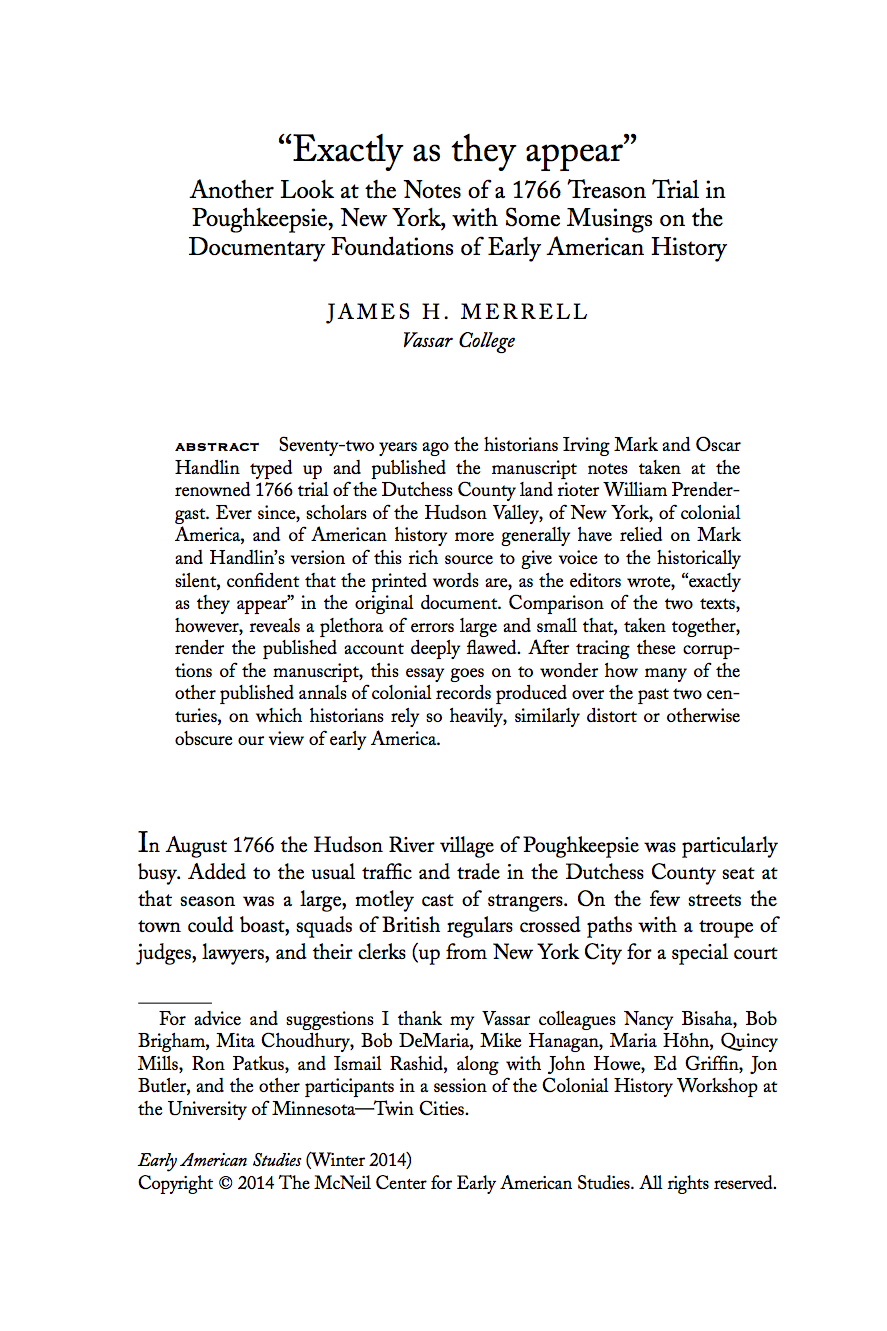
Merrell ArticleMany of us have been there. Sitting in front of our computers, we fret over how we will find the time and funding to examine important manuscript sources at faraway archives. And then, a few keystrokes later, we find that those sources are available in published form. Relief floods over us, replacing anxiety. But should we really be so relieved?

James H. Merrell’s recent article in Early American Studies asks exactly this question. Entitled “‘Exactly as they appear’: Another Look at the Notes of a 1766 Treason Trial in Poughkeepsie, New York, with Some Musings on the Documentary Foundations of Early American History,” it suggests that we should not be so quick to assume that published versions of manuscript sources faithfully reproduce the originals. [1]

Continue reading

Guest Post: Working on The Papers of Francis Bernard

Christopher F. Minty (University of Stirling) recently completed his dissertation on the social and cultural origins of Loyalism in New York during the imperial crisis. He is the recipient of numerous fellowships, including the British Library, the Huntington Library, the David Library of the American Revolution, Colonial Williamsburg Foundation, and Houghton Library at Harvard University. This is his second guest post for The Junto.

In early 2013, Michael D. Hattem offered some thoughts on his role as a Research Assistant on the Papers of Benjamin Franklin. Since then, a variety of other online databases have established themselves as essential go-to sources for students and scholars of colonial British America, the American Revolution and the early Republic. With the launch of Founders Online, it has complemented a stream of other online resources that have given us an unparalleled insight into the lives of George Washington, Alexander Hamilton, Thomas Jefferson, James and Dolley Madison, the Adams family as well as documentary histories of the ratification of the Constitution and, well, “People of the Founding Era.”  Continue reading