Today, we conclude “The Ideological Origins of the American Revolution at 50″ roundtable with a guest post from Eran Zelnik. Zelnik is a PhD candidate at UC-Davis where he is writing “The Comical Style in America: Humor, Settler Colonialism, and the Making of a White Man’s Democracy, 1740-1840,” a dissertation that traces the rise of common white men to cultural dominance in early America.

In his classic study, The Great Cat Massacre, Robert Darnton captured what to me has always seemed as the moment when cultural or intellectual history becomes truly thrilling: “when you realize that you are not getting something—a joke, a proverb, a ceremony—that is particularly meaningful to the natives, you can see where to grasp a foreign system of meaning in order to unravel its meaning.” Fifty years later, Bernard Bailyn’s classic The Ideological Origins of the American Revolution still stands out in my mind as one of the prime examples of such a moment in the historiography of early America. His writing in that piece exudes the intellectual rush Bailyn and many of his students felt as they fleshed out a new promising analysis of what later came to be known as “republican” thought. Leafing through the book one can still feel the sense of excitement Bailyn shares with the reader as he explores the significance of hitherto little-understood intellectual traditions. It might seem counter intuitive for a junior historian with unambiguous leftist tendencies, but it is one of those few books that keep reminding me that history can be exciting. Continue reading

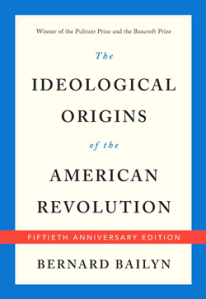 It took me a long time to warm to The Ideological Origins of the American Revolution. I don’t think this is an uncommon experience for an early Americanist. Fifty years after its publication, Bailyn’s seminal work still features prominently on graduate and undergraduate reading lists. Yet it is hard to say that the book is beloved. Often, simply mentioning Bailyn’s name can be a pejorative shorthand—an outmoded view of the past that celebrates elites at the expense of the darker underbelly of the Revolution. As an undergraduate, I too railed against the book. How far, I asked with youthful bluster, were minutemen really inspired by the cautionary tale of seventeenth-century Denmark? And yet, like the profession itself, I have found it hard to shake Bailyn’s shadow. How is it that a book that is often only grudgingly admired still occupies such a large part of the field’s mental imagination?
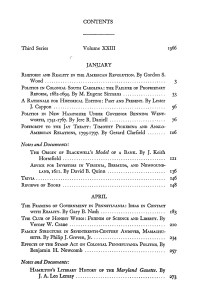 1966 was a transformative year in popular music. The Beatles released Revolver; Dylan put out Blonde on Blonde; and the Beach Boys dropped Pet Sounds. Even fifty years later, those three albums sit atop many respectable lists of the best all time albums. 1966 was also a transformative year in early American history. Fifty years later, it gets my vote for one of the top 5 most historiographically innovative years the field ever had.
  Gordon Wood riled up the #twitterstorians with a
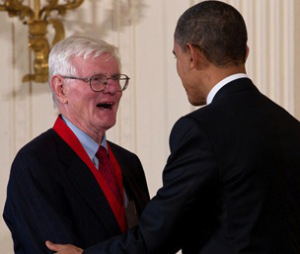
  Bernard Bailyn’s contribution to our understanding of early American history is so vast that it’s easy to forget he’s still publishing books. His writings on the American Revolution, begun in the 1960s, remain required reading for any doctoral student studying for orals. And even since retiring from Harvard a quarter century ago, he’s continued to influence the field, perhaps nowhere more than through his promotion of Atlantic history.
 After our summer hiatus, “The JuntoCast” is back with a new type of episode.
  “By 1990,” wrote Daniel Rodgers, the concept of republicanism in American historiography “was everywhere and organizing everything, though perceptibly thinning out, like a nova entering its red giant phase.” A quarter of a century later, it can seem barely more than a dull glow—and in part, we have Rodgers’ essay to thank for dimming the lights. If republicanism’s 1970s high-water-mark was followed by a decade of furious debate over republicanism-versus-liberalism, scholarship after 1990 often framed itself as moving beyond precisely that anachronistic question. There was, apparently, no such conflict in the minds of revolutionary-era Americans. The problems that troubled them were different ones entirely.[1]
  It seems to have become a tradition to open this post with a weather report for New England. This morning we’re looking at a slushy Sunday, which while annoying is quite an improvement over the snowpocalypse of a few weeks ago. In any case, a little sleet/snow won’t stand any longer between you and your weekly supply of links. On we go!
 The Junto