 When I consider the non-early-American history books that have had the greatest impact on the way I think, two stand out in particular. One is Ross McKibbin’s The Evolution of the Labour Party, 1910-1924; the other, CLR James’s Beyond A Boundary. The former is the most obviously “academic” of the two; the opportunity to write a Junto post primarily concerned with cricket, however, means that today I’ll focus on the latter.[1]
Both books influenced me for their creativity in approaching politics and society. McKibbin’s insight that “political action is the result of social and cultural attitudes which are not primarily political” has remained with me ever since; a useful reminder that in writing political history, we have to try and find ways of recovering political mindsets not only by looking at what political actors say, but also the many and varied ways they actually do things. James, too, calls for an approach to studying the past that looks beyond a narrow scope of inquiry, in his famous question ‘What do they know of cricket, who only cricket know?’ Continue reading
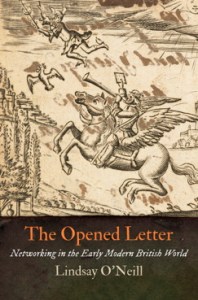 Yesterday, Jessica Parr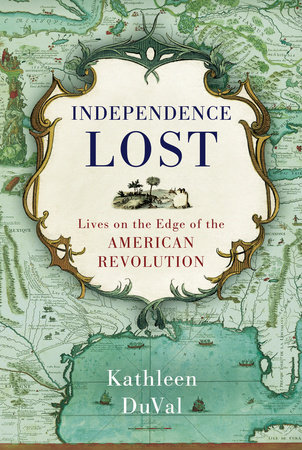
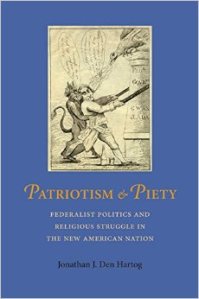 Religion was an “engine of politics” in the early American republic. Jonathan Den Hartog explains how religion energized (and then, ironically, diverted energy from) Federalist politics, and how the national vision of Federalists changed American religion. He considers northern evangelical Federalists such as John Jay (and his two sons), Caleb Strong, and Elias Boudinot, Unitarian Federalists including John Adams, and Federalists with a southern accent, Henry De Saussure and Charles Pinckney. These individuals are located, through impressive archival research, in a web of interpersonal relationships.
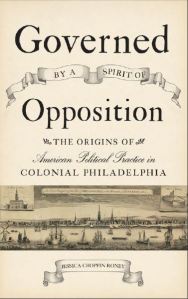 In recent years, early American political history has received considerable attention. A range of historians have enriched our understanding of how Americans participated in and contributed to politics in the early republic.
 Abigail Swingen is an Assistant Professor of History at Texas Tech University (Lubbock, TX). She received her Ph.D. in History from the University of Chicago. She specializes in the Early Modern British Atlantic Political Economy. Competing Visions of Empire is her first book and was reviewed here yesterday. The following is part of our (relatively) new tradition of reviewing a book and then offering a Q & A with the author the following day. [NB: You can find my review from yesterday
 At the beginning of February, Wake Forest University
  The Junto