Elizabeth M. Covart is an early American historian, writer, and podcaster. Presently she is working on her first book manuscript about cultural community creation in Albany, New York, 1614-1830. Liz also writes a practical blog about history and how to make it more accessible at Uncommonplacebook.com and her new podcast, “Ben Franklin’s World: A Podcast About Early American History,” seeks to bring the work of academic and public historians to history lovers everywhere.
 October 31, 2014. On the most fearsome day of the year, Tufts University convened “Fear in the Revolutionary Americas, 1776-1865,” a one-day conference designed to explore the question: What role did fear play in the revolutions that occurred in North and South America between 1776 and 1865? Continue reading
 ndro Institute and the University of Southern California-Huntington Library Early Modern Studies Institute are pleased to announce the tenth in a series of William and Mary Quarterly-EMSI workshops designed to identify and encourage new trends in understanding the history and culture of early North America and its wider world.
 What does it mean to give consent? Or to withhold it? In what situations is it asked for? When isn’t it? And why? These are questions that most historians of early America face some time, some way or another. But the range of uses of consent is vast, from the many senses of government through relations of labour, exchange, sex, and kinship. Next March at the Rothermere American Institute in Oxford, Kathryn Olivarius and I will hold a conference with the aim of drawing connections and patterns across these disparate realms.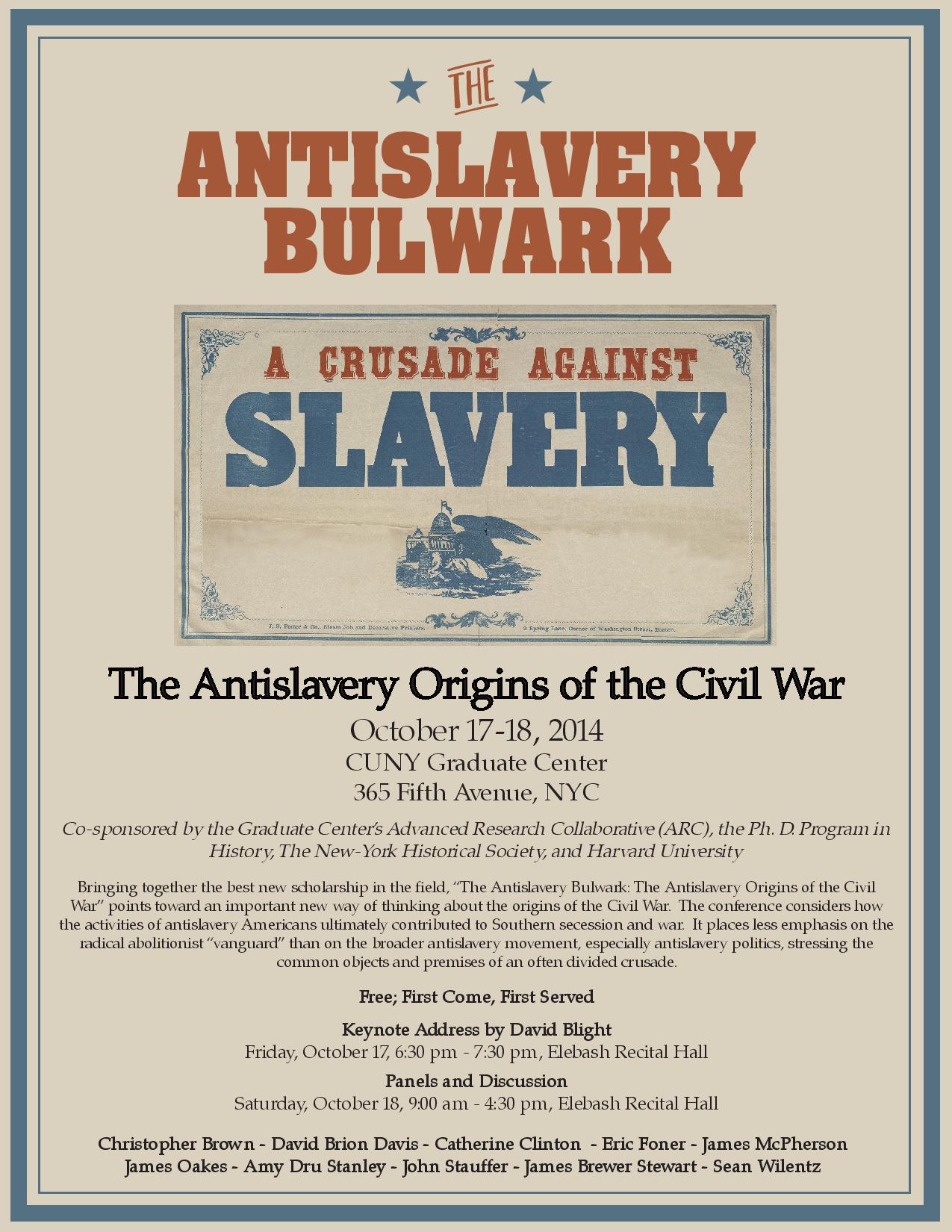
 Last night, I had a dream about waking up at some indeterminate time in the future, not too distant but not very close either. It was one of those kinds of dreams where you find yourself in a world that is so clearly different from your own, yet at the same time seems strikingly familiar. I was still my same-old early Americanist self. But where was I? Well, that was part of the beauty of it. It didn’t matter. I found myself in an early Americanist digital universe of the future. Not just a blogosphere. Not just various social media platforms. Not just online magazines. But an integrated digital universe, one in which access and participation in all the appurtenances of the institutional life of the profession—conferences, working groups, publishing—had been prioritized and maximized and the restraints of distance and resources minimized. And here’s what it looked like…
 This weekend it wasn’t just the swiftly-approaching independence referendum causing excitement in Edinburgh—it was also the annual conference of the British Group of Early American Historians (BGEAH: that’s “beggar” to some, “big-ear” to others), which brought together early Americanists from Southampton to Dundee and all points in between, plus a few from the far side of the Atlantic. In the stately setting of Edinburgh University’s Old Medical School, the theme we were given was “Better Together? Union and Disunion in the Early Modern Atlantic.” I couldn’t possibly cover everything, but in this post I’ll share a few of my personal highlights.
  Like many academics, I’ve spent many hours this summer in conference rooms with fluorescent lighting and insufficient air conditioning. For the most part, this has been a real pleasure—after a year of teaching, it is always invigorating to hear others present their research and engage in fruitful conversations. But one part of the experience always fills me with dread: the comment.
 In 1740, during George Whitefield’s first visit to New England, Connecticut minister Reverend Daniel Wadsworth wrote in his diary: “met with the famous life of Whitefield: but what is it?”[1] Wadsworth’s comments no doubt reflected both the excitement and the unease that Whitefield’s visit provoked among New England clergy, who both looked to him as a man who could renew piety and New England, but also feared his potential for exacerbating existing religious tensions. Nonetheless, it is a poignant question, and one anyone who is familiar with “the Grand Itinerant” might ask.
  Last weekend, the world of early Americanists transferred itself to Canada, for the Omohundro Institute’s annual conference. Hosted by Dalhousie and St Mary’s Universities, Halifax (Nova Scotia) provided the backdrop to the academic festivities. Though it was a long and arduous journey to Halifax (at one point I thought I might have to Skype my paper from Philadelphia airport), and though the weather frequently failed to shine (to this Brit, it was very reminiscent of summer), the conference was a tremendously well-organized feast of academic camaraderie. What follows is necessarily only a partial recap, but one that I hope gives a flavor of what was on offer. If you have other reminiscences—not least on the many panels I missed!—please do share them in the comments.
  The Junto