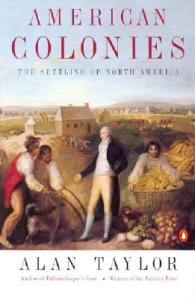
 Teaching the first half of the American history survey has become a more complicated job over the last few decades. The reason is quite simple—the purview of early American historians has broadened significantly in the same period. A narrative from Jamestown to Independence to Civil War is now a narrative that begins with (or even before) the Columbian Exchange. A geographical focus that formerly considered the “thirteen colonies” almost in isolation now extends northwards to Canada, westwards to the Mississippi, southwards to the Caribbean, and across the ocean to Europe and Africa. A predominantly white, male, Protestant cast of characters has welcomed women, people of color, Native Americans, and others to its merry band.
All of this is a good thing. But it runs up against a critical problem—the amount of time in a semester has not extended at all. To take account of newer historical approaches therefore requires critical editing of syllabi and a rethinking of approaches. That means there will be, for want of a better term, “winners” and “losers” in terms of the material covered in the survey course. My contention is that the 18th century is the main loser from these changes—and I wonder, at times, what the implication is for our students’ understanding of key currents of American history. Continue reading →




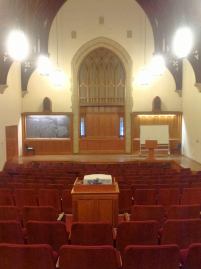 As I near the end of a somewhat unusual semester, I wanted to reflect a bit on my experiences as a Teaching Fellow for a course on the American Revolution. This semester I was fortunate enough to have the opportunity to deliver a number of lectures. And it has gotten me thinking about the lecture as both a piece of writing and a pedagogical tool. The purpose of this post is mostly to throw out some things that have occurred to me throughout the semester but to also get thoughts from those of you with experience giving lecture courses.
  We’re barreling toward the end of the semester, which always feels closer once Thanksgiving’s over. As the Brits don’t celebrate Thanksgiving here, I’m in the midst of doing mid-semester evaluations with students this week A) To remind them that the semester really is more than half over and B) To try to suss out what is and isn’t working in our class.
 The Junto