Varieties of Heritage Interpretation

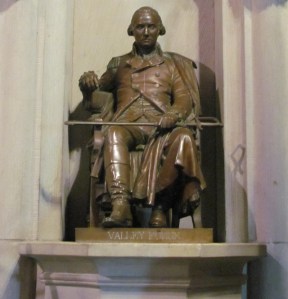
WashingtonMemorialChapelOver the last few days, I’ve joined tours of several historic sites around Philadelphia. It’s common for me to visit historic sites, of course, but these tours are different.

For once, I’m doing my best to act and perhaps think like a normal tourist. I’m seeking out the most mainstream experiences instead of trying to strike out alone. (“Tickets for the one o’clock trolley tour, please! And where’s your gift shop?”) Not coincidentally, I’m also visiting these sites in rapid succession, as if I were a vacationer and not a local resident. It’s been a lot of fun.

It has also tested one of my casual assumptions about these places.

Continue reading

The Week in Early American History

TWEAHThis week, we’re bringing in a bumper crop of cultural opportunities and political teachable moments. Continue reading

The Week in Early American History

TWEAHWelcome to another exciting week in early American history, where all the women are strong, all the men are strong, all the children are strong, and all the historians are above average. This week, we can report: Continue reading

The Week in Early American History

TWEAHHappy Memorial Day to our readers in the United States. This week’s links begin with reminders about the origins of the holiday. Continue reading

Commencement in Early America: Pausing at the Portal

Columbia College Commencement, 1818This is commencement season in the United States. On weekend mornings, college towns around the country are being beset by billowing clouds of begowned bachelors, trailing various family members and friends in their newly distinguished wakes. University neighborhoods are full of rented trucks and vans. Sidewalks are littered with furniture. People are swarming into auditoriums, sports stadiums, gymnasiums, or (as in the case of some of my Texas cousins) livestock arenas to hear more or less famous people dispense advice for adulthood. And to me, it’s all very, very exciting.
Continue reading

The Trouble with Global: Early Thoughts from an Early Americanist

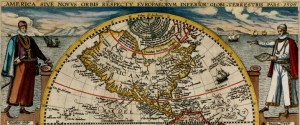
mapofthenewworld-debryThis week, I’m wrapping up my survey course on modern global history (1500 to the present). It’s the first time I’ve taught this course. So I have opinions.
Let me just put this right out there: I had long been skeptical about global history as a standard survey course. It seemed too unwieldy, too shallow or spotty in coverage, and way too vulnerable to political ax-grinding. I assumed this course would reinforce old stereotypes: that history is an endless parade of random facts and dates and battles and names of elite men. Or else it would turn into pure theory, and thus an exercise in polemic. Either way, it would have little of the texture of lived experience, which is what I reckon makes history compelling to ordinary powerless students.

Continue reading

The Week in Early American History

TWEAHWe begin with sad news. The Junto learned a few days ago that Stephanie Camp, professor at the University of Washington and author of Closer to Freedom: Enslaved Women and Everyday Resistance in the Plantation South, died on April 2 after a battle with cancer. The Seattle Times published an obituary this week, quoting Drew Gilpin Faust: “Students heard her courage and saw her integrity and learned from it in ways they never forgot. Her scholarship did the same.” The Rice University History Department, where Camp worked for two years, has posted a brief tribute. Caleb McDaniel, who worked with Camp at Rice, has also posted a longer personal reflection. The University of Washington is soliciting donations in her honor for the Stephanie M. H. Camp Lecture Fund for the History of Race and Gender.

Continue reading

Looking for “a World of Love”: Jonathan Edwards in the Big City

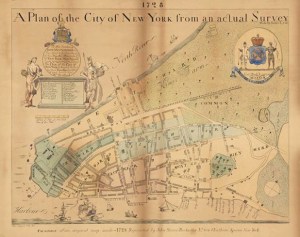
nyc1728Jonathan Edwards is so strongly identified with Connecticut and Massachusetts that it’s easy to overlook where his pastoral ministry began: near the waterfront of New York City. In 1722, Edwards took a temporary position as the minister to a small Presbyterian congregation in Manhattan. He was about nineteen years old.

Edwards’s months in New York shaped him in at least two ways. First, according to his own account, Edwards developed a stronger desire for personal holiness. In New York, he wished increasingly to be “in everything a complete Christian.” Second, he grew in missionary zeal. Holding long religious conversations with his host family (who were immigrants from England) and observing life in the Atlantic port, he came to a more global awareness of the faith. He put it this way:

Continue reading

Using Local History in the Survey: City Streets

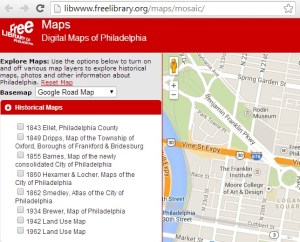
digitalmapsofphillyrecent conversation with Joe, Ken, and Michelle Moravec has me thinking about ways to use local history in a US survey course. Right now, Michelle and I have it easy; we’re both teaching in greater Philadelphia. It doesn’t take a lot of creativity to find ways to call out local attractions in class. (I can even display a map showing my campus smack in the middle of the Battle of Germantown.) But what about local history in general? How can we demonstrate that history is experienced in particular places, and that every place, at least potentially, has a history?

Continue reading

The Week in Early American History

TWEAHIt’s been another marvelous week for early American history. First, we saw the one hundred fiftieth anniversary of the Gettysburg Address. As John Fea notes, the exact wording of the speech has been causing trouble; Barack Obama has been accused of refusing to read a crucial passage. The AP’s Allen G. Breed investigated the various drafts of the speech and, with help from Martin P. Johnson, discussed their significance to American journalism. On SNL, though, Mr. Jebediah Atkinson had harsh words to say about the address.

Continue reading