 A century after the end of the War for Independence, New Yorkers continued to celebrate a holiday known as “Evacuation Day,” commemorating the leaving of the last British troops from New York City on November 25, 1783. It marked the end of a seven-year occupation by the British army who used the city as the headquarters for its North American operations during the war. But it also marked the beginning of a holiday that would be enthusiastically celebrated by New Yorkers for a century to come. On this anniversary, I offer the following narrative account of a day that played a large role in the city’s historical memory of the Revolution for more than a century, but was eventually displaced when it became incompatible with contemporary circumstances. Continue reading
Author Archives: Michael D. Hattem
The JuntoCast, Episode 13: Education in Early America
 We’re happy to bring you the thirteenth episode of “The JuntoCast.” Continue reading
J. Franklin Jameson Superstar
 It is not often that historiographical essays have a hero. But, in Al Young’s essay, “American Historians Confront ‘The Transforming Hand of Revolution’,” it’s hard not to see J. Franklin Jameson that way. Jameson was a New Englander by birth and character who helped found the American Historical Association in 1884. Never a prolific historian (or teacher, for that matter), Jameson’s greatest impact—beyond the important structural role he played in the emergence of History as a modern academic and professional discipline in the United States—came in the form of a small collection of four lectures originally written in 1895 but published largely in the form they were given at Princeton 30 years later. That small book, The American Revolution Considered as a Social Movement, is not just the starting point for Young’s assessment of the historiography of the American Revolution in the twentieth century, it is quite literally its genesis. Continue reading
Roundtable: The Legacy of Alfred F. Young
 This week, The Junto is dedicated to reconsidering the legacy of Al Young. Young died two years ago this week, but we scheduled the timetable unaware of that coincidence. Instead, we originally scheduled it to coincide with Pope’s Day, a topic many of us associate with Al Young. After his passing, the internet was filled with many personal and heartfelt memoriams from colleagues and former students. But this week, my fellow Juntoists and I will reconsider the legacy of Al Young and a body of work with few equals in the history of early American scholarship. Continue reading
Guest Post: Diplomacy, Slavery, Quids, and Much More in the Latest Volume of the Papers of James Monroe
Cassandra Good is the Associate Editor of The Papers of James Monroe. She received her PhD from the University of Pennsylvania and her first book Founding Friendships: Friendships between Men and Women in the Early American Republic is forthcoming from Oxford University Press in January 2015.
 From the Louisiana Purchase to reflections on travels in Spain to debates on slavery, the latest volume of The Papers of James Monroe will be a great resource for scholars of the early republic. Whether or not you have ever read anything by or about Monroe, it’s likely that there will be documents of interest in this volume. It spans from 1803, when Monroe was sent to France to help negotiate for Louisiana, to April 1811, just before he became secretary of state. Continue reading
The JuntoCast, Episode 12: Bailyn’s Ideological Origins of the American Revolution
After our summer hiatus, “The JuntoCast” is back with a new type of episode. Continue reading
Rip Van Digital
 Last night, I had a dream about waking up at some indeterminate time in the future, not too distant but not very close either. It was one of those kinds of dreams where you find yourself in a world that is so clearly different from your own, yet at the same time seems strikingly familiar. I was still my same-old early Americanist self. But where was I? Well, that was part of the beauty of it. It didn’t matter. I found myself in an early Americanist digital universe of the future. Not just a blogosphere. Not just various social media platforms. Not just online magazines. But an integrated digital universe, one in which access and participation in all the appurtenances of the institutional life of the profession—conferences, working groups, publishing—had been prioritized and maximized and the restraints of distance and resources minimized. And here’s what it looked like…
The Week in Early American History
 Let them eat links!
The OId World of the New Republic
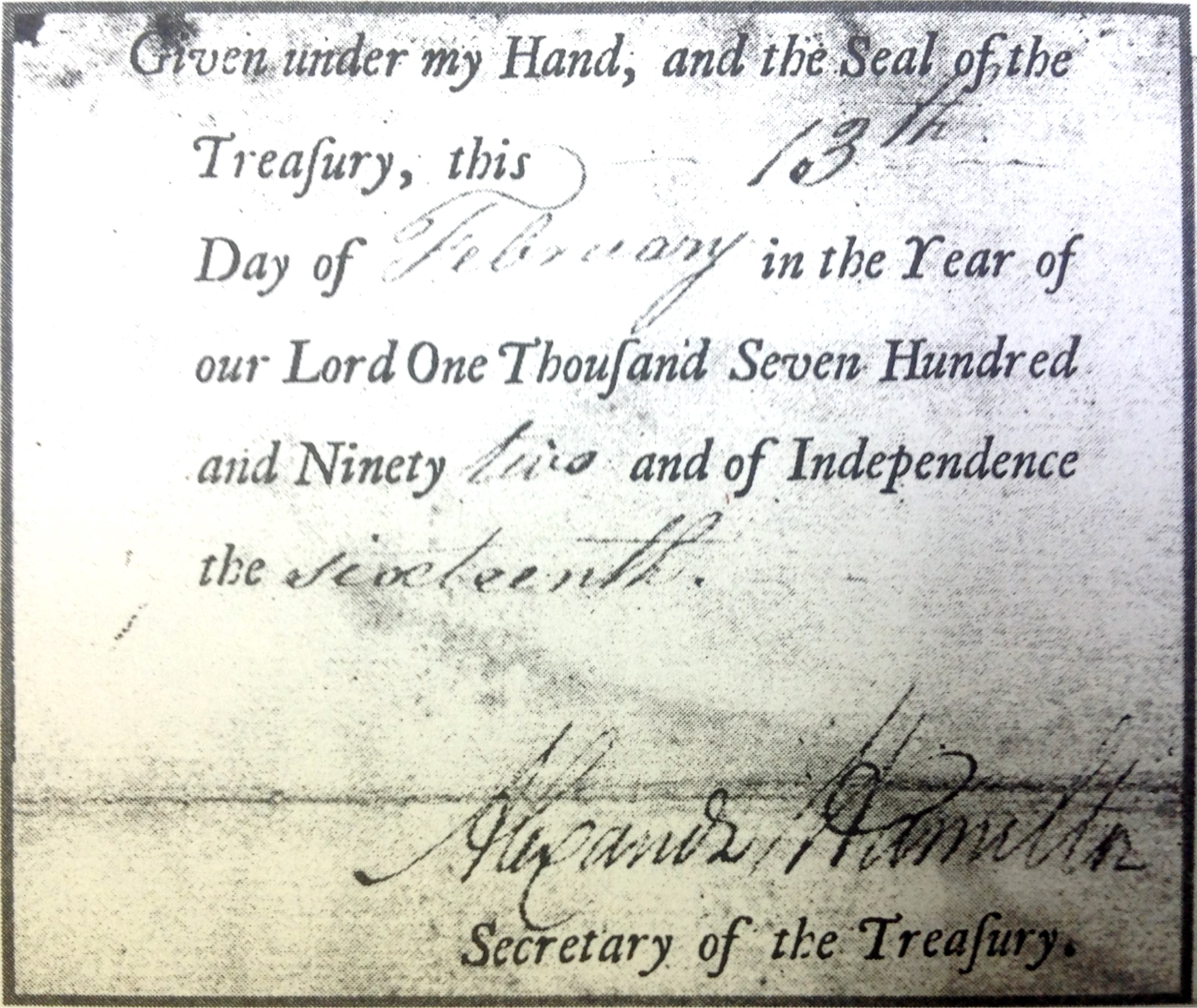
As someone who works on the late colonial period (1730s-1770s) in a field dominated by the “early republic,” it is easy to feel as though I am working on the margins of the field of early American history rather than what is actually the middle or center of what we usually define as early America (i.e., 1607 to somewhere between 1848 and 1861).[1] Yet, in this brief, speculative post, I will suggest that—in terms of my own subfield of political history and political culture—one of the things missing from much of the scholarship on the early republic is the colonial period itself. Continue reading
How Do You Pronounce This Blog’s Name, Anyway?
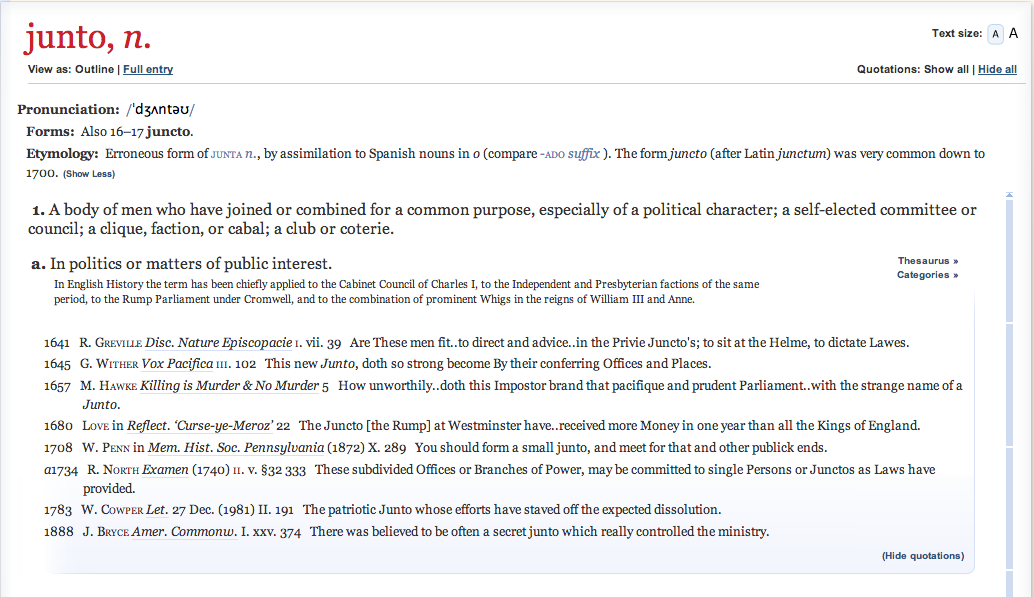 Back in 2012, when the initial ideas for this blog were first being thrown around, I suggested the name The Junto. I did so, not least because working at the Franklin Papers tends to keep Franklin on the brain. But I also suggested the name because the blog seemed to me to be analogous to the original group in that it was started by a bunch of upstarts with the intent of creating intellectual discourse amongst a supportive and engaged community. And those were the two most important initial goals of the blog. At the time, I never anticipated that there would ever be any confusion as to how to pronounce the name. That may have been a good thing since I probably would not have suggested it otherwise (“pronouncability” being pretty important when it comes to naming things, apparently). So, you might ask: “What is the correct pronunciation?” Well, that’s the thing. There doesn’t seem to be one, at least not nowadays. So, in a hopeful effort to settle the question, I decided to try to find out how people in the eighteenth century pronounced “Junto.” Continue reading
 The Junto