Carl Robert Keyes is a newly tenured Associate Professor of History at Assumption College in Worcester, Massachusetts. He is currently working on a book about advertising practices and consumer culture in eighteenth-century Philadelphia. An earlier version was delivered at the induction ceremony for the Phi Alpha Theta chapter at Framingham State University in April, 2014.
 Earlier this month I finished teaching my first public history course. I’ve long been concerned about how professional historians, especially academic historians, (often don’t) communicate with the public and, in turn, the general public’s misunderstanding of the historian’s craft. Teaching a public history course made these apprehensions central to my work in the classroom. My students and I grappled with a different kind of historiography, a less formal historiography consisting of public opinion, incomplete recollections of elementary and secondary history education, and a “master narrative” that usually dominates stories of the American past told by many public figures, a narrative steeped in patriotism, heritage, and commemoration. More than ever, I found myself challenging my students (in all my classes, not just the public history course) to take a three-part approach in their studies: learn about the past, learn about how professional historians have interpreted the past, and learn about how the general public understands the past. This became yet another way to demonstrate that course content has relevance outside the classroom and beyond the semester.
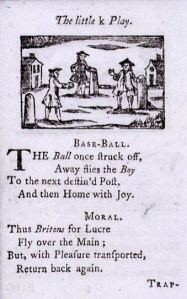 As most graduate students experience first-hand, the relationship between universities and unions can be complex. Our position as students, employees or a combination of the two varies largely by institution, particularly by whether or not our universities are public or private. However, if you’re a Division One football player with a potential NFL career in your future, the construct of a student-athlete underscores a specific question about the nature of labor in higher education. For those who participate in collegiate sports, are academic scholarships a privilege or a right, a special acknowledgement of their abilities on the field or a form of compensation for service to their institutions? Yet the tension between privileges and rights is as much about intellectual activity as it is about physical skills, dating all the way back to Andrew Law’s Privilege of 1781.
 Back in December, the Dean of Undergraduate Education at Harvard was
 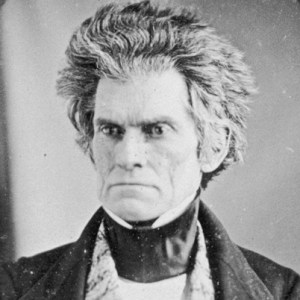 Ever since Richard Hofstadter called John C. Calhoun the “
 I had the opportunity, over the course of Passover-Easter break, to watch the first three episodes of AMC’s new series Turn (transcribed as TURИ on subway ads).[1] The show is very much in the vein of the recent spate of high-serious historical (Mad Men) or faux-historical (Game of Thrones) dramas airing on the finer cable networks (AMC, IFC, HBO). Turn, like its sister-shows, features excellent acting and wonderful set and costume design. Unlike these other shows, however, it adapts for television a historical event that gets a lot of coverage on this blog–the American Revolution.[2] For the series AMC has turned Alexander Rose’s
  Thanks to John Fea’s
  On Sunday, at the 2014 OAH Annual Meeting, I was part of a roundtable discussion entitled “Is Blogging Scholarship?”
  I have a confession to make: I have been watching MOOCs. I feel guilty about it, honestly, I do—not so much about the fact that I have been watching them, but more about the fact that I have also been enjoying them.
 I am currently in the midst of grading midterms and the process, as well as a recent piece by Marc Bousquet at CHE, has gotten me thinking about undergraduate writing and the debate of its value kicked off by Rebecca Schuman’s piece, “
 The Junto