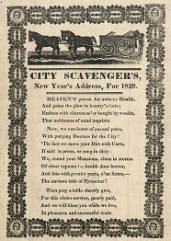
 Every day they took apart the city, and put it back together again. New Year’s Day was no different. They worked while dawn, then dusk, threaded the sky, to patch up narrow streets. Lamplighters, an urban mainstay heroicized by Maria Susanna Cummins’ fictional “Trueman Flint,” heaved up their wooden ladders to trim wicks and refill oil pans. Along with the dry-dirtman, city scavengers spread out to collect loose trash. The scene might have been Boston, Philadelphia, Charleston, New York, Baltimore, Cleveland, St. Louis—and set anytime from the Revolution to the Civil War. Newspaper carriers, mostly young boys, filtered along the avenues. Tucked in sheets of newsprint, the city’s youngest workers also carried on a curious tradition: the New Year’s address. A rhyming blend of local-color writing and cultural commentary, the New Year’s address recapped the past and looked ahead. Laden with ornamental tombstone borders and often draped over double columns, each address ended with a plea for an annual gratuity. Continue reading
Category Archives: Digital History
Guest Post: Digital Humanities & Digital Journalism Symposium Recap
Brad Rittenhouse is a PhD candidate at the University of Miami specializing in 19th-century American literature and the digital humanities. His work thinks about literature as data, and looks at the intersection of literary aesthetics and information management techniques. He is also working on a DH project at UM’s Center for Computational Science, where he is developing a methodology for quantitatively identifying instances of informationally “thick” literary passages.
 The inaugural Digital Humanities + Data Journalism Symposium recently took place at the University of Miami, from September 29 to October 1st, drawing together a diverse crowd of academics, journalists, and many in between. As conference convener and Knight Chair in Visual Journalism at UM Alberto Cairo informed the audience in his opening remarks, the somewhat speculative event topic was inspired by a February 2012 tweet by Digital Public Library of America Executive Director Dan Cohen, which hopefully conjectured that “digital journalism and digital humanities are kindred spirits, and that more commerce between the two could be mutually beneficial.” Delivering the first keynote of the weekend-long proceedings, Cohen drew equal inspiration from Thucydides and Reese’s Peanut Butter Cups, lightheartedly suggesting the latter as a metaphor for the symbiotic (and potentially delicious?) roles digital humanists and data journalists could play in our increasingly informational world. In referencing Thucydides, he developed one of the salient themes of the weekend, the notion that digital scholars and journalists alike were primarily motivated by the quest to rise up from data to understanding, to construct knowledge from the complicated and overwhelming. Continue reading
The JuntoCast LIVE!: Elections in Early America
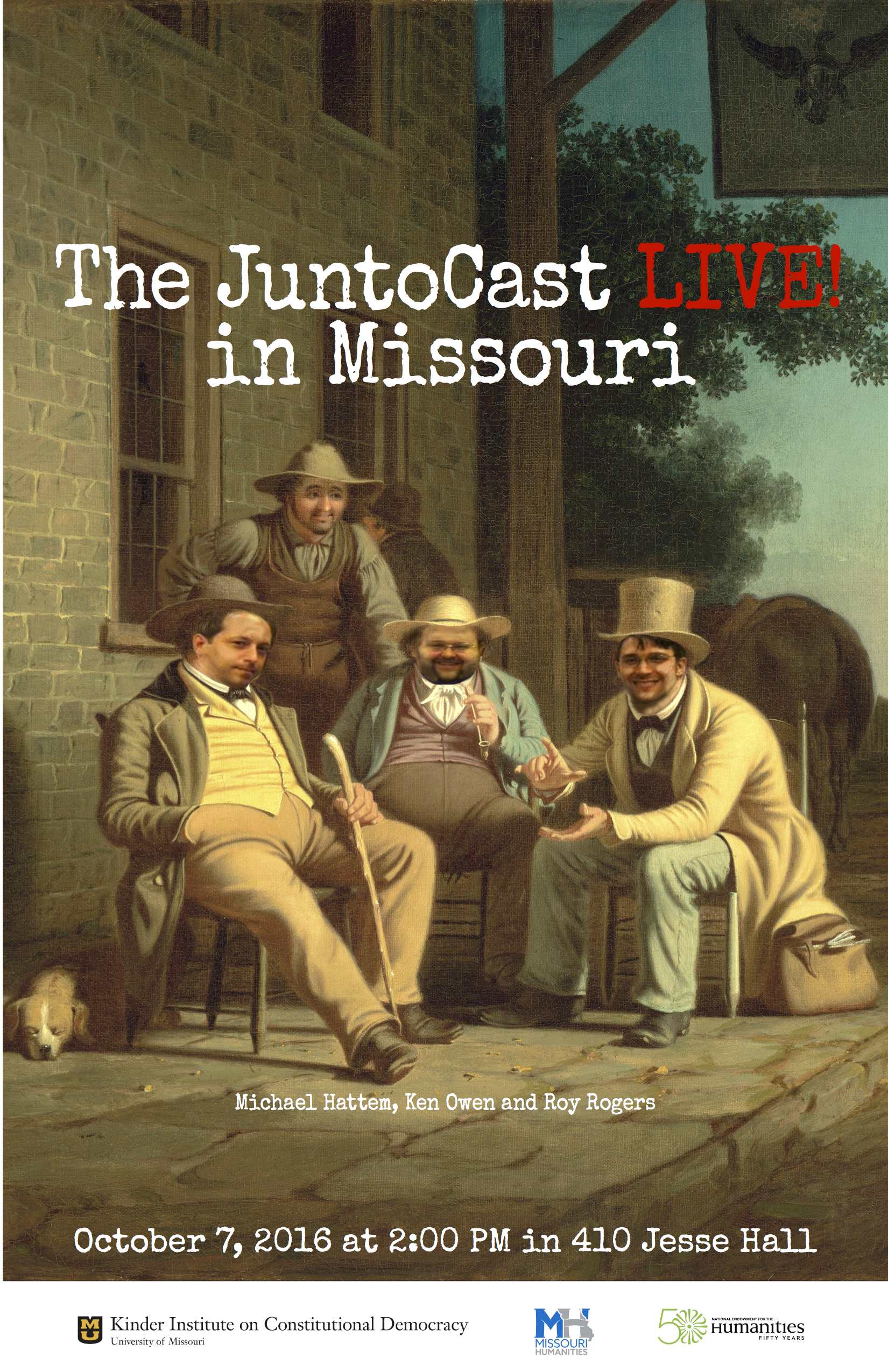 The JuntoCast returns for 2016-17 with this timely episode in which Ken Owen, Michael Hattem, Roy Rogers, and special guest Jeffrey L. Pasley discuss the role and development of elections in early America from the colonial period to the antebellum era. It was recorded in front of a live (studio) audience at the Kinder Institute on Constitutional Democracy at the University of Missouri in Columbia on October 7, 2016. The event was supported in part by a grant from the National Endowment for the Humanities administered by the Missouri Humanities Council. For more information about this episode, including suggestions for further reading, visit the episode page on our website. Continue reading
Doing Digital History 2016: A Recap
 The NEH Doing Digital History Institute took place at the George Mason University School of Law, over two weeks in July. The primary instructors, Sharon Leon and Sheila Brennan conceptualized the Institute as a means to aide mid-career scholars to learn digital tools both to serve as “ambassadors” for DH, and also because digital tools can allow historians to ask new research questions of sources. [1] This Institute in part, answers calls made by William Cronon, Cameron Blevins, and others.[2] Even as the interest in Digital History grows, there still remains the challenge of accessing digital history training for those outside of elite research universities. There is also a need to expand the number of historians who are qualified to peer review digital projects and to assess them in tenure portfolios. [3] Continue reading
Love Letters and the Digital Turn
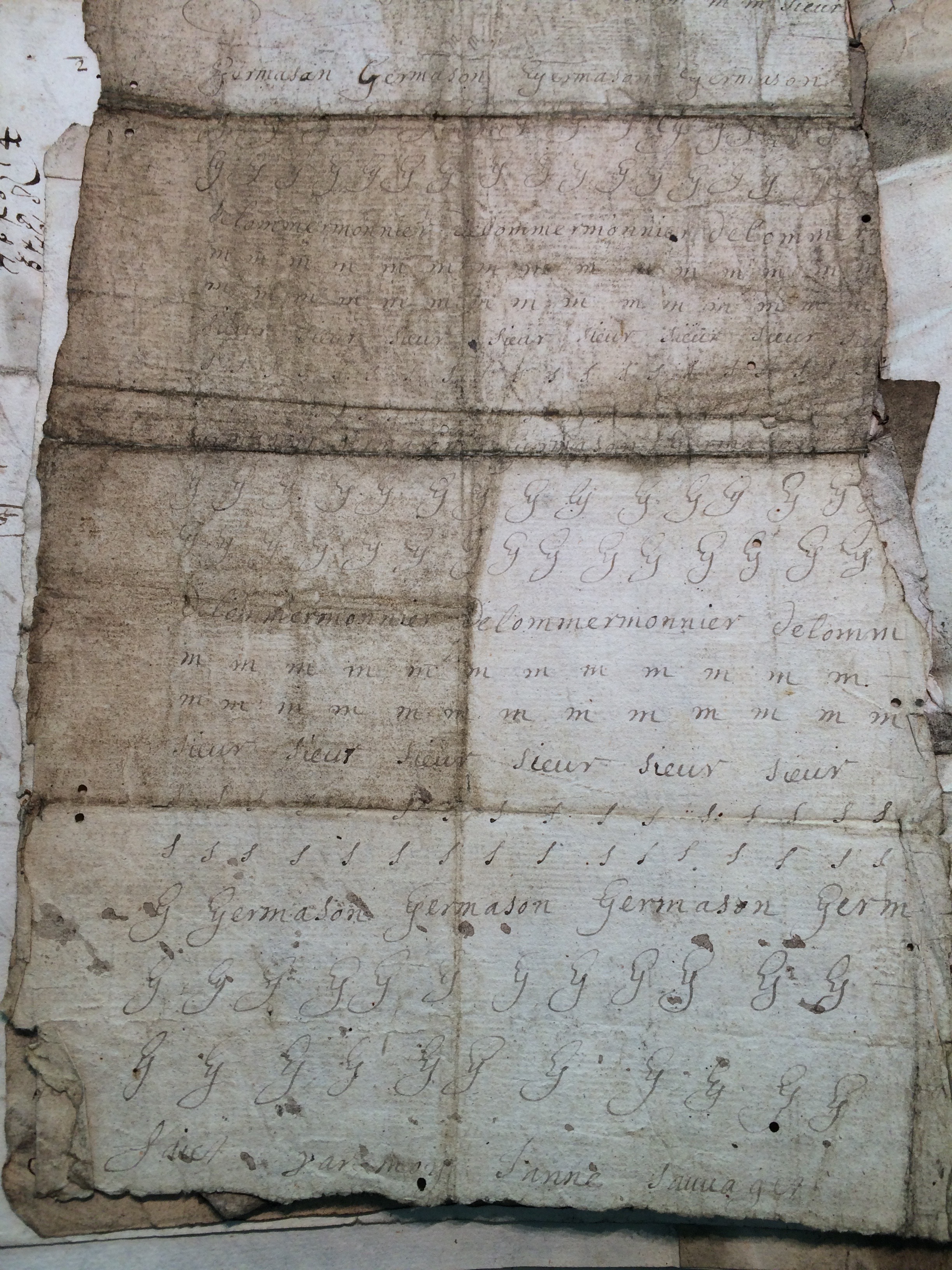 There should be no need to mention in a blog about early American history that the digital turn is, perhaps, a fait accompli. However, over the past couple of years more and more articles have called into question the ways in which access to digital archives and digitized sources has changed both the questions historians ask and the kinds of research we do. Of this surge in publications, Lara Putnam’s recent AHR article stands out as a kind of canary-in-the-coal-mine warning to both graduate students and established professionals. Putnam, professor of history at the University of Pittsburgh, calls on all of us to have an “extensive discussion of digitization,” thereby pulling our research approaches out of, “the realm of invisible methods, the black box where by consensus we leave so much of our discipline’s heavy lifting.”[1] For Putnam and others, the digital turn remains full of pitfalls that deserve our serious consideration. Continue reading
13 Revolutions +1

Diego Rivera and Bertram D. Wolfe, “Portrait of America,” 1934
When John Adams looked back on the American Revolution (something he liked to do), he reflected that, “The Revolution was in the Minds and Hearts of the People.” The colonists’ drive to independence marked a new era of American history, Adams thought, when “Thirteen Clocks were made to Strike together; a perfection of Mechanism which no Artist had ever before effected.” Scholars have struggled to frame the experience of the Revolution in picture and on the page. How can we use digital tools to curate collections of revolutionary culture and #vastearlyamerica for use in the classroom?
Today, The Junto chats with Darren Milligan, Senior Digital Strategist at the Smithsonian Center for Learning and Digital Access, about the Smithsonian Learning Lab, which encourages us to make, use, and share new galleries of history. Continue reading
Guest Post: How Do We Find Religion in the American Revolution?
Kate Carté Engel is an associate professor of history at Southern Methodist University. She is the author of Religion and Profit: Moravians in Early America (Philadelphia: University of Pennsylvania Press, 2009), and she is currently writing a history of international protestantism and the American Revolution.
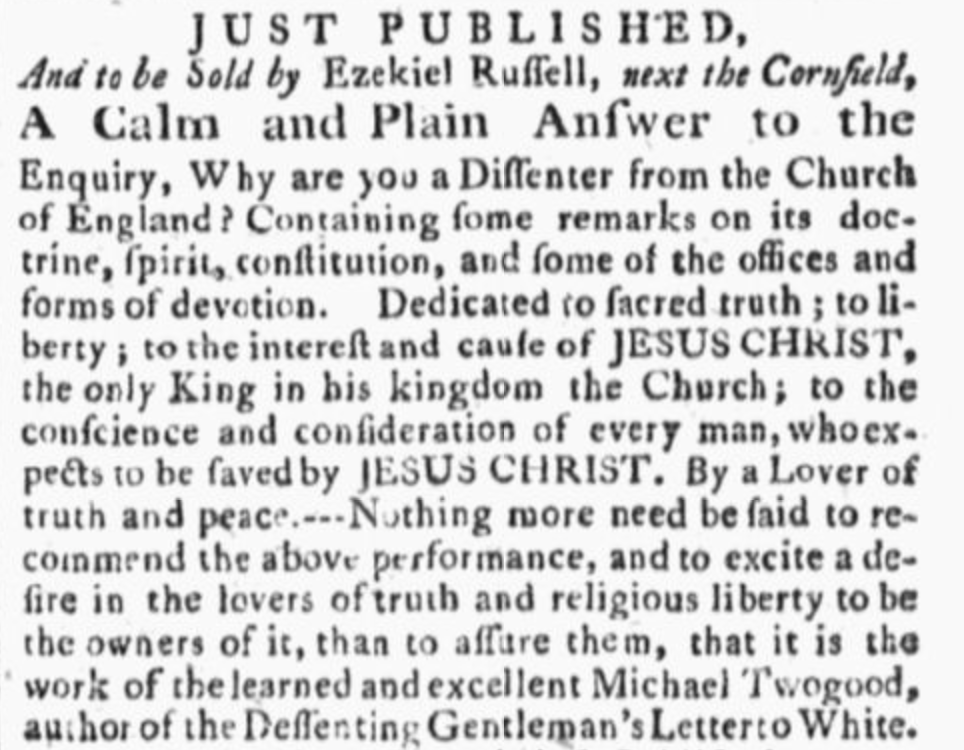 On May 17, 1773, an advertisement appeared in the Massachusetts Gazette for a new book by English dissenting minister Micaiah Towgood (misidentified in the advertisement as Michael Twogood). The ad is interesting because it is one of only 67 items in that come up in a search of Readex’s American Historical Newspapers database for the period between 1764 and 1789 containing a particular trifecta of terms: “Jesus Christ,” “liberty”, and (to get both religion and cognates like religious and religiously) “religio*”.
An Interview with Carl Robert Keyes, creator of Adverts250
Carl Robert Keyes (@TradeCardCarl) is an associate professor of history at Assumption College in Worcester, Massachusetts. Keyes is currently writing a book on advertising practices and consumer culture in eighteenth-century America, and in Fall 2016 he will become the director of Assumption College’s Women’s Studies Program. Keyes has previously written several guest posts for The Junto. Today, Keyes speaks with The Junto about his new digital humanities initiative, The Adverts 250 Project. Continue reading
The Revolution Will Be Live-Tweeted
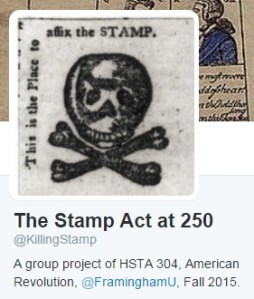 As many of our readers already know, this fall has marked the 250th anniversary since the protests against the Stamp Act, one of the earliest major actions of the imperial crisis that resulted in the American Revolution. Over the course of a year—from the first arrival of the Act in May 1765 until news of its repeal arrived in May 1766—colonists in the “thirteen original” colonies (as well as the “other thirteen”) passed resolutions, argued in essays, marched in the streets, forced resignations, and otherwise made clear their displeasure with paying a tax on their printed goods.
Q&A: Keith Grant and Denis McKim, Borealia: A Group Blog on Early Canadian History
 We’re pleased to kick off this week with an interview featuring Keith Grant and Denis McKim, the scholars behind the latest addition to the historical blogosphere, Borealia: A Group Blog on Early Canadian History. If you have not already done so, be sure and bookmark their blog immediately and add it to your regular reading list. You can also follow Borealia on twitter @earlycanada. Continue reading
 The Junto