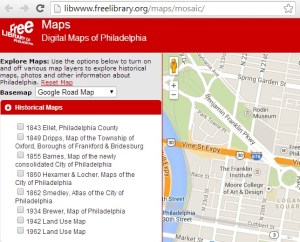
 A recent conversation with Joe, Ken, and Michelle Moravec has me thinking about ways to use local history in a US survey course. Right now, Michelle and I have it easy; we’re both teaching in greater Philadelphia. It doesn’t take a lot of creativity to find ways to call out local attractions in class. (I can even display a map showing my campus smack in the middle of the Battle of Germantown.) But what about local history in general? How can we demonstrate that history is experienced in particular places, and that every place, at least potentially, has a history?
Category Archives: Pedagogy
Using Contraries in the Classroom: Thoughts on Choosing Reading Assignments
“Without Contraries there is no progression. Attraction and Repulsion,
Reason and Energy, Love and Hate are necessary to Human existence.
From these contraries spring what the religious call Good & Evil.
Good is the passive that obeys Reason. Evil is the active springing
from Energy. Good is Heaven. Evil is Hell.”
-William Blake, The Marriage of Heaven and Hell
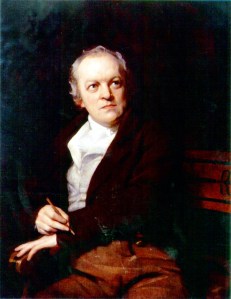
I doubt that the mercurial poet William Blake had American historiography on his mind when he penned these famous lines from his most famous poem, but I am going to use them for such a purpose anyhow. And who knows—Blake was indeed known as a visionary. Continue reading
As the Semester Looms

January has been a busy month for many of us here at The Junto, and we’re sure for many of our readers, as we have been preparing for the semester about to begin (except, of course, for Rachel, who will be grading first-term exams for weeks to come). Over the thirteen months the blog has been active, we’ve actually now written quite a few posts on teaching and pedagogy, and we’d like to point out a few highlights as you prepare your syllabi and first weeks of classes.
Teaching Through Primary Sources: Henry Drax’s Plantation Instructions
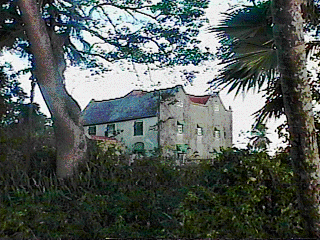 Primary sources form an important part of the assignments for any of my undergraduate classes. As with any set readings, some of these sources work more successfully than others. One source that has proven reliably successful is Henry Drax’s instructions on running a sugar plantation in seventeenth-century Barbados. Back in my graduate student days, I prepared an initial transcription of the instructions as a research assistant. Thankfully, my students don’t have to grapple with some of the more eccentric approaches to handwriting in the original copy, and can instead read the 2009 William and Mary Quarterly “Sources and Interpretations” piece written by Peter Thompson. [1]
Using Blogs in the Classroom
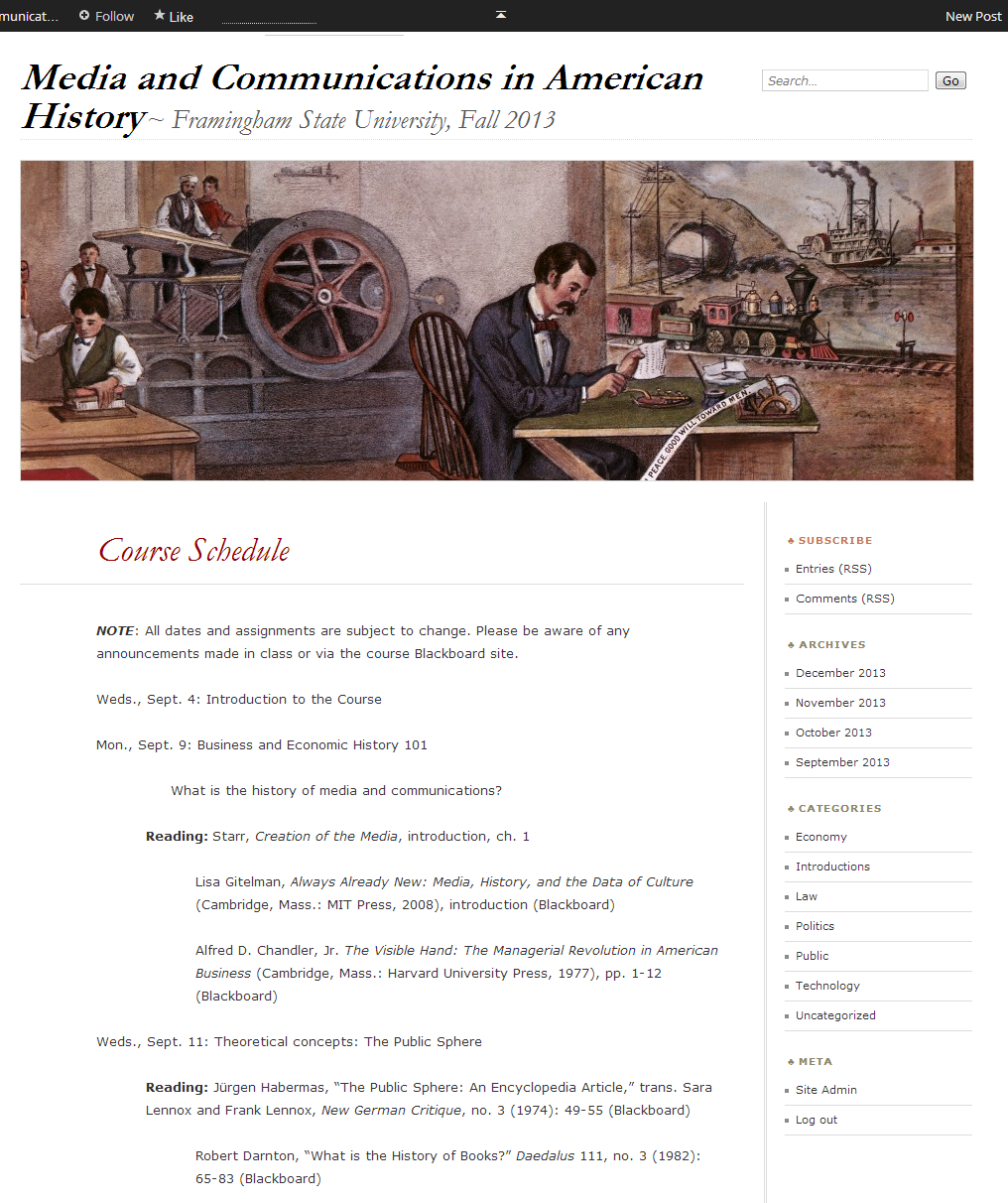 This week Framingham State University held its annual faculty professional development day (known on campus by its chronological moniker, January Day). As part of the day, I and a colleague in the English department put together a session on using social media in the classroom. What follows is an approximation of my half of the discussion, which focused on using blogs in a classroom setting. With the semester looming for almost everyone (though not, apparently, Rachel), it’s a good time to think about course syllabi, readings, and assignments. These sessions are aimed broadly at generating discussion among the faculty across disciplines about pedagogy, so I tried less to talk about how innovative I am (in some ways, not in others) but rather to provide a narrative of my experiences and raise a few questions.
Preparing for Final Exams…Wait, What?
 I am still learning how things work in England. Prime example: a couple of months back, I referred to the place where one purchases delicious, delicious beer-battered cod and fries as a “fish and chippery” before a kind(?) soul on Twitter alerted me to the fact that it’s called a “chippy,” here. So perhaps it’s understandable that I still find it a little weird that my students are about to take their final exams. Continue reading
Connecting the Past with the Present: A Trip to the Grocery Store
 I think it’s important for historians to try to make connections with the present, not only because it more thoroughly engages students, but also because the past is not static. I haven’t always been great at explicitly drawing these parallels, but when the first day of the U.S. government shutdown coincided with my first Revolutionary America class, I sort of lost it. I thought to myself, “I have to go into class prepared to talk about how people in thirteen disparate colonies—some of whom disliked each other immensely—managed to get it together enough to rebel against Great Britain?” It’s no wonder I ended up showing a pop music video and comparing the Revolution to the bad breakup of a dysfunctional relationship.[1] I assume that a teensy bit of pandering to students’ tastes didn’t hurt, either. Continue reading
Whither the 18th Century?
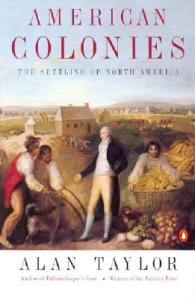 Teaching the first half of the American history survey has become a more complicated job over the last few decades. The reason is quite simple—the purview of early American historians has broadened significantly in the same period. A narrative from Jamestown to Independence to Civil War is now a narrative that begins with (or even before) the Columbian Exchange. A geographical focus that formerly considered the “thirteen colonies” almost in isolation now extends northwards to Canada, westwards to the Mississippi, southwards to the Caribbean, and across the ocean to Europe and Africa. A predominantly white, male, Protestant cast of characters has welcomed women, people of color, Native Americans, and others to its merry band.
All of this is a good thing. But it runs up against a critical problem—the amount of time in a semester has not extended at all. To take account of newer historical approaches therefore requires critical editing of syllabi and a rethinking of approaches. That means there will be, for want of a better term, “winners” and “losers” in terms of the material covered in the survey course. My contention is that the 18th century is the main loser from these changes—and I wonder, at times, what the implication is for our students’ understanding of key currents of American history. Continue reading
My Lecturing Disjunction
 As I near the end of a somewhat unusual semester, I wanted to reflect a bit on my experiences as a Teaching Fellow for a course on the American Revolution. This semester I was fortunate enough to have the opportunity to deliver a number of lectures. And it has gotten me thinking about the lecture as both a piece of writing and a pedagogical tool. The purpose of this post is mostly to throw out some things that have occurred to me throughout the semester but to also get thoughts from those of you with experience giving lecture courses. Continue reading
Some Reflections of a First Time TA
Or, How I Stopped Hating Finance and Learned to Love the Business Major[1]
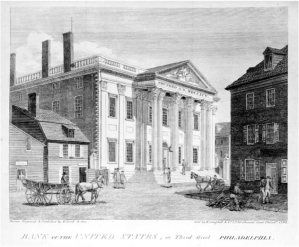
Settling in to my first semester as a TA this fall, I was stoked. Yes, stoked. Unbelievably enthusiastic about my teaching assignment: Early American Maritime Culture. I thought about all the port cities we would study, the trade routes we would map, and maybe for good measure we’d throw in an impressment or two. This first-time TA was assigned to a course in her field. Huzzah!
But a week into the semester I received an email stating, “We write to inform you that your teaching assignment has been changed to The History of Finance.”[2] Continue reading
 The Junto