Guest Post: Strange Constitutional Bedfellows: The First and Third Amendments in the Mormon Quest for Religious Liberty

Today’s guest post comes from Spencer W. McBride, who has blogged with us before. Dr. McBride received his PhD at Louisiana State University in 2014 and is now a historian and documentary editor at the Joseph Smith Papers. His research examines the politicization of clergymen during the American Revolution and in the early American republic.
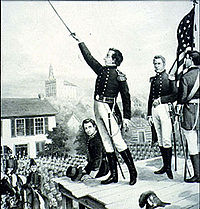
JS LegionOf the ten amendments that comprise the United States Bill of Rights, the third amendment is arguably the least controversial. Go ahead, think back to your high school civics class and try to remember what rights are protected by the third amendment. Can’t remember? Don’t feel too bad. It is rarely invoked by politicians and political activists, it does not often spark heated debates in the media, and the U.S. Supreme Court has never heard a case in which it was the primary basis. Let’s face it, since the adoption of the first ten amendments to the Constitution, Americans have not been overly concerned that the government will quarter troops in the homes of private citizens without their consent. Continue reading

Guest Post: Teaching Toilets in an Age of American Ebola

K.A. Woytonik is a PhD Candidate in the Department of History at the University of New Hampshire. In 2013-2014, she was a Research Associate at the McNeil Center for Early American Studies. Her dissertation is a cultural history of the Pennsylvania Hospital in Early Republic Philadelphia.

PennsylvaniaHospitalWilliamStrickland-1A bevy of esteemed scholars across fields have established the devastating effects of early modern epidemics, from Europe’s plagues to the decimation of Native American populations in North America. Epidemics occupied the minds of colonists, who, depending on region and demographics, participated in prevention strategies including quarantine, the destruction of soiled linens belonging to sick individuals, days of fasting and prayer, and immunity-building efforts such as inoculation and changes in diet. In today’s academy, epidemics offer historians avenues of interdisciplinary discussion, as the impact of contagious disease can be read not only in the archive, but in literature, in artwork, and in archaeological findings.

Continue reading

Guest Post: Keeping the “Human” in the Humanities

Hannah Bailey is a PhD candidate in History at the College of William & Mary, where her research examines the interconnectivity between developing notions of race and the expansion of the African slave trade in the early modern French Atlantic. This is her second guest post at The Junto. Be sure and read her earlier post on French archives and entangled histories here

SAM_1925As someone who is also leaping into an entirely new historiography in preparation for dissertation writing, I could commiserate with Casey Schmitt’s brilliantly astute post on the costs and benefits of comparative projects. It can be terrifying to move from a historiography with which one is relatively comfortable to, as she puts it, “a [new] field where innumerable scholars have dedicated entire careers.” I took one undergraduate class on West African history (which was a survey course that occurred five years ago), and yet my dissertation focuses heavily on early modern histories of West Africa and the Atlantic networks of knowledge (and ignorance) that shaped them. The body of exemplary secondary source material on West Africa is vast, and working with it for the first time is more than a little daunting. Continue reading

Guest Post: “Fear in the Revolutionary Americas” Conference Recap

Elizabeth M. Covart is an early American historian, writer, and podcaster. Presently she is working on her first book manuscript about cultural community creation in Albany, New York, 1614-1830. Liz also writes a practical blog about history and how to make it more accessible at Uncommonplacebook.com and her new podcast, “Ben Franklin’s World: A Podcast About Early American History,” seeks to bring the work of academic and public historians to history lovers everywhere.

massacre_jane_c_1October 31, 2014. On the most fearsome day of the year, Tufts University convened “Fear in the Revolutionary Americas, 1776-1865,” a one-day conference designed to explore the question: What role did fear play in the revolutions that occurred in North and South America between 1776 and 1865? Continue reading

Big History: Weighing the Benefits and Drawbacks of a Comparative Project

Casey Schmitt is a PhD candidate in History at the College of William & Mary, where she is writing a dissertation on the Iberian roots of seventeenth-century Anglo-American slave law. This is her second guest post, following her first on the value of storytelling and the use of audiobook primary sources in the classroom here.

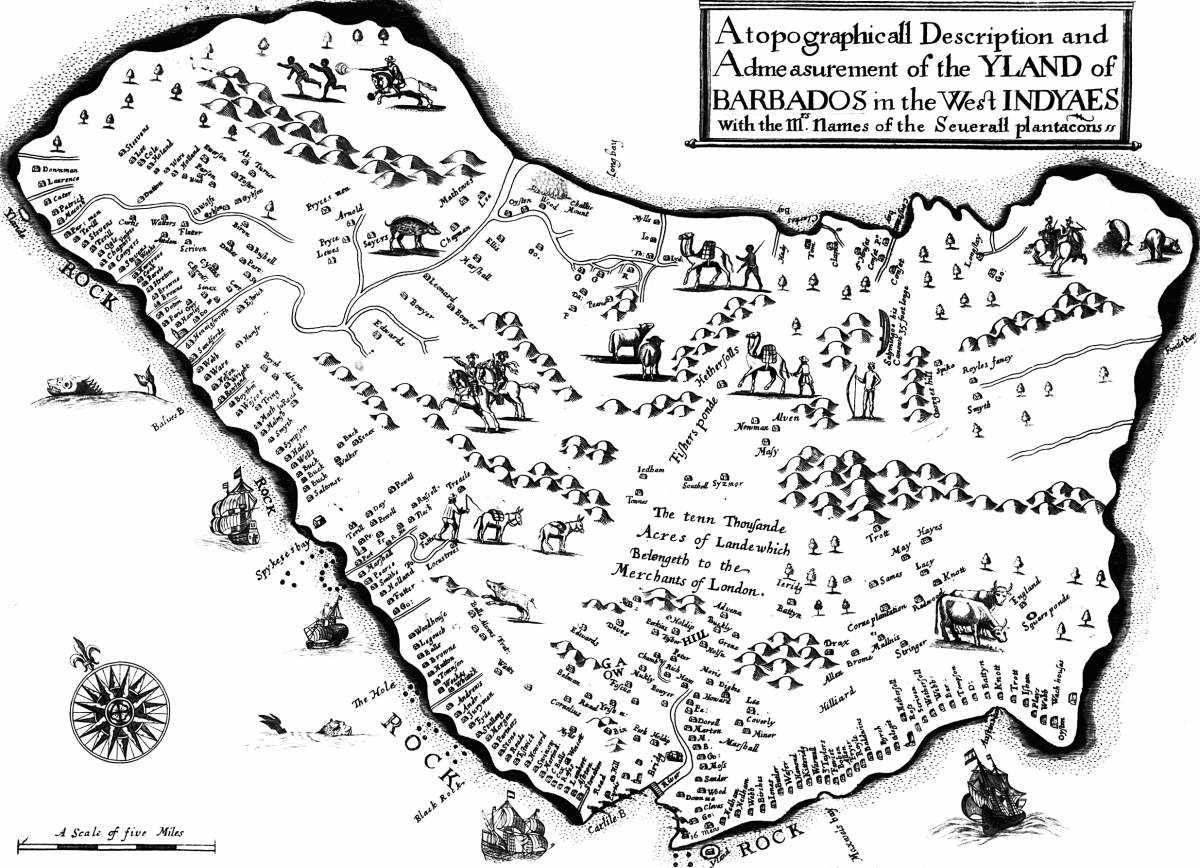
barbadosmapA little over a year ago, I switched research interests from the study of eighteenth-century contraband trade between Jamaica and Cartagena de Indias to a comparative study of the codification of slave law in the greater Caribbean. Admittedly not too drastic of a change, I was nonetheless daunted by moving from a historiography containing a select number of significant works to a field where innumerable scholars have dedicated entire careers. Like any graduate student, I began working through the library stacks here at the College of William and Mary, seeking answers to what I thought would be easy questions: Were the legal regimes of European slave societies shaped by their interactions with other slave societies in the Caribbean? Were English slaveholding practices modeled off of successful Portuguese or Spanish examples? Why were there so many institutionalized efforts to codify slave law in the seventeenth century and did these separate legal dialogues unfold in conversation with one another? As you can probably guess, none of these questions have proven as easy to answer as I thought. Continue reading

Guest Post: Researching en Français: French Archives, and Why They’re Worth It for All Early Americanists

Hannah Bailey, a PhD candidate in History at the College of William & Mary, studies the interconnectivity between developing notions of race and the expansion of the African slave trade in the early modern French Atlantic. She graduated with honors from the University of Wisconsin-Madison in 2010, with degrees in History and French, and a minor in Gender and Women’s Studies. Her master’s thesis focused on how women like Eliza Jaquelin Ambler Brent Carrington remembered, defined, and recorded their experiences during the American Revolution for her master’s thesis. Her dissertation uses histories of West Africa written by individuals like Jean-Baptiste Labat to help explain why, in early eighteenth-century accounts of the region, the fiction of African inferiority began to supersede the fact of African political and economic dominance on the West African coast.

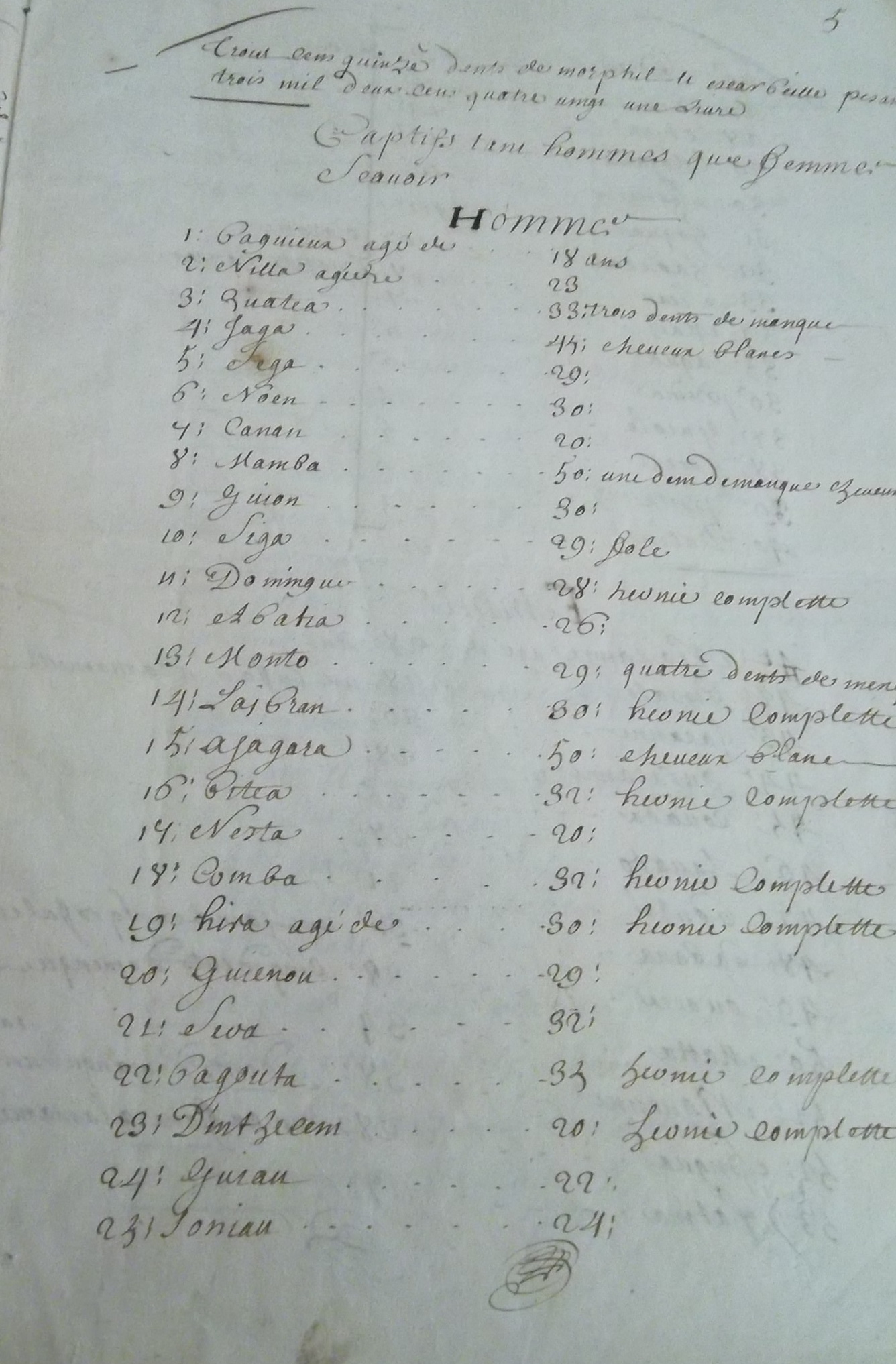
ANOMI never learned the verb “rebobiner” in any of my nine years’ worth of French courses. I don’t blame my French teachers or professors for this. Neither they nor I had any idea that it would one day become an integral part of my vocabulary as I commenced my dissertation research in the Archives Nationales d’Outre-mer in Aix-en-Provence, France. As it happens, “rebobiner” means “to rewind the bobbin of microfilm that you spent twelve minutes learning how to load onto the microfilm reader, because microfilm is always complicated and is triply so when the directions are in a foreign language,” or…something like that. Despite my attempts to prepare myself for my time in the French archives, I experienced more “trials by fire” than I might care to admit. All of my listening to French radio, reading complex French secondary sources, and frantic scouring of French online archival inventories only got me so far. Despite the best efforts of the kindest and most helpful archival staff I’ve yet encountered, I often had to learn by doing, and that wasn’t always easy. It was, however, always worth it. Continue reading

Guest Post: American and Scottish Independence: Hearts and Minds

Simon Newman is Sir Denis Brogan Professor of American History at the University of Glasgow. His most recent book, A New World of Labor: The Development of Plantation Slavery in the British Atlantic, was published by the University of Pennsylvania Press in 2013. In this guest post, Newman draws parallels between the American campaign for independence in the 1770s, and the current campaign for Scottish independence.

On September 18th millions of voters in Scotland will head to the polls to answer a simple question: “Should Scotland be an independent country?” As an historian of the American Revolution living and working in Scotland I am struck by the parallels not just between the two movements for independence, but more significantly between the ways in which the British government in the eighteenth century and the UK government in the twenty-first century have challenged those who sought and seek independence. Continue reading
Guest Post: The Value of Storytelling

We’re thrilled to welcome as our latest guest poster, Casey Schmitt. Casey is a PhD candidate in History at the College of William & Mary, where she is writing a dissertation on the Iberian roots of seventeenth-century Anglo-American slave law under the supervision of Brett Rushforth. Casey holds an MA in history from the University of Utah, where she wrote an excellent thesis on the British Asiento, illicit trade, and the limits of empire in the eighteenth-century Caribbean. Her teaching and research interests center on the inter-imperial nature of the early modern Americas.

As a newly-minted ABD embarking on my first stab at teaching the early American history survey, I find myself buried beneath my own excitement for the material. No one warned me that the biggest obstacle to designing a course would be curbing my own unrelenting enthusiasm. Perhaps no part of that enthusiasm has proven more damaging to my syllabus than my passion for storytelling. Specifically, I approached teaching the early America survey with a litany of historical works of fiction and non-fiction that I wanted to familiarize undergraduates with: 12 Years a Slave, Benito Cereno, Poor Richard’s Almanac, Letters From an American Farmer, among many, many other titles. Before too long I was looking at a weekly reading word count over 150 pages. Yikes. Continue reading
Guest Post: Lowell & the Executive

Today’s guest post is from Lindsay Schakenbach, a Ph.D. candidate in history at Brown University. Her dissertation,  “Manufacturing Advantage: War, the State, and the Origins of American Industry 1790-1840,” explores the development of the arms and textile industries in the context of national security, diplomacy, and territorial expansion.

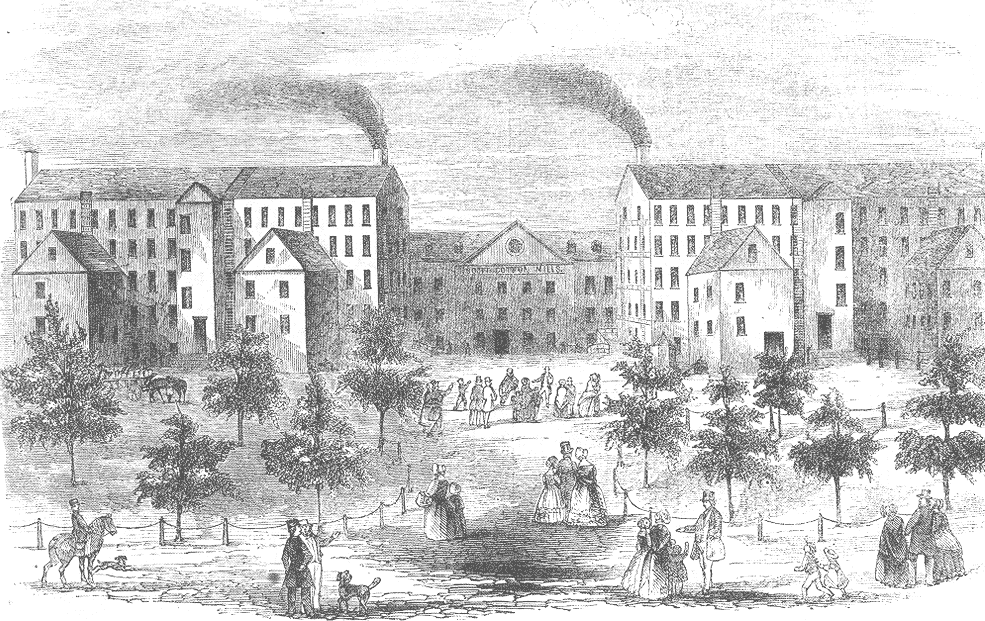
lowellLook through any opinion section of The Wall Street Journal and you’ll almost certainly find condemnations of government intervention in business or a lambasting of the inefficiencies of bureaucratic meddling. Too much government, these commentators say, is bad for the economy. A reexamination of America’s origins as an industrial superpower, however, suggests a different mantra. Take the founding of Lowell, Massachusetts, for example. Even if we debate the birthplace of the American Industrial Revolution–Pawtucket, Rhode Island?, Patterson, New Jersey?–the fact remains that Lowell was the site of the first large-scale integrated factory system in the United States and stands as a symbol of the birth of industrial capitalism. And its rise to prominence depended on federal meddling. Continue reading

Guest Post: “A Display of Folly and Show”: Joseph Smith’s Impressions of Congress

Today’s guest poster, Spencer McBride, received his PhD at Louisiana State University in 2014 and is now a historian and documentary editor at the Joseph Smith Papers.  His research examines the politicization of clergymen during the American Revolution and in the early American republic.

JS uniformIn my work at The Joseph Smith Papers, I have recently been examining dozens of documents surrounding the trip Joseph Smith made to Washington D.C. in 1839. As I have prepared these documents for publication in one of the project’s future volumes, they have drawn my mind to the way men and women living in rural America during the nineteenth century perceived the federal government and what they thought occurred in its different branches. Though Smith’s experience in this regard is but one example, I think that it is a telling one. Continue reading