Vaughn Scribner is a Visiting Assistant Professor at the University of Central Arkansas. He has published on topics ranging from early American tavern culture to the commodification of slaves in Tidewater Virginia, and also has a forthcoming article on early American mineral springs and spas. His book manuscript (in progress), Beyond Bacchus: Colonial Taverns and the Golden Age of the British Empire in America utilizes the colonial tavern space to realize how urban colonists realized the full potential of the British Empire in America from 1744 to 1765. He is also currently researching for an article on early modern conceptions of mermaids and tritons. For more info or to contact Vaughn, please visit www.vaughnscribner.com.
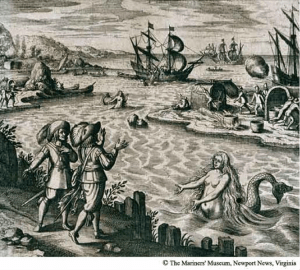
Figure 1: “Captain Hailborne at St. Johns Newfoundland, 1655,” from Ludwig Gottfriedt, Newe Welt und Americanische Historien (Frankfurt/ Bey denen Merianischen Erben, 1655). The Mariners’ Museum.
I originally planned for this piece to be a brief investigation into a number of articles that appeared in the Gentleman’s Magazine from 1750 to 1775. The articles, it must be added, consisted of in-depth analysis of mermen and mermaids. Yes, a number of early modern Britons—ranging from Cotton Mather to Benjamin Franklin—entertained, if not believed in, the existence of merfolk.[1] A deeper analysis of early modern conceptions of mermen and mermaids, my article would propose, provide a more nuanced understanding of Britons’ imperial imaginations. But that will have to wait, because my research for this piece led me down a different path that was both extremely frustrating and, ultimately, quite enlightening. Continue reading →
 In recent years, early American political history has received considerable attention. A range of historians have enriched our understanding of how Americans participated in and contributed to politics in the early republic.[1] Popular politics during the colonial period has received less attention.[2] But in Governed by a Spirit of Opposition, part of Studies in Early American Economy and Society from the Library Company of Philadelphia, Jessica Choppin Roney focuses on politics in Philadelphia prior to the American Revolution. In so doing, she makes an important contribution to the field of early American history. Continue reading
  I’m grateful to The Junto blog for inviting me to discuss how to publish a journal article. Although the views that follow are my own and the details of the process vary somewhat from journal to journal, I know from conversations with other editors that there is consensus on the essentials.
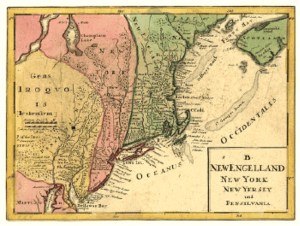 States’ rights looms large in discussions of both historical and contemporary American politics and its federal union. For good reason, the ante-bellum states’ rights movement of the South is often the first to come to mind, but such a narrow focus does not do justice to the topic as a dynamic historical phenomenon, nor does it provide adequate context for the more modern manifestations of states’ rights movements. In the early republic, New Englanders promoted their own brand of states’ rights, to protect a type of near-sovereignty they attributed to their legislatures, as the best way to promote their interests and shield individuals from distant oppression.
 Historical knowledge plays an important role in the international business field. Ironically, as programs in the humanities are forced to justify their relevance to administrators, elected officials, and the general public, we, as a society, are in need of those fields’ contributions to creating the desired “global citizen.”
 Almost all university presses prefer to first receive a proposal from a potential author, rather than a full manuscript. Alas, no editor anywhere has the time to read the huge number of manuscripts that come our way, and the situation would be even worse if we attempted to read manuscripts from every potential author seeking a publisher. This makes the proposal an ideal introduction to a topic and a crucial step in the process towards publication. Although an author may have chatted with an editor prior to submitting a proposal (if not then I urge you to get to an academic conference and chat up editors in the exhibit hall), the proposal is the first formal representation of a book project from the author to the publisher.
  Abigail Swingen is an Assistant Professor of History at Texas Tech University (Lubbock, TX). She received her Ph.D. in History from the University of Chicago. She specializes in the Early Modern British Atlantic Political Economy. Competing Visions of Empire is her first book and was reviewed here yesterday. The following is part of our (relatively) new tradition of reviewing a book and then offering a Q & A with the author the following day. [NB: You can find my review from yesterday

 The Junto