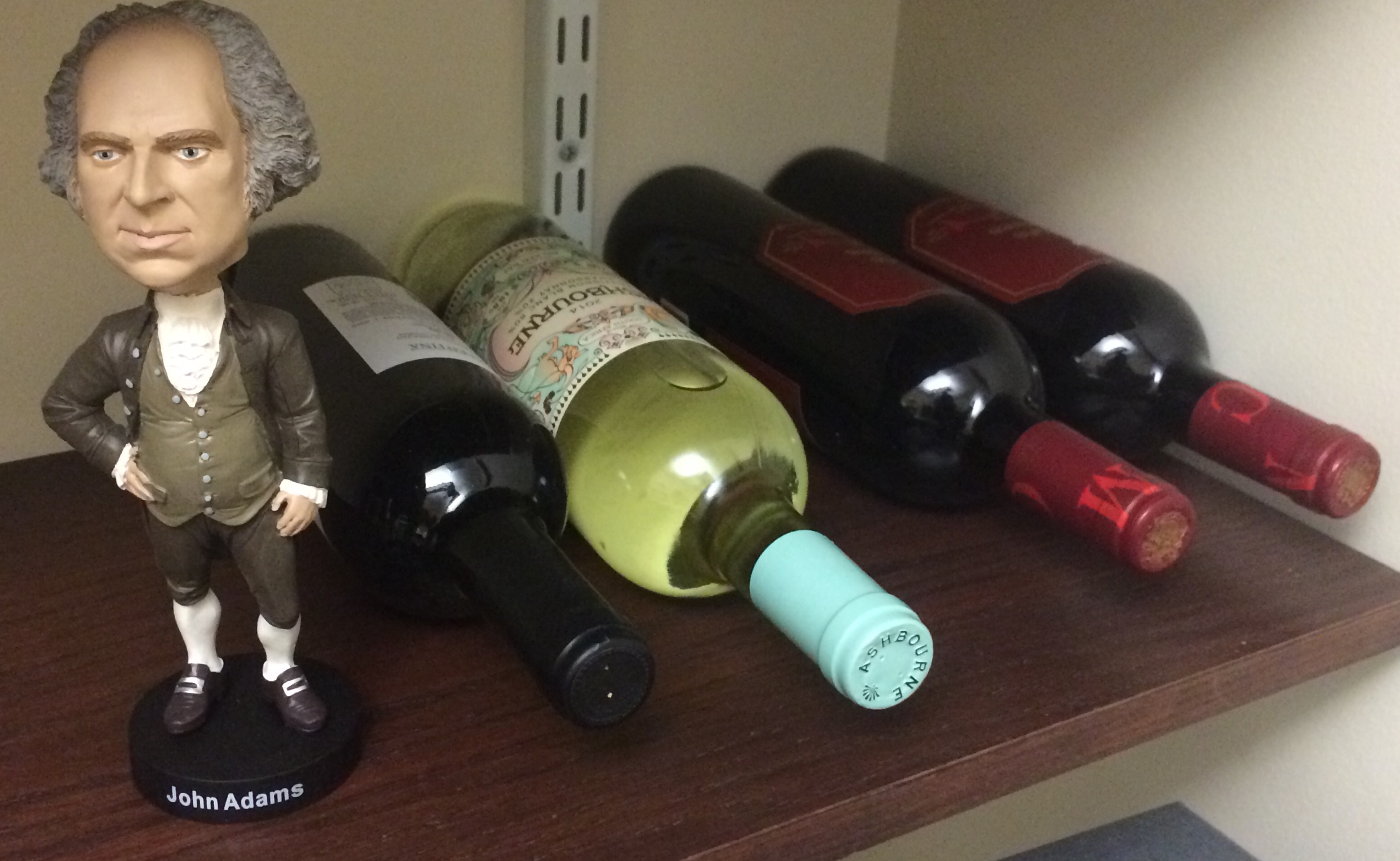
 Happy 280th birthday to President John Adams: lawyer, statesman, and…wine connoisseur? He began a crisp New England morning like today with a tankard of hard cider, but Adams’ years in Europe primed his palate for fine French wine. Continue reading
Category Archives: Uncategorized
The Junto Goes to Washington: #USIH15 Preview
 Well, we kinda asked for it, and our good colleagues at the U.S. Society for Intellectual Society heard us. When their annual conference gets underway this evening in Washington, D.C., several Junto bloggers will be there, joining other early Americanists in bringing some new research questions to the table. (For the details of the two Junto-sponsored panels this weekend, look below the fold.) We look forward to hearing all the intellectual history that we can, from a keynote by Corey Robin to diverse plenary sessions featuring Russell Jacoby, Archivist of the United States David Ferriero, Smithsonian curators, and a host more of thinkers and their publics. See you in D.C.! Continue reading
Legal Professionalization and the American Revolution
 John Adams thought that James Otis set the whole American Revolution in motion in 1761. Otis’ argument against writs of assistance, in a legal case that year, Adams wrote, “was the first scene of the first Act of opposition to the Arbitrary claims of Great Britain. Then and there the Child Independence was born.”[1] Of course, Adams also though that July 2nd would be the most famous date in history. So forgive me for at least questioning Adams’ view that the “Writs of Assistance Case” basically jumpstarted the Revolution. That said, I do think the evidence base for the “Writs of Assistance Case” suggests that it was a major turning point in the development of the colonial legal profession. Picking up on themes in yesterday’s guest post by Craig Hanlon, the case may help make sense of the connections between legal professionalization and the American Revolution. Continue reading
When Sources Talk Back
How do we select the sources we use? How do we approach those sources once we’ve selected them? What does that process do to the stories we eventually tell about the past? And, what happens when our sources disagree with the choices we’ve made?
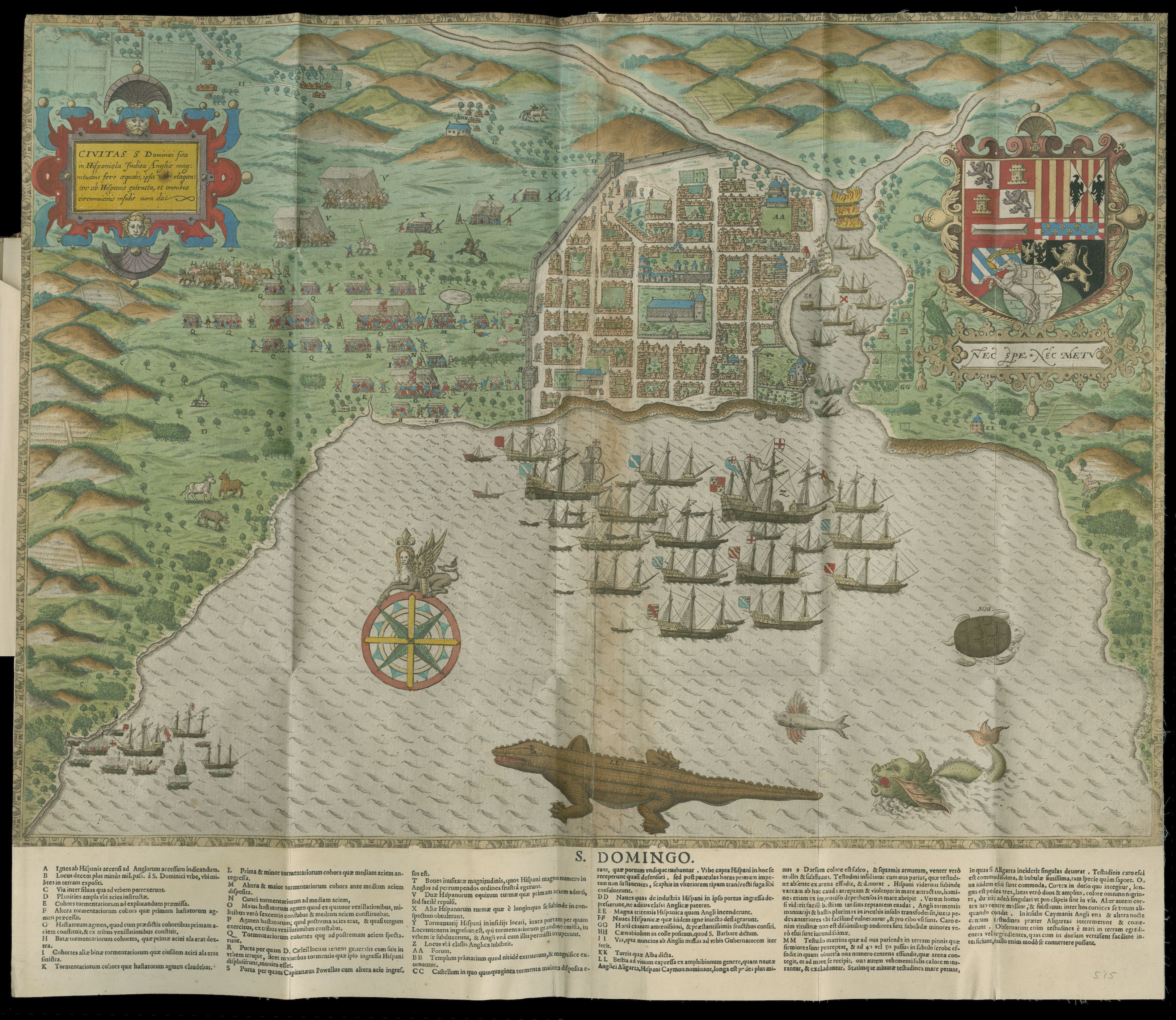
That last question is one that historians working on the early modern period rarely have to grapple with – after all, the individuals who wrote the letters, manuscripts, and account books that we read have been dead for a very long time. And, it is an issue that I’ve blithely ignored until I read Manuel Gonzalez Pallano Tinoco’s “Narrative of the Invasion of La Española, Santo Domingo, which the English Attempted in 1655.” It is near the end of Captain Tinoco’s detailed description of the failed English invasion of Spanish Santo Domingo that this long-deceased chronicler called out future historians who would use his narrative on any but his own terms. And, his reasoning was compelling enough to make me question my own methodology in using his history in my work. Continue reading
Junto March Madness: Elite Eight Voting
 We’re getting close to the finals here at The Junto. Elite Eight voting starts AND ends today at 5 p.m. EST. We’ll post results tomorrow and give you the weekend to mull over your final four choices.
Junto March Madness: Round 3 Results
So, there were quite a few close races this round, including one that came down to the last hour. (Literally!) CAN YOU FEEL THE MADNESS?!?!?!?!!!11?!?!
Jonathan Edwards and Thomas Paine clutched victory from the jaws of defeat by the slightest of margins. Benjamin Franklin is basically looking like this. And Harriet Jacobs and Frederick Douglass are heading for a slave narrative showdown.
There is a quick turnaround this week, so you have little time to catch your breath. Voting for the Elite Eight is tomorrow. Continue reading
The Week in Early American History
 Happy Sunday, and welcome to another edition of The Week in Early American History. Here at the Junto, we’re gearing up for the Sweet Sixteen beginning tomorrow (since Villanova, Iowa State, and Baylor have basically thwarted our brackets for that “other” March Madness). Here for your enjoyment before you get distracted by basketball (or by trying to avoid basketball), are today’s links.
Winter Reads
Just in time for your holiday shopping list, here’s our preview of new titles—share your finds in the comments! Continue reading
The Week in Early American History
The past week has brought a number of fascinating developments in the world of academe and early America. But I think by far the most exciting has been the arrival in mailboxes around the country of the Fall 2014 issue of Early American Studies—a special edition dedicated to “Critical Approaches to Sex and Gender in Early America.” The articles are rich, creative, and surprising; I haven’t been able to put the issue down. If you’ve not gotten around to reading it yet, head on over to Project Muse and enjoy. In case you have already savored the new EAS issue, though, here’s your weekly roundup of noteworthy online happenings to bide you through a crisp fall Sunday. Continue reading
Junto March Madness 2014: Championship Game!
It started off with 64… now only 2 remain. It’s the day you’ve been waiting for—the time when the ultimate champion of Junto March Madness will be decided. Strong challengers have fallen by the wayside; now your votes will decide who walks away with the fame, fortune and accolades for being recognized as the best early American history book since 2000. Final Four results, and the final poll, all after the jump!


