
We are down to the Elite Eight. See the results and updated bracket below and then vote for your favorites of the eight books left standing.
We are down to the Elite Eight. See the results and updated bracket below and then vote for your favorites of the eight books left standing.
 The Round of 32 voting is completed and we have out Sweet Sixteen match-ups. See the bracket below for results. Below that, begin voting for the next round. Voting for the Round of 16 will conclude Thursday, March 23rd at 5pm EST. Results and the Round of 8 match-ups will be posted on the morning of Friday, March 24th. Happy voting!

 Welcome one and all to the 5th annual Junto March Madness (#JMM17). This year’s tournament will cover books in early American history (broadly defined) published since 2014. There are, however, a few key differences from past years. First, this year’s tournament will feature 32 books rather than 64. Moreover, we have decided to forego the open nomination process. The 32 works in the bracket below were selected by the 25 members of the blog. Before voting begins, let me also offer our usual disclaimer: JMM is meant to be fun and to expose more people to excellent recent scholarship on early America. It is not meant to determine the “best” book on early American history since 2014 but to show the favorites of our readers. As always, we encourage participants to use both the comments here on the blog and our hashtag (#JMM17) to discuss these works. With that out of the way, here is this year’s bracket (click for full-size): Continue reading
 Following up on Jonathan Wilson’s review of Spencer McBride’s Pulpit and Nation: Clergymen and the Politics of Revolutionary America (Charlottesville: University of Virginia Press, 2017), we’re pleased today to post this Q&A with Spencer about his book and his future research. McBride is a historian and documentary editor at The Joseph Smith Papers. He earned a Ph.D. in History at Louisiana State University, and is currently working on several book projects, which you can read about more here. Continue reading

 The relationship between Christianity and the American founding is a topic of obvious contemporary political relevance in the United States. It is also a field in which historians during the last few years have labored with great energy.[1] In Pulpit and Nation: Clergymen and the Politics of Revolutionary America, Spencer McBride adds to that labor with a book that is—at first glance—less politically charged than some other contributions have been. Yet Pulpit and Nation advances what may be a subversive claim. Continue reading
Guest poster Evelyne Martial is a retired attorney. She received her JD from the Cincinnati College of Law. She is currently enrolled in the Gender and Cultural Studies Program at Simmons College.
E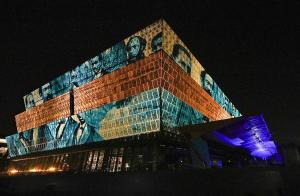 arly on a cold, frigid morning in Washington, D.C., my husband and I stood at the tail end of a long, winding line to get into the Museum of African American History and Culture. It was too cold to walk around to view the architecture so we hustled over to the entry line as soon as we exited the cab. As we waited, clutching our prized full-page sized passes, we watched a line of yellow school buses deposit kids from elementary, middle, and high schools into the bright frigid air. Their peals of laughter and rambunctious playfulness resisted the cold air. Their faces, hues of browns and tans bundled in colorful puff jackets, were filled with excitement. In line, a group of about six or seven women of African descent stood behind us. This group was from Los Angeles, California and had centered their annual get together around the visit to the Museum. They also were uncomfortably cold yet visibly excited about being here, particularly at this moment of our political lives. I wanted to find out more about them, but because it was so cold or the line was already so long at 10:00 a.m., the Museum staff diverted half of our line to another entryway. We lost contact with them and the children as we sped down the plaza to a much shorter line and before we knew it we were inside the Museum. Continue reading
 Comps, orals, qualifying exams…no matter what you call them, they are a source of angst for many (US) PhD students. Expectations can vary from one department to the next. Some programs have set reading lists, and a process that takes much of the guess work out of preparing for these exams. Other programs expect the student examinee to take a more proactive role. The advice herein is not exhaustive, but is geared primarily towards students who in this later situation. As you prepare, remember that thousands of PhDs have successfully passed through this process, and you can too. You just need to put in the work. Continue reading
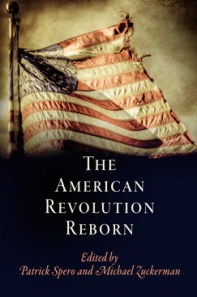 Following on from yesterday’s review of The American Revolution Reborn, The Junto was fortunate enough to get to ask a few questions of the volume’s editors. Both Patrick Spero, Librarian of the American Philosophical Society, and Michael Zuckerman, Professor of History Emeritus at the University of Pennsylvania, were instrumental in organizing the highly successful conference that led to the volume. In the Q&A below, the organizers/editors reflect back on both the conference and the volume, their effect on their own views of the Revolution, and their hopes for the legacy of both the conference and the volume. The Q&A is published here in its entirety. Continue reading
 Between May 30 and June 1, 2013, hundreds of historians, teachers, and students came together in Philadelphia to discuss twenty-first-century perspectives on the American Revolution at a landmark conference, “The American Revolution Reborn.” That conference, which received and receives regular shout-outs here at The Junto, forms the basis for The American Revolution Reborn, an edited collection of essays designed to “upset the patterns of history inquiry that have defined scholarship for the past generation” (3). Much like The Oxford Handbook on the American Revolution (New York: Oxford University Press, 2012), The American Revolution Reborn seeks to regenerate interest in the Revolution with “new perspectives” that, the editors and contributors hope, “will produce new interpretations of the past that move our understanding forward in new directions” (5). Continue reading

Guest reviewer Adam Pratt is an assistant professor at the University of Scranton. His current manuscript project is titled “The White Man’s Chance: Race and Politics in Pre-Removal Georgia.” He can be reached at adam.pratt@scranton.edu.
 Guns are ever-present in American life. Gun culture, though frequently ridiculed by opponents for its fetishization of firearms, is inescapable in the 21st century. Visual media demonstrates the logical outcome of an individual’s unfettered right to bear arms. AMC’s The Walking Dead places gun violence at the heart of its dystopian, zombie-plagued world, while Zombieland normalized the double-tap, or, the necessity of shooting the undead in the head twice to ensure further reanimation. Although recent Supreme Court decisions have fundamentally altered how most Americans understand the Second Amendment, these legal changes followed a larger, more fundamental shift. Indeed, if the crooning of Johnny Cash in 1958, entreating his listeners to leave their guns at home, did not convince Americans, then what chance do well-reasoned, logical arguments have?
 The Junto