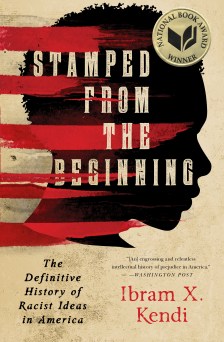
 Today, we are pleased to offer an interview with Dr. Ibram Kendi on his National Book Award winner, Stamped from the Beginning: the Definitive History of Racist Ideas. Kendi is an Assistant Professor of African-American History at the University of Florida, and Associate Editor of the African-American Intellectual History Society blog. You can find his blog posts here. Continue reading
Guest Post: Dr. Strangehonor, Or: How I Learned to Stop Worrying and Love Snapchat
Today’s guest post is by Honor Sachs, an assistant professor of history at Western Carolina University and author of Home Rule: Households, Manhood, and National Expansion on the Eighteenth-Century Kentucky Frontier.
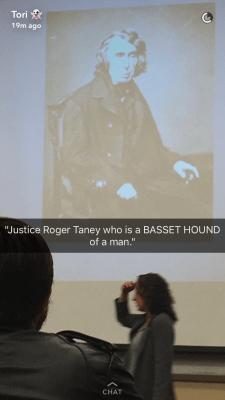 Several years ago, I attended a seminar on digital pedagogy. I thought it might be worthwhile to explore new opportunities out there for social media in the classroom. It was indeed an eye-opening experience, though not in the way I had hoped. Seminar leaders regaled us with software package after software package filled with whistles, bells, alerts, gimmicks, everything, they claimed, one would need to connect with this generation of “digital natives” (their term, not mine.) Students these days spend so much time on social media, they claimed, that faculty need to learn to connect with them online in order to really engage. “Here’s a program that allows you to text your students!” “Here’s another that allows you to collect data on how much time your students spend on homework!” “Here’s a program where you can instant message your student and remind them to study!” Continue reading
America, the Series?
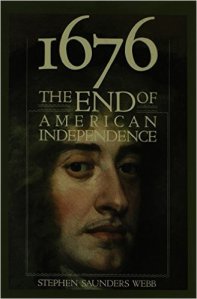 It took me a few days to realise my mistake. Around the third week of the semester, in this my first year teaching the “Foundations of American History” survey course here at Birmingham, I slipped up in a way I’d never have imagined. I was lecturing about Bacon’s Rebellion, and about Stephen Saunders Webb’s provocative, half-mad 1676: The End of American Independence. I found it odd that my students didn’t seem to see what was so funny, or at least glib, about Webb’s title. Those blank looks spooked me. So I said, “well, you know guys, because, 1776, right? That’s… when the Americans declared independence? Remember?” Continue reading
J. K. Rowling, History, and Revisionism

Source: allnightavenue on Flickr
I feel like I’m writing more than a few pieces lately that start with “I love [X], BUT . . .” and apparently today is no different. I’ll just come out and say it: I love Harry Potter, but I have trouble with J. K. Rowling’s treatment of history. Harry Potter was immensely important to my young adulthood. I read the books as a teenager, went to more than one midnight movie release, bought and consumed Bertie Bott’s Every Flavour Bean, and dressed as a character from the books for Halloween.[1] I tend to re-read the novels once a year, when I’m looking for ways to improve my ability to tell a story. I wasn’t a historian when I first started reading the books, so I didn’t look too critically at Rowling’s characterizations of history and historians. Now that I am a historian, I’ve come to the conclusion that although Rowling’s portrayal of our discipline is wrong, her depiction of the wizarding world’s past—and how people interpret and at times attempt to change and revise it—is much more in keeping with the task that muggle historians daily confront. Continue reading
Guest Post: “Have You Read this?:” Teaching About Early Republic Print Culture with Hamilton
We are pleased to share this guest post from Michelle Orihel, an Assistant Professor of History at Southern Utah University. Dr. Orihel received her doctorate from Syracuse University and is currently working on a book manuscript about Democratic-Republican Societies in the post-revolutionary period.
 Last spring, I blogged about how I used the song “Farmer Refuted” from Hamilton: An American Musical to teach about the pamphlet wars of the American Revolution.[1] But, that’s not the only song about pamphlets in the musical. There’s also “The Reynolds Pamphlet,” named after the sensational tract published in 1797 in which Alexander Hamilton confessed to adultery.[2]
Identity and the Founders: A Response to Mark Lilla

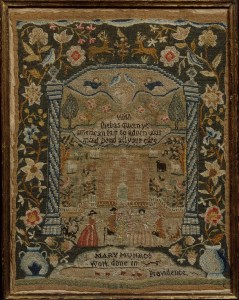 This weekend, Mark Lilla, a historian of ideas at Columbia University, published a New York Times op-ed on “identity liberalism.” Reacting to the outcome of the presidential election, Lilla argues that contemporary American liberalism’s celebration of diversity, however morally salutary in private life, has been politically suicidal at the national level. “National politics in healthy periods is not about ‘difference,'” Lilla writes; “it is about commonality. And it will be dominated by whoever best captures Americans’ imaginations about our shared destiny.”
Lilla’s argument is a response—one of several possible responses—to what I see as a real problem. In contemporary America, demands for inclusion, equality, and dignity often seem to be made in the name of particular groups rather than in the name of the common good. Whether this perception is accurate is another matter. I won’t address that complicated question here. But Lilla’s perspective on early American history warrants a critical response.
Lies and Half Truths in the Archives
 As a historian of piracy, I suppose it was inevitable that my research summaries would end up reading like bad monologues for a late night comedy act. Like this tidbit from the Archivo General de Indias in Sevilla: “1618 four Frenchmen appeared before the governor of Santo Domingo accused of piracy by the Spanish patrolmen who caught them on the island’s coast. The governor interrogates the four men through a translator. One of the men admits that, to survive, they occasionally went pirating on the high seas, but that they never stole anything from the Spanish. The governor then asks him where they got their ship, to which the men admit that they may have stolen one thing from the Spanish.” Ba dum tsshhh, cue the rimshot and laughter from my friends as I relate the story over beers later that evening. Continue reading
An Interview with Ann Little
 Today at The Junto we’re featuring an interview with Ann Little, an Associate Professor of History at Colorado State University, about her new biography, The Many Captivities of Esther Wheelwright. Little has previously authored Abraham in Arms: War and Gender in Colonial New England. She also writes regularly at her blog, Historiann: History and Sexual Politics, 1492 to Present.
In The Many Captivities of Esther Wheelwright, Little chronicles the life of a New England girl, Esther Wheelwright, who was captured by the Wabanakis in 1703 when she was seven years old. After living with the Wabenakis for several years, Wheelwright entered an Ursuline convent in Quebec at age twelve. She lived the remainder of her life there, voluntarily becoming a nun and taking on several leadership positions in the convent, including that of Mother Superior, during old age. Continue reading
Steamboats and Teaching Tech
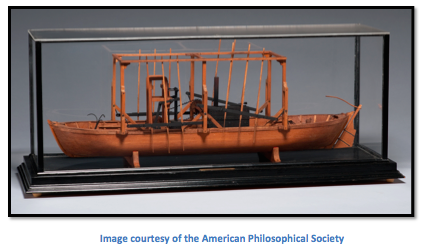 Steamboats are ready for a comeback. A pedagogical one, that is. While in all likelihood the steamboat’s time as a common form of transportation in the United States is finished, over the past several weeks I’ve noticed subtle mentions in a seminar paper, a museum display, comments during last month’s PEAES conference, and only once, I should add, did I bring them up! This may be in part due to my increasing interest in them as a pivotal subject in the history of Anglo-American intellectual property. Yet I don’t think this is entirely an instance of frequency illusion but rather indicates that while steamboats are no longer an effective mode of movement, they are very effective as an illustrative one, particularly when trying to flesh out broader themes in the political economy of the Early Republic. Continue reading
“Daddy” Schuyler, Hamilton, and the Dakota Access Pipeline
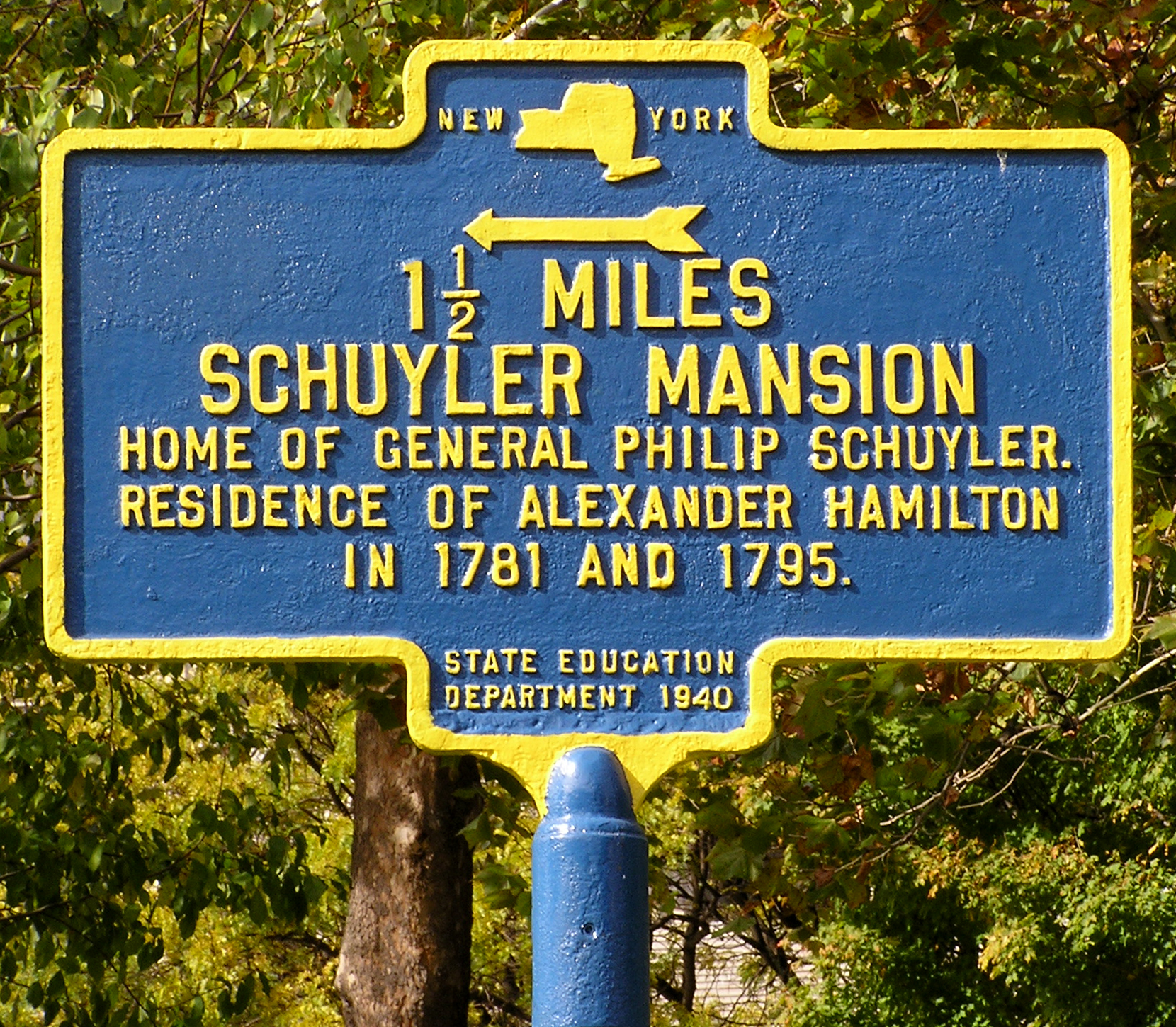
Three things happened in the last couple weeks to put Hamilton back on my mind: 1) the Victoria Palace Theatre in London announced that tickets for the show would finally (finally!) go on sale in January, 2) I started re-reading some of my research notes for this round of book edits, and 3) police arrested and pepper-sprayed peaceful Native Americans—Standing Rock Sioux, along with 90 additional nations and tribes—who were protesting the construction of the Dakota Access Pipeline.[1] I find that being a historian is a job of intellectual mood swings. I read my sources telling me about the horrible things some of the people I study did in the past, and then I have to pull back and contextualize their actions within an eighteenth-century milieu in which many people were terrible people most of the time by 2016’s standards (and people, our standards these days are low). All this is a longish way of saying that I, like many historians, love Hamilton while recognizing that its treatment of Early Republic history misrepresents and sometimes leaves out some of the topics that matter most to me as a historian. And so today I want to talk about Hamilton, settler colonialism, and Native American history—in particular, about land battles and the relationship between Indians, federal governments, and state entities. Continue reading
 The Junto