This week is Academic Book Week—“A celebration of the diversity, innovation and influence of academic books.” There are events, special promotions, and competitions running in Britain between November 9 and 16, 2015. Perhaps the most provocative and interesting competition #AcBookWeek is running is a public vote on “the academic book that has most changed the world.” The entrants include Mary Wollstonecraft’s A Vindication of the Rights of Women, George Orwell’s Nineteen Eighty-Four, E. P. Thompson’s The Making of the English Working Class, and Thomas Paine’s The Rights of Man. There are sixteen other entries, which are equally wide-ranging.[1] Although the list makes for interesting reading, voting is closed. But do not fret, Junto readers, we are running a roundtable on a similar, yet distinct, topic. This week, several Juntoists will discuss an academic book that has shaped their work. Continue reading
Guest Post: Revisiting Women of the Republic with Linda Kerber at the American Antiquarian Society
Carl Robert Keyes is an Associate Professor of History at Assumption College in Worcester, Massachusetts. He recently launched the #Adverts250 Project, featuring advertisements published 250 years ago in colonial American newspapers accompanied by brief commentary, via his Twitter profile (@TradeCardCarl).
My Revolutionary America class recently visited the American Antiquarian Society for a behind-the-scenes tour followed by a document workshop in the Council Room. As we passed through the closed stacks I remarked to one of the curators, “This still blows me away, yet nothing can compare to the first time I came back here. Taking this all in for the first time is an experience that cannot be re-created.”
Guest Post: Correcting an Incorrect “Corrective”
Edward E. Baptist is the author of The Half Has Never Been Told: Slavery and the Making of American Capitalism. He would like to “thank Joshua Rothman, Jefferson Cowie, Louis Hyman, and David Silbey for advice on this piece of writing, and The Junto for letting me publish in their space.”
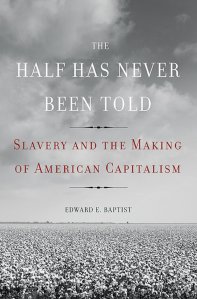
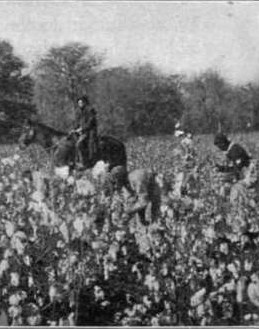
How was an immense increase in the “efficiency” of cotton production achieved in the nineteenth century? The question cuts to the heart of the debates over the history of U.S. slavery.
Last week, The Junto linked to sociologist John Clegg’s review in Critical Historical Studies, which considered several recent books on slavery and capitalism. This blog reported Clegg’s take on The Half Has Never Been Told as a “corrective.” Clegg attacks my argument that intense coercion drove a 400% increase in the efficiency of cotton-picking slave labor in the U.S. South between 1800 and 1860. His critiques directly build on the work of economists Alan Olmstead and Paul Rhode. In a series of essays, they asserted that efficiency actually increased because of improved seeds. In a recent issue of the Journal of Economic History, Olmstead appears somewhat displeased that I disagree with their assertions. Continue reading
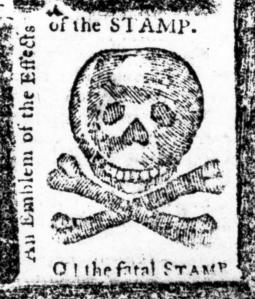
The Day the Presses Went Silent
250 years ago today, the Stamp Act was in legal effect throughout the British North American colonies—including not only the “Thirteen Colonies” but also British possessions in Canada and the West Indies. As those who study the American Revolution know, the matter was rather different when it came to the on-the-ground impact.
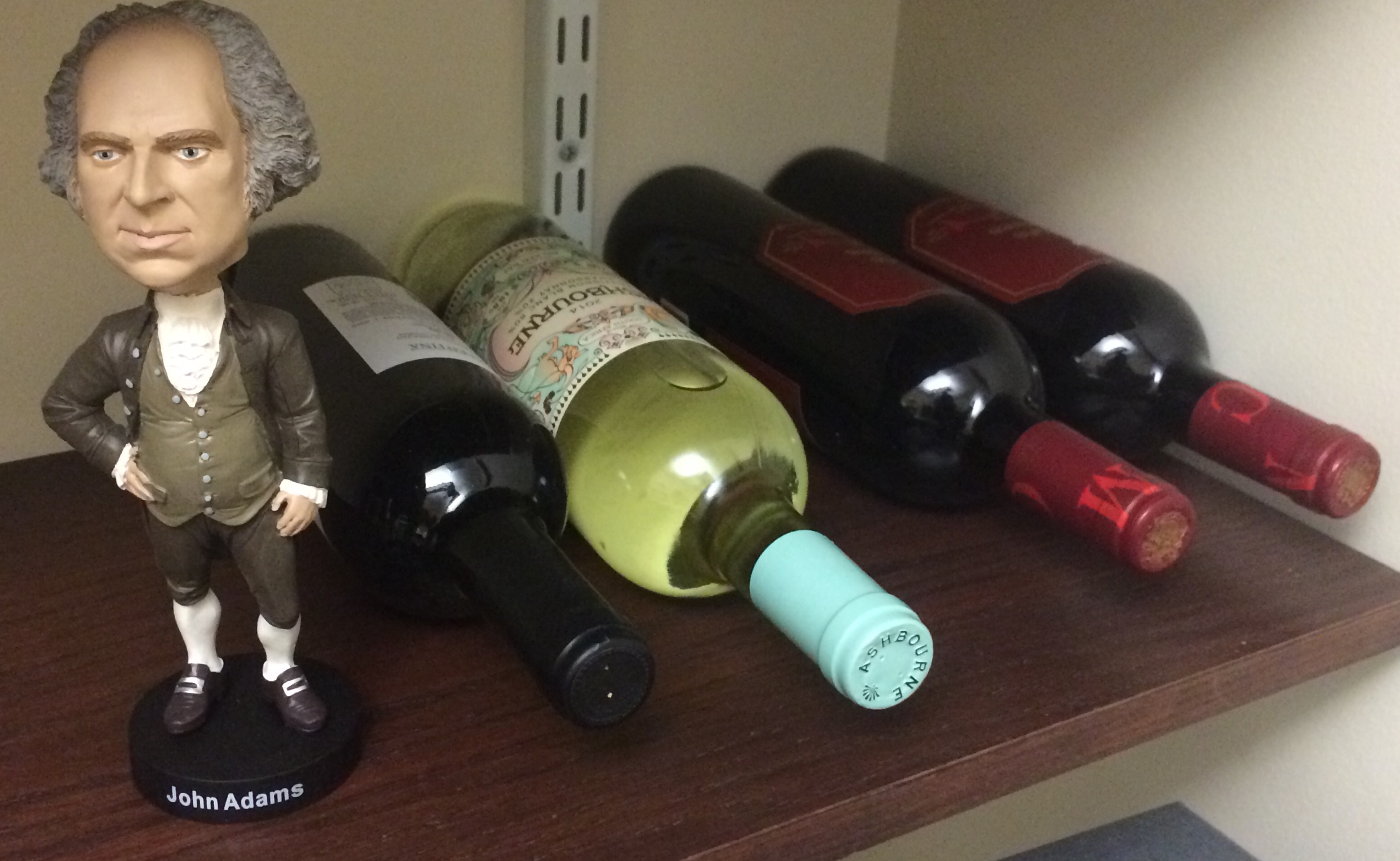
A Toast to John Adams
Happy 280th birthday to President John Adams: lawyer, statesman, and…wine connoisseur? He began a crisp New England morning like today with a tankard of hard cider, but Adams’ years in Europe primed his palate for fine French wine. Continue reading
Guest Post: The “Scotch War”: Scotophobia and the War of American Independence
Today’s post is a guest post from Tim Worth, a PhD candidate at the University of Southampton. His thesis examines transatlantic Scotophobia during the late eighteenth century, and how ideas of ethnicity affected British and American images of empire.

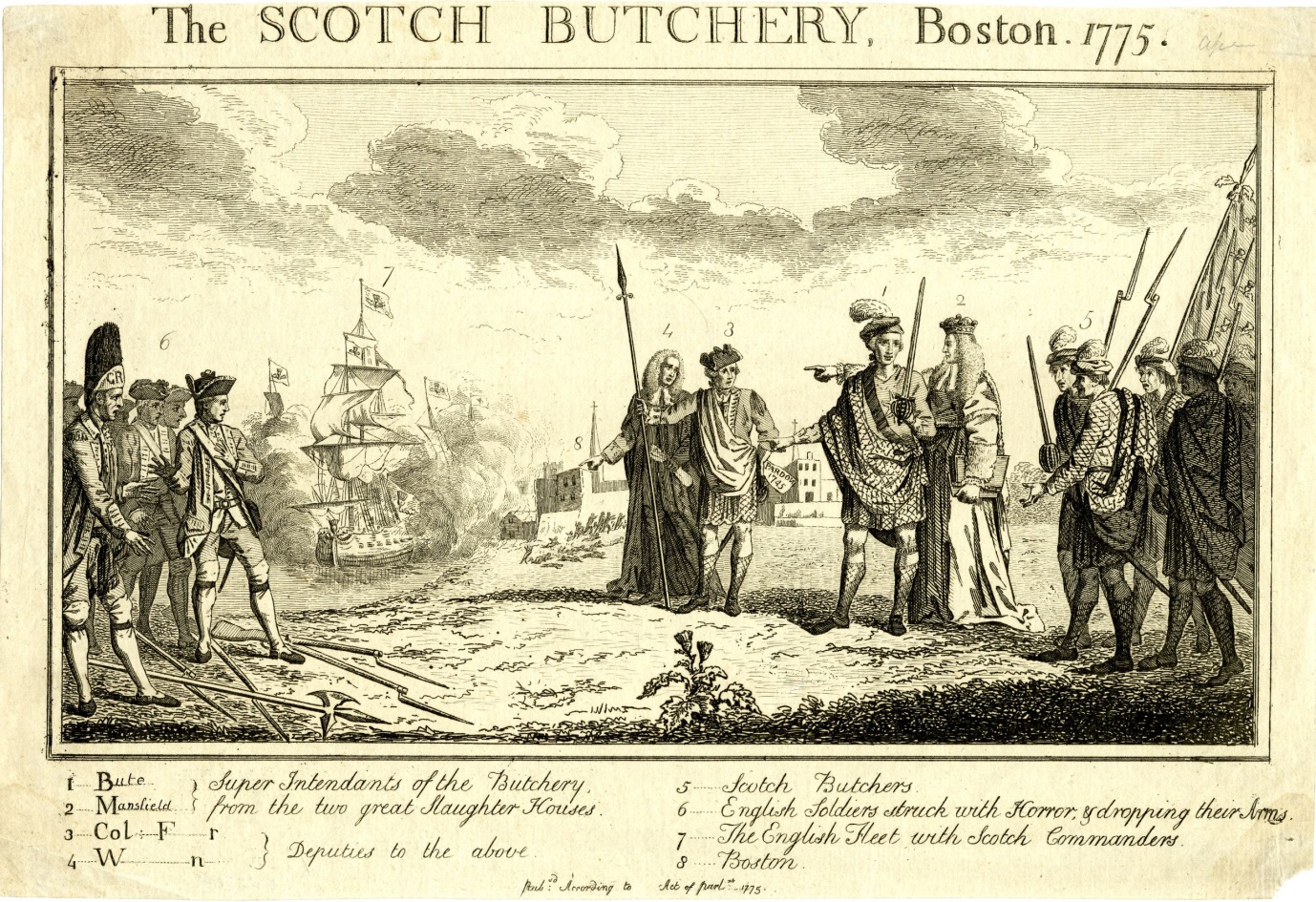
The Scotch Butchery, Boston 1775, (London, 1775). Lord Bute and the Scotch Junto instruct Highland soldiers to slaughter the inhabitants of Boston. On the left, a group of English riflemen drop their muskets in horror. © The Trustees of the British Museum.
Over the past couple of years I’ve followed the fascinating Junto debate about whether or not we can see the War of American Independence as a civil war. Tom Cutterham and Christopher F. Minty have both put forward some excellent arguments outlining the strengths and weaknesses of this model. Whether or not we should use the term “civil war,” a great many contemporary writers often described the conflict as a tragic war fought between Britons. Today, I want to add a little more to this debate by breaking these Britons down into their component parts, and briefly examining how popular attitudes towards one of the ethnic groups we’re left with, the Scots, affected English and American ideas of the war during its early years. Continue reading
Continuing the Debate on Slavery and Capitalism
It’s been two and a half years since the new history of capitalism marked its arrival with the full red carpet treatment in the New York Times. So it’s about time we saw some serious and constructive critiques of the project. Robin Blackburn’s lengthy review of Empire of Cotton goes some way to bringing that Bancroft-winner back down to earth, particularly by scrutinising the concept of “war capitalism.” But what I particularly want to share with Junto readers today is an article by the NYU sociologist John Clegg recently published in the Chicago-based journal, Critical Historical Studies. Continue reading
Guest Post: Emerging Histories of the French Atlantic
Robert Taber, a postdoctoral associate with the University of Florida Writing Program, wrote his dissertation on the connection between family life and grassroots politics in colonial Saint-Domingue and is the author of Navigating Haiti’s History: Saint-Domingue and the Haitian Revolution.
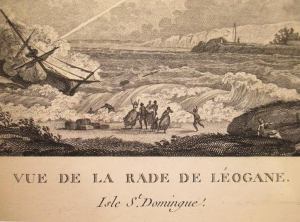
More than 30 scholars from three continents gathered at the Williamsburg Inn from October 16th through the 18th to present emerging histories of the French Atlantic. Sponsored by the Omohundro Institute, and made possible through considerable labor and financial investment, one hundred scholars were able to enjoy a great conference atmosphere. Three days of panels, workshops, and roundtables pushed for our collective knowledge of the French Atlantic to be wider, deeper, and better integrated, fulfilling a plan first sketched out in the summer of 2010.

Q&A: Cassandra Good, Author of Founding Friendships
In April, Tom Cutterham reviewed Cassandra Good’s new book, Founding Friendships: Friendships Between Women and Men in the Early American Republic (New York: Oxford University Press, 2015). Good received her PhD from the University of Pennsylvania and is now the Associate Editor of the Papers of James Monroe at the University of Mary Washington. Today, she speaks with The Junto about Founding Friendships and her next project.
Continue reading
The Junto Goes to Washington: #USIH15 Preview
Well, we kinda asked for it, and our good colleagues at the U.S. Society for Intellectual Society heard us. When their annual conference gets underway this evening in Washington, D.C., several Junto bloggers will be there, joining other early Americanists in bringing some new research questions to the table. (For the details of the two Junto-sponsored panels this weekend, look below the fold.) We look forward to hearing all the intellectual history that we can, from a keynote by Corey Robin to diverse plenary sessions featuring Russell Jacoby, Archivist of the United States David Ferriero, Smithsonian curators, and a host more of thinkers and their publics. See you in D.C.! Continue reading