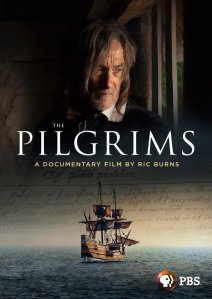
 In his now classic study of early nationalism, historian Benedict Anderson wrote “I propose the following definition of the nation: it is an imagined political community—and imagined as both inherently limited and sovereign. It is imagined because the members of even the smallest nation will never know most of their fellow-members, meet them, or even hear of them, yet in the minds of each lives the image of their communion…. Communities are to be distinguished, not by their falsity/genuineness, but by the style in which they are imagined….”[1] While Puritan society was not a “nation” in the sense that Anderson meant it, his reflections nonetheless are evident in Ric Burns’ documentary, The Pilgrims. Burns seeks not to merely retell the Thanksgiving story, but to understand why Plimouth Rock and the popular Thanksgiving story (much of which is inaccurate) is such a pervasive part of the American origins story.
Podcasts for Thanksgiving
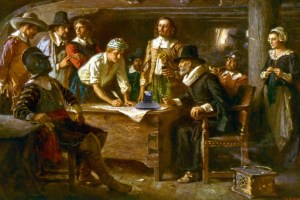 On the road this week for Thanksgiving? Or expecting to spend long hours in the kitchen? For some of us, this holiday means listening to podcasts. (And podcasters have noticed. Thanks, Serial.) Whether you’re downloading them for the road or streaming them from a browser, this could be a good week to catch up on episodes related to the history and culture of the Thanksgiving holiday. Here are a few suggestions we’ve compiled for your convenience this year.
Early America Comic Con: Drawing the American Revolution

Chan Lowe/Tribune Content Agency
“Welders make more money than philosophers,” Marco Rubio said in a recent G.O.P. debate. “We need more welders and less philosophers,” he continued, proudly. It was a decent line from the presidential hopeful. But not long after these words echoed around the Milwaukee Theatre, it was shown to be a somewhat clumsy statement, not least when seen alongside figures from the Bureau of Labor Statistics (comparative wages: philosophers & welders). Thus over the days following Rubio’s line, it was caricatured, with one cartoonist picking up on Rubio’s wording. This G.O.P. presidential candidate is not alone: All of the 2016 presidential candidates, Democrat and Republican, have been caricatured. So, too, are their worldwide equivalents on a regular basis. Continue reading
Guest Post: The Winthrops and their Books: A Transatlantic Tale
Guest posters Richard Calis and Madeline McMahon are graduate students in the History Department at Princeton University. Along with Frederic Clark, Anthony Grafton, and Jennifer Rampling, they are part of a collaborative research project (@WinthropProject) studying how multiple generations of Winthrops read, annotated, and acquired books on both sides of the Atlantic.
 John Winthrop (1588-1649) and his son John Winthrop Jr. (1606-1676) are now known primarily as protagonists in the turbulent political history of early America. But in addition to shaping the government and theology of New England as governors of Massachusetts Bay and Connecticut (respectively), they and the rest of the Winthrop family also participated in a transatlantic and inter-generational bookish culture. Long before the Arbella sailed to Boston in 1630 to build a “city upon a hill”, generations of Winthrops began to talk about books, ways to read them and, as we will illustrate here, the difficulties and contingencies of collecting them—on both sides of the Atlantic. Continue reading
Interview: Terri Snyder, The Power to Die
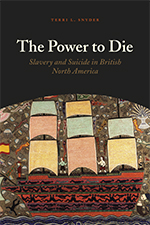 Terri Snyder is Professor of American Studies at California State University at Fullerton who specializes in slavery and gender. She received her PhD in 1992 from the University of Iowa. In 2003, Cornell University Press published her first book, Brabbling Women: Disordered Speech and Law in Early Virginia. The Power to Die: Slavery and Suicide in British America is her second book.
Roundtable: Academic Book Week—On Trade/Craft
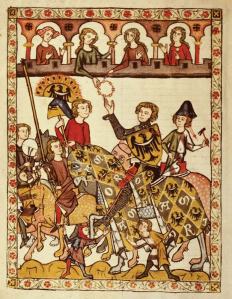 The baker’s nod, the knight’s blade, the king’s touch: These are three of the main and mostly medieval reasons why I read and write American history. Over the past few days, we’ve lauded new writing blueprints, parsed the definition of an academic book, and even made good sport of the whole reading selection process. So, in the last, spooling print loop of Academic Book Week, let’s rewind the too-short life of Marc Bloch for tradecraft’s sake. Continue reading
Roundtable: Academic Book Week: Alternative Entries To Familiar Topics
 When I consider the non-early-American history books that have had the greatest impact on the way I think, two stand out in particular. One is Ross McKibbin’s The Evolution of the Labour Party, 1910-1924; the other, CLR James’s Beyond A Boundary. The former is the most obviously “academic” of the two; the opportunity to write a Junto post primarily concerned with cricket, however, means that today I’ll focus on the latter.[1]
Both books influenced me for their creativity in approaching politics and society. McKibbin’s insight that “political action is the result of social and cultural attitudes which are not primarily political” has remained with me ever since; a useful reminder that in writing political history, we have to try and find ways of recovering political mindsets not only by looking at what political actors say, but also the many and varied ways they actually do things. James, too, calls for an approach to studying the past that looks beyond a narrow scope of inquiry, in his famous question ‘What do they know of cricket, who only cricket know?’ Continue reading
Roundtable: Academic Book Week—What’s an Academic Book Anyway?
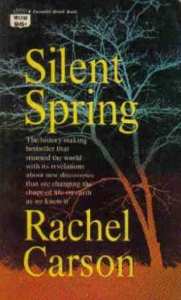 Is Rachel Carson’s Silent Spring an academic book? Is Mary Wollestonecraft’s Vindication of the Rights of Woman? The list of twenty nominees for “the academic book that has most changed the world,” part of the UK’s Academic Book Week, is a pretty confusing collection. Plato’s Republic is a product of the academy, sure, but is George Orwell’s 1984? In the US, we’re in the middle of University Press Week, which is a much more easily-identifiable category. We should all celebrate the important role of university presses in preserving scholarly endeavour from the rapacious maw of the market. In the face of ever-deeper cuts, they deserve our vigilant support. Continue reading
Roundtable: Academic Book Week—How Should We Write History?
 This week is Academic Book Week—“A celebration of the diversity, innovation and influence of academic books.” There are events, special promotions, and competitions running in Britain between November 9 and 16, 2015. Perhaps the most provocative and interesting competition #AcBookWeek is running is a public vote on “the academic book that has most changed the world.” The entrants include Mary Wollstonecraft’s A Vindication of the Rights of Women, George Orwell’s Nineteen Eighty-Four, E. P. Thompson’s The Making of the English Working Class, and Thomas Paine’s The Rights of Man. There are sixteen other entries, which are equally wide-ranging.[1] Although the list makes for interesting reading, voting is closed. But do not fret, Junto readers, we are running a roundtable on a similar, yet distinct, topic. This week, several Juntoists will discuss an academic book that has shaped their work. Continue reading
Guest Post: Revisiting Women of the Republic with Linda Kerber at the American Antiquarian Society
Carl Robert Keyes is an Associate Professor of History at Assumption College in Worcester, Massachusetts. He recently launched the #Adverts250 Project, featuring advertisements published 250 years ago in colonial American newspapers accompanied by brief commentary, via his Twitter profile (@TradeCardCarl).
 My Revolutionary America class recently visited the American Antiquarian Society for a behind-the-scenes tour followed by a document workshop in the Council Room. As we passed through the closed stacks I remarked to one of the curators, “This still blows me away, yet nothing can compare to the first time I came back here. Taking this all in for the first time is an experience that cannot be re-created.”
 The Junto