
 Late last week, Americans learned about an armed takeover of a federal wildlife refuge in Oregon. It was initiated by a group of men who have an idiosyncratic understanding of constitutional law and a sense that they have been cheated and persecuted by the United States government. The occupation comes during a time of general unease about national security and fairness in policing. As a result, some critics have been calling the rebels “domestic terrorists,” mostly on hypothetical grounds. One of their leaders, on the other hand, told NBC News that they see themselves as resisting “the terrorism that the federal government is placing upon the people.”
I do not propose to address the Oregon occupation directly. However, since the topic keeps coming up lately, this seems like a good opportunity to examine the roles the word terrorism has played in other eras. As it turns out, Americans have been calling each other terrorists a long time.


 Last week, the entire field was saddened by the news of the passing of Drew Cayton. Born in Cincinnati in 1954, he earned his bachelor’s degree from the University of Virginia before receiving his PhD from Brown University, where he studied under Gordon Wood. Cayton went on to teach at Harvard, Wellesley, Ball State, and Miami University, before recently moving to Ohio State University, where he held the Warner Woodring Chair. He contributed to the profession in numerous ways, including serving as President of SHEAR in 2011-12 and the Ohio Academy of History in 2015. A frontier history pioneer, Cayton’s most well-known work, Frontier Republic: Ideology and Politics in the Ohio Country, 1780-1825, was published in 1989. His most recent work was Love at the Time of Revolution: Transatlantic Literary Radicalism and Historical Change, 1793-1818, published by the OIEAHC in 2013. A number of scholars responded to our call for remembrances, which we are honored to publish in memory of such a highly respected and pioneering member of our field.
 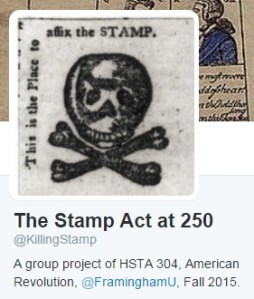 As many of our readers already know, this fall has marked the 250th anniversary since the protests against the Stamp Act, one of the earliest major actions of the imperial crisis that resulted in the American Revolution. Over the course of a year—from the first arrival of the Act in May 1765 until news of its repeal arrived in May 1766—colonists in the “thirteen original” colonies (as well as the “other thirteen”) passed resolutions, argued in essays, marched in the streets, forced resignations, and otherwise made clear their displeasure with paying a tax on their printed goods.
 Three years ago, founder Ben Park
  Earlier this week historian Rebecca Onion
 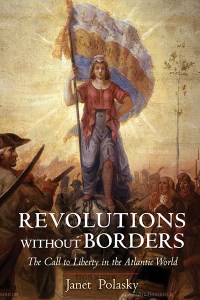 I often have a goal to write a substantive post that addresses crucial historiographical topics. I really do. But then, I’m also lazy. Further, I love book lists. So let me put on my salesman’s voice and offer a gift guide for all of you who are searching for books for your overspecialized-early-American-history-nerd-friends. These are, in other words, some of my favorite books from the past twelve months in early American history.
  The Junto