Or, How I Stopped Hating Finance and Learned to Love the Business Major[1]
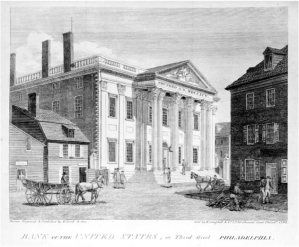
Settling in to my first semester as a TA this fall, I was stoked. Yes, stoked. Unbelievably enthusiastic about my teaching assignment: Early American Maritime Culture. I thought about all the port cities we would study, the trade routes we would map, and maybe for good measure we’d throw in an impressment or two. This first-time TA was assigned to a course in her field. Huzzah!
But a week into the semester I received an email stating, “We write to inform you that your teaching assignment has been changed to The History of Finance.”[2] Continue reading


 We’re barreling toward the end of the semester, which always feels closer once Thanksgiving’s over. As the Brits don’t celebrate Thanksgiving here, I’m in the midst of doing mid-semester evaluations with students this week A) To remind them that the semester really is more than half over and B) To try to suss out what is and isn’t working in our class.
 Was the purpose of the constitution to protect democracy from being ruined by the people or to protect commerce from being ruined by democracy? This was one of the questions put to Gordon Wood and Woody Holton in a debate held a few weeks ago at the University of South Carolina. A full video of the event has just been released on YouTube, and is embedded below. For anyone familiar with the work of these two historians, the debate will constitute a useful recap of the distinction between their two interpretations of the origins of the federal constitution. And for others, I hope it might be a kind of teaser for their excellent books!
  It’s been a busy week of headlines for early Americanists: to the links!
  A scary story:
 Joel Barlow and Noah Webster graduated from Yale together in 1778 with little sense of what they might do next. Their experience will be familiar to graduates of our own day, except, of course that it was in the middle of a Revolutionary War. “We are not the first men in the world to have broke loose from college without fortune to puff us into public notice,” Barlow wrote to Webster. But if ever virtue and merit were to be rewarded, he went on, “it is in America.”[1] Both men would have their faith in America sorely tested over the following decades, as they struggled to gain entry into established social elites that were themselves experiencing tension and transformation.
 The Junto