Bernard Bailyn’s Last Act?: An Interview with the Harvard Historian on His New Book

Bernard Bailyn’s contribution to our understanding of early American history is so vast that it’s easy to forget he’s still publishing books. His writings on the American Revolution, begun in the 1960s, remain required reading for any doctoral student studying for orals. And even since retiring from Harvard a quarter century ago, he’s continued to influence the field, perhaps nowhere more than through his promotion of Atlantic history.

Yet even at 92, Bailyn isn’t finished. His new book, Sometimes An Art: Nine Essays on History (Knopf), can be read in a number of ways: as an introduction to his vast corpus of work; a chance to respond to his critics; a reflection on the meaning of history; and, perhaps, a summing up of sorts. “It reflects some of my own work over the years,” Bailyn told me during an interview from Boston. The essays he’s chosen to include, dating from 1954 to 2007, have only appeared in either obscure publications or dated back issues of prominent journals. But in one way or another, he said, they “concentrate on certain major themes” in all his work. Continue reading
Retelling “A Tale”: An Interview with Richard S. Dunn

Dunn Roundtable CoverWrapping up our roundtable review of A Tale of Two PlantationsThe Junto chats with Richard S. Dunn about microhistory as a “healthy antidote to top-down history,” and the archival surprises that reshaped his work. If you are near Harvard University on February 5th, come and hear more about the project. Continue reading

The Spy Who Came in from the Confederacy

1862_LON_14_1862_NPL_P385[SVC1]He was, at first, another young shadow hurrying through Westminster Hall. He carried flimsier credentials than most, papers hastily sent by a new nation called the Confederate States of America. It was November 1862, and, since spring, he had stretched expenses to accommodate the bare $750 granted to fund his secretive mission. Still, regular sightings of the worn, 29 year-old Swiss-American stranger, who had shipped to London via the fiery newsrooms of Richmond and Mobile, caused a flutter of concern among British peers. Within weeks, the constant American shadow near Parliament became a very real worry. “He is but a private gentleman, it is true,” one M.P. fretted, “yet he may leave his card at the Foreign Office, and possibly find his way upstairs.” Continue reading

Q&A with Kyle T. Bulthuis, Author of Four Steeples over the City Streets

BulthuisThe following is an interview with Kyle Bulthuis, an assistant professor of history at Utah State University. Jonathan Wilson’s review of Kyle’s recently-released book, Four Steeples over the City Streets: Religion and Society in New York’s Early Republic Congregations, appeared on the blog yesterday. Kyle agreed to sit down and answer a few follow up questions about the book and his future research plans, which we are happy to post today. Continue reading
Winter Reads

Just in time for your holiday shopping list, here’s our preview of new titles—share your finds in the comments! Continue reading

Contested Rites

continental_prayerJoseph Yesurun Pinto, a 31 year-old Anglo-Dutch émigré in the autumn of 1760, had led New York’s Shearith Israel synagogue for barely a year when the second notice appeared in the papers. To re-commemorate the British conquest of Canada, all “Christian societies” and “houses of worship” would celebrate a day of thanksgiving on Thursday, October 23d. Over the past decade, New Englanders and their neighbors had held at least 50 fast days, many to lament God’s judgments against America, or to reform their wayward behavior. The proclamation of a thanksgiving day likely brought some measure of relief and joy.
Continue reading

Guest Post: Keeping the “Human” in the Humanities

Hannah Bailey is a PhD candidate in History at the College of William & Mary, where her research examines the interconnectivity between developing notions of race and the expansion of the African slave trade in the early modern French Atlantic. This is her second guest post at The Junto. Be sure and read her earlier post on French archives and entangled histories here

SAM_1925As someone who is also leaping into an entirely new historiography in preparation for dissertation writing, I could commiserate with Casey Schmitt’s brilliantly astute post on the costs and benefits of comparative projects. It can be terrifying to move from a historiography with which one is relatively comfortable to, as she puts it, “a [new] field where innumerable scholars have dedicated entire careers.” I took one undergraduate class on West African history (which was a survey course that occurred five years ago), and yet my dissertation focuses heavily on early modern histories of West Africa and the Atlantic networks of knowledge (and ignorance) that shaped them. The body of exemplary secondary source material on West Africa is vast, and working with it for the first time is more than a little daunting. Continue reading

Guest Post: “Fear in the Revolutionary Americas” Conference Recap

Elizabeth M. Covart is an early American historian, writer, and podcaster. Presently she is working on her first book manuscript about cultural community creation in Albany, New York, 1614-1830. Liz also writes a practical blog about history and how to make it more accessible at Uncommonplacebook.com and her new podcast, “Ben Franklin’s World: A Podcast About Early American History,” seeks to bring the work of academic and public historians to history lovers everywhere.

massacre_jane_c_1October 31, 2014. On the most fearsome day of the year, Tufts University convened “Fear in the Revolutionary Americas, 1776-1865,” a one-day conference designed to explore the question: What role did fear play in the revolutions that occurred in North and South America between 1776 and 1865? Continue reading

Big History: Weighing the Benefits and Drawbacks of a Comparative Project

Casey Schmitt is a PhD candidate in History at the College of William & Mary, where she is writing a dissertation on the Iberian roots of seventeenth-century Anglo-American slave law. This is her second guest post, following her first on the value of storytelling and the use of audiobook primary sources in the classroom here.

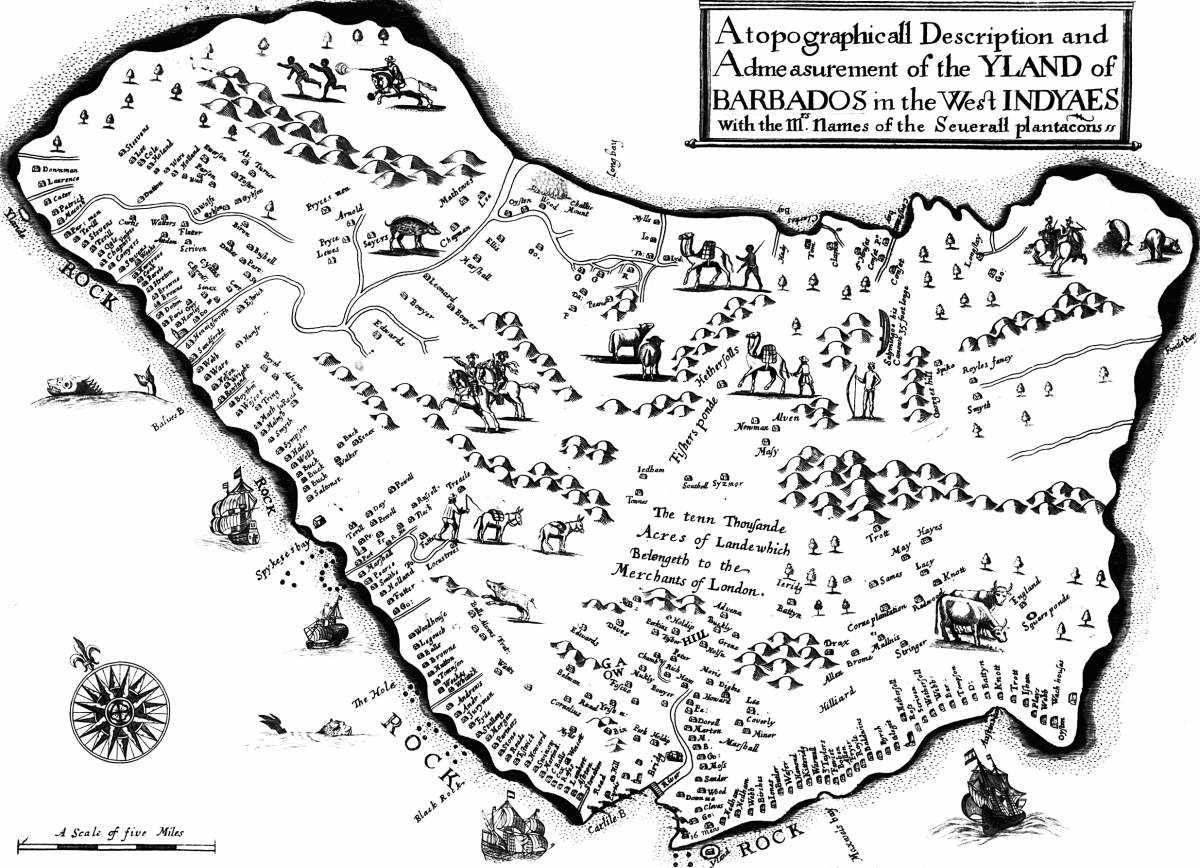
barbadosmapA little over a year ago, I switched research interests from the study of eighteenth-century contraband trade between Jamaica and Cartagena de Indias to a comparative study of the codification of slave law in the greater Caribbean. Admittedly not too drastic of a change, I was nonetheless daunted by moving from a historiography containing a select number of significant works to a field where innumerable scholars have dedicated entire careers. Like any graduate student, I began working through the library stacks here at the College of William and Mary, seeking answers to what I thought would be easy questions: Were the legal regimes of European slave societies shaped by their interactions with other slave societies in the Caribbean? Were English slaveholding practices modeled off of successful Portuguese or Spanish examples? Why were there so many institutionalized efforts to codify slave law in the seventeenth century and did these separate legal dialogues unfold in conversation with one another? As you can probably guess, none of these questions have proven as easy to answer as I thought. Continue reading

The Week in Early American History

TWEAHWelcome to your weekly roundup of early American headline news. To the links! Continue reading