 A little over a week from now (July 18-20) marks the beginning of the thirty-sixth annual meeting of the Society for Historians of the Early American Republic (SHEAR), held this year the society’s balmy hometown of Philadelphia, PA. To help get the broader Junto community excited, for what is my favorite conference of the year, I thought I’d offer a brief preview of a few of the panels and sessions I am particularly interested in this year.
I’ve highlighted below just one session from each scheduling block. This preview is just that—it does not represent all of the panels I’m interested in at this year’s conference. I have, for example, excluded all of the panels touching on the history of religion because Monica Mercado has already ably highlighted them over at Religion in American History. The wonderful thing about this year’s SHEAR meeting is the sheer number of fantastic offerings for each session block.[1] No matter your subfield—gender, slavery, religion, and economics—there are offerings sure to challenge your perceptions and shake up the historiography. You can find the full program here.
I invite our community to highlight the panels and sessions in which you are particularity interested in the comments section of this post, if I don’t mention them below. Continue reading

 I hope that Thomas Jefferson’s Qur’an: Islam and the Founders (New York: A. A. Knopf, 2013) gets picked up for a Fox News segment. Denise A. Spellberg (UT-Austin) has synthesized a large body of scholarship into a readable, teachable, and thoughtful look at the significance of Islam in the American founding era. Conservatives pounced on Spellberg during
  Readers will be pleased to note that blog posts might indeed be
  In his essay on “Eating American,” the anthropologist Sidney Mintz relates a class conversation during which he admitted that he “did not think that there is such a thing as an American cuisine.”[1] Around this time of year, it’s impossible to ignore the influx of commercials, ads, and general hullabaloo pushing “American food” for the Fourth of July. I have to admit that I’ve been convinced by Mintz’s point for a long time, especially as that assertion pertains to the world of early American cuisine.
 Looking forward to attending one of the largest conferences on the American Revolution in a generation this week in Philadelphia, I thought I would take a moment to reflect on the title of the conference—”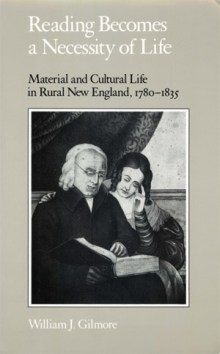
 The Junto