Readers of early American history blogs will undoubtedly have come across the recent kerfuffle regarding the divide between academic and public historians of the American Revolution, which stemmed from a series of posts by Peter Feinman assessing the conference. Much of the debate has centered around this post, in which Feinman chided academic historians for their failure to answer the question: “Was the American Revolution a good thing?” Roy Rogers posted an excellent response to this here last week; J.L. Bell at Boston 1775 had other reflections on Monday (and is continuing to address the topic in other posts).
Tag Archives: Public History
When Was the Last Time You Loved America?
Few issues trouble historians of all stripes more than the disconnect between “popular” and “academic” history. Somewhere in the mists of the recent past the Age of Hofstadter gave way to, at best, the Age of McCulloch and, at worst, the Age of Barton.[1] The waning influence of professional historians in the public sphere particularly troubles the historical blogosphere. The popular-academic history disconnect is something addressed a lot here at The Junto, including with a podcast.
I am, as I said on the JuntoCast episode, particular dour about the possibility of bridging this gap. Academic historians, public historians, and interested members of the public more often than not talk past each other. How each group defines “good” or “useful” history is often so at cross-purposes that it sounds like one side is speaking English, another French, and another Dothraki.[2] My attention was recently drawn to a series of posts by Peter Feinman at New York History, which deeply entrenched my Eeyore-like-sullenness when it comes to these questions. Continue reading
Collecting Delaware
T his week, Chief Curator Constance Cooper shares what’s next for the past at the Delaware Historical Society. Continue reading
The Week in Early American History
 Here at The Junto, we’ve spent the last week with our noses buried in one really, really good book. But there’s been much afoot elsewhere, both on the web and beyond.
Colonial Adventures in England: The Benjamin Franklin House
 On a cold and wet May Friday in London, I decided to take refuge from the weather by stepping back into the eighteenth century. While serving as agent for the colony of Pennsylvania (and others), Benjamin Franklin lodged in a small dwelling on Craven Street, now just behind Charing Cross station and a short walk from Parliament. Though Franklin’s lodgings were originally misidentified (to the extent that a commemorative plaque was placed on the wrong house!), the original building still stands. Now the only surviving Franklin home in the world, the house is the home of the “Benjamin Franklin Historical Experience,” dedicated to telling the story of “the first American embassy.” Continue reading
Art & Soul
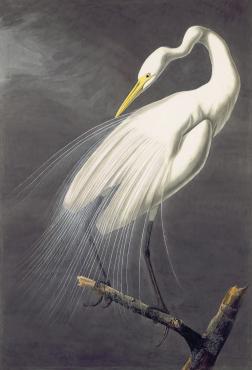
“Great Egret,” John James Audubon
I’ve always thought that John Adams knew the enduring value of a good museum trip, and the power of art to sharpen the mind while refreshing a work-weary soul. How else would he have known to share this insight with wife Abigail, written at just about this time in another May spring, that of 1780: “I must study Politicks and War that my sons may have liberty to study Mathematicks and Philosophy. My sons ought to study Mathematicks and Philosophy, Geography, natural History, Naval Architecture, navigation, Commerce and Agriculture, in order to give their Children a right to study Painting, Poetry, Musick, Architecture, Statuary, Tapestry and Porcelaine.” With those words in mind, here’s a quick survey of early American art currently on special exhibit throughout the country. Please share more links in the comments. Continue reading
The Week in Early American History
It’s that time of the week and it’s my turn to do the roundup, so let’s just get started with some links from the past week or so… Continue reading
On Popularity and Self-Publishing

My wife is a knitter, and she’s explained to me the subtle difference observed, among those in her guild, when referring to someone’s work as “handmade” or “homemade.” Both acknowledge the difference between the sweater you spent months on and something mass-produced. The former, though, implies that for the piece in question that difference is measured in care and craftsmanship, while the latter measures it in imperfections. It’s the difference between, “You made that yourself?!” and “You made that yourself, huh?” Continue reading
Spring at the “History Harvest”

Currier & Ives, 1849
This week, we talk to University of Nebraska-Lincoln historians William Thomas and Patrick Jones, co-directors of History Harvest, a community-based approach to creating a new people’s history of America online using the real “stuff” of our past.
JUNTO: How did you get the idea (and support) for History Harvest? What are the goals of “community-based history,” and how is it a model for the profession?
THOMAS: The original idea for me goes all the way back to my work on The Valley of the Shadow Project in the mid-1990s with Ed Ayers and Anne Rubin. We ran a small community history harvest in that project, but neither the public awareness of digitization nor the technical infrastructure to do large scale digitization on site were available. Still ever since then, I have been interested in expanding the idea. And we have seen in every digital history project that the community often comes forward with materials to contribute. So in 2010 we started The History Harvest Project here at the University of Nebraska. Continue reading
Review of “New Netherland in a Nutshell”
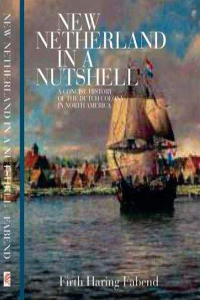 Public history can take many forms. We, here at The Junto, are committed to engaging with and covering public history regarding early America. The New Netherland Institute is an excellent example of an organization dedicated to bringing early American history to the public. I want to use this space to talk about its most recent publication, Firth Haring Fabend’s New Netherland in A Nutshell: A Concise History of the Dutch Colony in North America.
Fabend is an independent historian (though she holds a PhD in American Studies from NYU) and is the author of numerous books of fiction as well as two award-winning works of history also dealing with New Amsterdam, both of which were published by Rutgers University Press. Continue reading
 The Junto