
 This weekend, Mark Lilla, a historian of ideas at Columbia University, published a New York Times op-ed on “identity liberalism.” Reacting to the outcome of the presidential election, Lilla argues that contemporary American liberalism’s celebration of diversity, however morally salutary in private life, has been politically suicidal at the national level. “National politics in healthy periods is not about ‘difference,'” Lilla writes; “it is about commonality. And it will be dominated by whoever best captures Americans’ imaginations about our shared destiny.”
Lilla’s argument is a response—one of several possible responses—to what I see as a real problem. In contemporary America, demands for inclusion, equality, and dignity often seem to be made in the name of particular groups rather than in the name of the common good. Whether this perception is accurate is another matter. I won’t address that complicated question here. But Lilla’s perspective on early American history warrants a critical response.

 Late last week, Americans learned about an armed takeover of a federal wildlife refuge in Oregon. It was initiated by a group of men who have an
 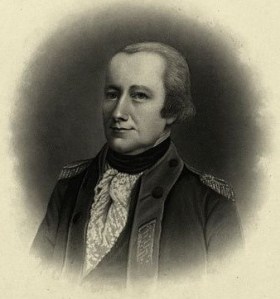 On April 25, 1775, hundreds of New Yorkers acknowledged receiving “a Good firelock, Bayonet, Cartouch Box, and Belt.” Six days after the Battles of Lexington and Concord, and three days after Israel (Isaac) Bissell told New Yorkers the news, Alexander McDougall mobilized support against the British. The War of American Independence had reached New York and, with hundreds of supporters, McDougall was ready to fight.
 After our summer hiatus, “The JuntoCast” is back with a new type of episode.
  “By 1990,” wrote Daniel Rodgers, the concept of republicanism in American historiography “was everywhere and organizing everything, though perceptibly thinning out, like a nova entering its red giant phase.” A quarter of a century later, it can seem barely more than a dull glow—and in part, we have Rodgers’ essay to thank for dimming the lights. If republicanism’s 1970s high-water-mark was followed by a decade of furious debate over republicanism-versus-liberalism, scholarship after 1990 often framed itself as moving beyond precisely that anachronistic question. There was, apparently, no such conflict in the minds of revolutionary-era Americans. The problems that troubled them were different ones entirely.[1]
 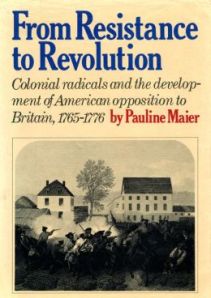 One of the things that set Pauline Maier apart was the exuberance she brought to the work of history. That joyful zeal is charmingly expressed in the metaphor she used to evoke the intellectual atmosphere in which she wrote her dissertation and first book, From Resistance to Revolution (1972).
 The Junto