Stephen W. Campbell earned a doctorate in history from the University of California, Santa Barbara, in 2013. A lecturer at California State Polytechnic University, Pomona, Campbell is the author of articles that have appeared in American Nineteenth Century History, Ohio Valley History, Perspectives on History, and History News Network. He has recently completed a book manuscript entitled Banking on the Press: Newspapers, Financial Institutions, and the Post Office in Jacksonian America, 1828-1834.
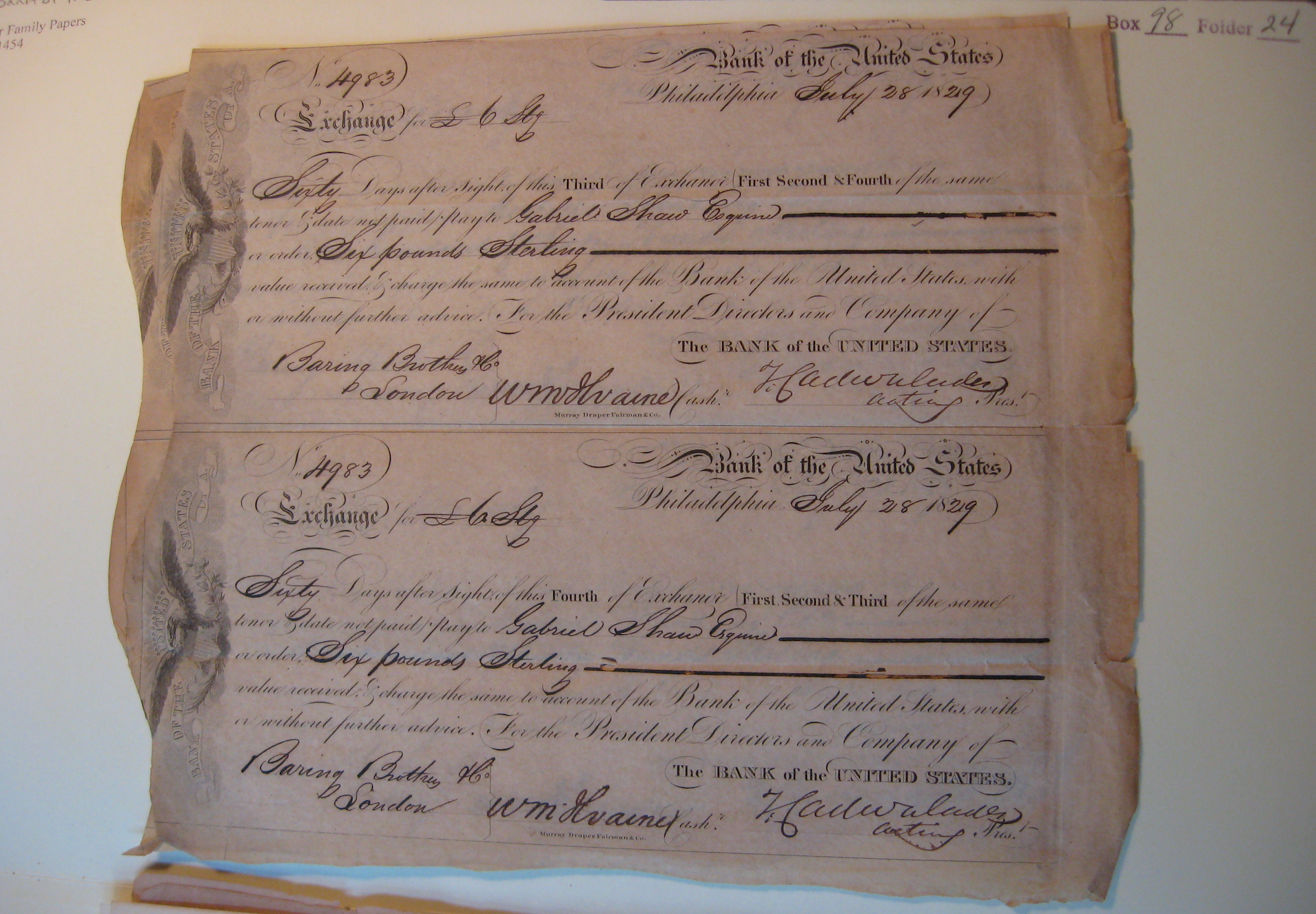
Cadwalder Family Papers, Box 98, Folder 24, Historical Society of Pennsylvania, Philadelphia, PA. [Click for full-size]
Unexpected “ah-hah!” moments make long hours of historical research worthwhile. A few months ago I was perusing a letter from an edited volume of Henry Clay’s correspondence when my eyes began to drift over to an adjoining page. A letter, dated August 17, 1830, showed the great senator and orator instructing his Washington agent, Philip Fendall, to send one of his slaves, Lotty, back to Kentucky. Clay wanted Lotty “to have the means to bring herself home…but if she wants money for that purpose I will thank you to apply to Mr. R[ichard] Smith to advance her the necessary sum.” Nothing in the footnotes or index shed light on this enigmatic Smith (an exceedingly common name both then and now), but I had come across this name several times before. This was almost certainly the cashier of the Washington branch of the Second Bank of the United States (BUS), the nation’s de facto central bank. A few weeks later, Clay again penned Fendall: “There are persons frequently bringing slaves from the district [of Columbia] to this State, some of whom might perhaps undertake to conduct [Lotty] to Maysville, Louisville, Lexington, or some other point from which I could receive her.”[1] Continue reading
 If you haven’t noticed, the blog has been a bit, well, quiet lately. We promise that wasn’t all a hiccup! Well, most of it, anyway. About halfway through the summer we realized our productivity was lagging so we decided to call it a summer sabbatical—we are academics, after all.
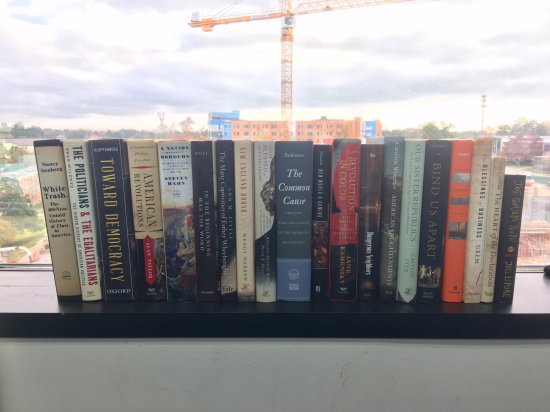
 This past semester I taught a course on “18th Century Atlantic Revolutions: America, France, and Haiti,” which included both undergraduate and graduate students. (I wrote about the assigned readings at
  The Kinder Institute is currently inviting submissions for presenters at the 2016-17 meetings of the Missouri Regional Seminar on Early American History (MRSEAH), which will be held on October 7, 2016, and April 21, 2017, in Columbia, MO, and on November 4, 2016, and February 17, 2017, in St. Louis. We welcome work on all aspects of early American history, broadly defined to extend throughout the Americas geographically and forward in time through the 19th century, and we are especially eager for submissions relating to political development, political thought, constitutionalism, and democratization. All MRSEAH submissions will also automatically be considered for the Kinder Institute’s Friday History Colloquium Series, held on campus during the academic year. Please visit the link below for complete instructions on submitting a proposal to present at the MRSEAH.
  Revolutions:
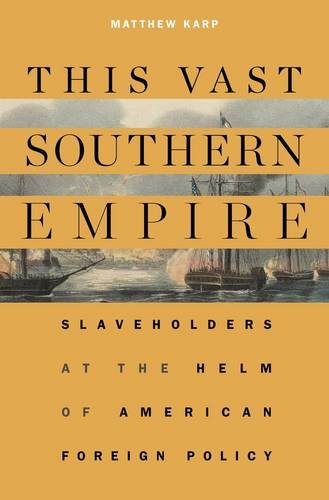
  I often have a goal to write a substantive post that addresses crucial historiographical topics. I really do. But then, I’m also lazy. Further, I love book lists. So let me put on my salesman’s voice and offer a gift guide for all of you who are searching for books for your overspecialized-early-American-history-nerd-friends. These are, in other words, some of my favorite books from the past twelve months in early American history.
 The Junto