 How does a crony capitalist son of a whore, and a militarist pumped up by delusional aspirations of honor, grow up to be feted by liberal scholars? [*]
Since the turn of the millennium, historians have lambasted the phenomenon of Founders Chic as a fundamental distortion of history. Placing the roles of specific, prominent individuals at the heart of sweeping narratives of the founding era meant that popular histories exaggerated the importance of individuals, at the expense of understanding the contribution of less-celebrated Americans or the role of broader societal and historical processes. Yet much of the reception of Hamilton, the hottest ticket on Broadway, seems to suggest that hagiography is acceptable, so long as it’s done to a catchy song-and-dance routine. It’s as if the only problem with Joseph Ellis, David McCullough and Ron Chernow is that they didn’t write to a hip-hop soundtrack. Continue reading
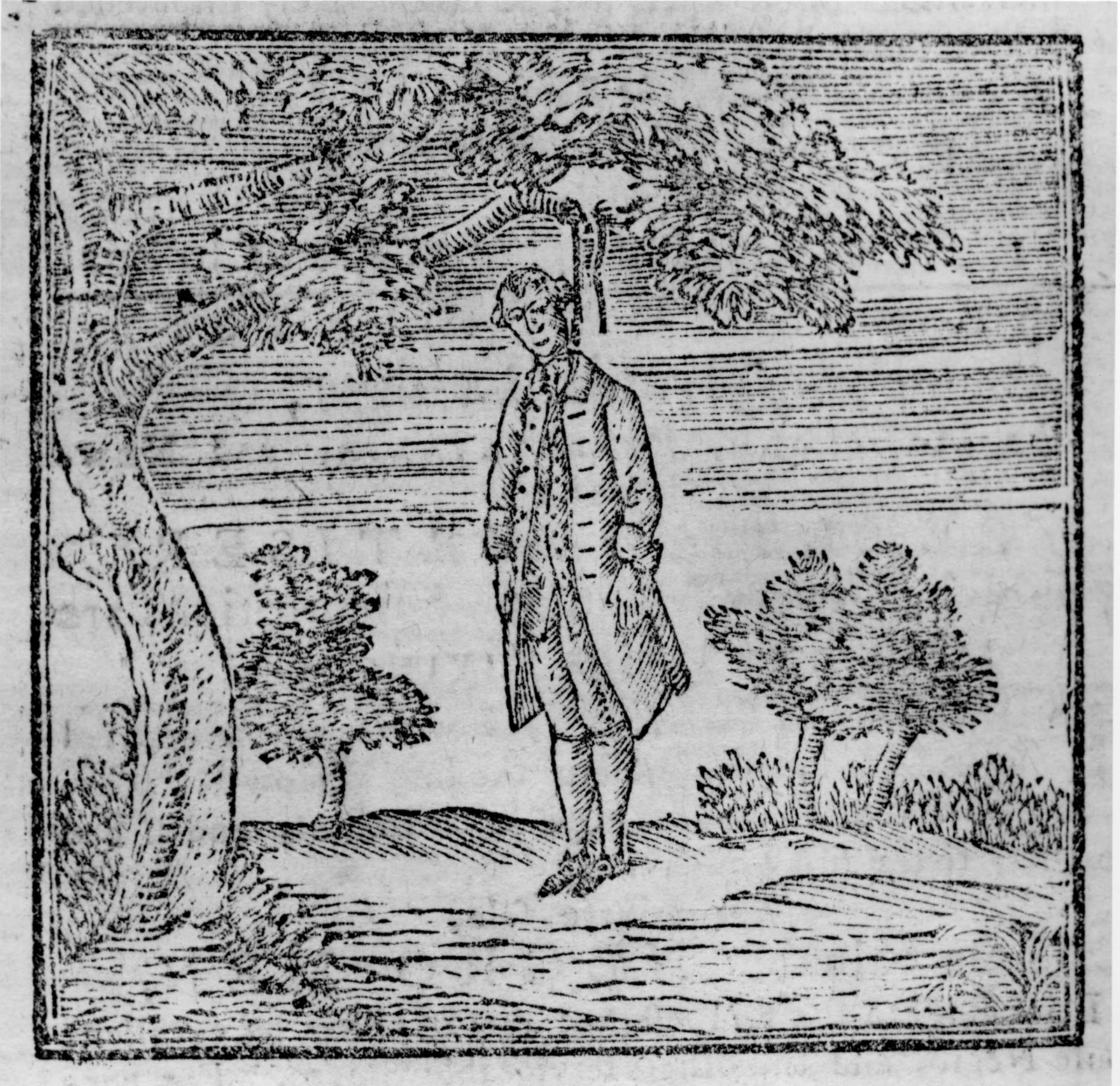
 “Slavery and Freedom” is an article about Puritans, even though it doesn’t mention them at all; it’s about what happens when you try to colonize a place without them.
  As both a horror nerd and an Early American historian, I have been excited about writer/direct Robert Eggers’ debut feature The Witch for quite some time. Excited might be a bit of an understatement: the first time I saw a poster in a theatre I shrieked, and I have been faithfully following the strangely endearing and decidedly bizarre Twitter of the film’s sometimes-antagonist goat,
 Late last week, Americans learned about an armed takeover of a federal wildlife refuge in Oregon. It was initiated by a group of men who have an
 In his now classic study of early nationalism, historian Benedict Anderson wrote “I propose the following definition of the nation: it is an imagined political community—and imagined as both inherently limited and sovereign. It is imagined because the members of even the smallest nation will never know most of their fellow-members, meet them, or even hear of them, yet in the minds of each lives the image of their communion…. Communities are to be distinguished, not by their falsity/genuineness, but by the style in which they are imagined….”[1] While Puritan society was not a “nation” in the sense that Anderson meant it, his reflections nonetheless are evident in Ric Burns’ documentary, The Pilgrims. Burns seeks not to merely retell the Thanksgiving story, but to understand why Plimouth Rock and the popular Thanksgiving story (much of which is inaccurate) is such a pervasive part of the American origins story.
 My Revolutionary America class recently visited the American Antiquarian Society for a behind-the-scenes tour followed by a document workshop in the Council Room. As we passed through the closed stacks I remarked to one of the curators, “This still blows me away, yet nothing can compare to the first time I came back here. Taking this all in for the first time is an experience that cannot be re-created.”
 It’s been two and a half years since the new history of capitalism marked its arrival with the full red carpet treatment in the
 The Junto