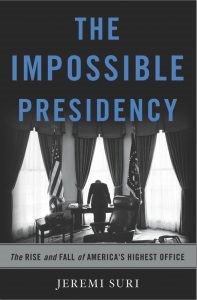
 The question of whether the office of the Presidency is too unwieldy with its ever-expanding duties has once again engaged pundits. Most recently, journalist Scott Dickerson’s article raised the issue, a piece which includes the recent study by Jeremi Suri, The Impossible Presidency (New York: Basic Books, 2017). Presidents often used similar rhetorical messages–from Washington to Franklin D.Roosevelt. Suri views one of the mounting obstacles to the presidency as being a discursive problem. Interestingly, the use of language, so central to the presidency, with its surprisingly similar messaging overtime, produced unintended, and often times, inverted outcomes in its collision with capitalism and technology. Suri is currently Mack Brown Distinguished Chair for Leadership in Global Affairs and Professor in the Department of History and the LBJ School of Public Affairs at University of Texas, Austin. Continue reading
Category Archives: Interview
Q&A with Daniel Livesay, author of Children of Uncertain Fortune: Mixed-Race Jamaicans in Britain and the Atlantic Family, 1733-1833
 Daniel Livesay is Associate Professor of History at Claremont McKenna College in Claremont, CA. His research focuses on questions of race, slavery, and family in the colonial Atlantic World. His first book, Children of Uncertain Fortune: Mixed-Race Jamaicans in Britain and the Atlantic Family, 1733-1833 was published in January 2018 by the University of North Carolina Press for the Omohundro Institute. Casey Schmitt reviewed it yesterday here at The Junto. Daniel’s research has been supported by an NEH postdoctoral fellowship at the Omohundro Institute of Early American History and Culture, the Fulbright Foundation, the Institute of Historical Research, and the North American Conference on British Studies, as well as number of short-term fellowships. He is currently working on a book manuscript about enslaved individuals of advanced age in Virginia and Jamaica from 1776-1865 entitled, Endless Bondage: Old Age in New World Slavery. He graciously agreed to sit down and answer a few questions about his research.
Continue reading
Q&A: Max Perry Mueller, Race and the Making of the Mormon People
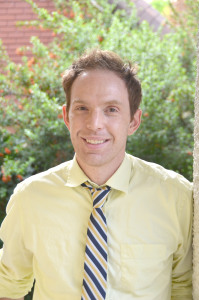 Max Perry Mueller is assistant professor of religious studies in the Department of Classics & Religious Studies of the University of Nebraska-Lincoln, and the author of the recently-released Race and the Making of the Mormon People (University of North Carolina Press, 2017). Be sure and read Ben Park’s review of that book, posted at The Junto yesterday. Continue reading
Where Historians Work: Q&A with David Gary of the American Philosophical Society
“During graduate school, you have to be very focused on a topic. But in libraries you’re a generalist in many ways. In all the jobs I’ve had, I’ve had to learn new skills and topics.” ~ Dr. David Gary, the American Philosophical Society
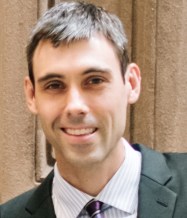 Good morning, Junto readers! As we head into July 4th weekend, what better city to visit than Philadelphia? Today, we discuss the exciting intellectual opportunities that accompany the curation of printed collections, with Dr. David Gary, Curator of Printed Materials at the American Philosophical Society.
Dave’s story highlights the vibrancy and variety of the history profession, as well as the many paths scholars can take, both during and after graduate school, to find themselves in fulfilling occupations. Continue reading
Where Historians Work: Q&A with Valerie Paley of N-YHS
“The work I do is true to our training [as historians] and representative of what that training can be for the public.” ~ Dr. Valerie Paley, Vice President, Chief Historian, and Director of the Center for Women’s History at New-York Historical Society.
 After a brief break to make room for the fantastic “Founding Fiction” roundtable series about children’s and young adult literature, “Where Historians Work: The View from Early America” is back! We’re excited to feature two interviews today and tomorrow.
Today, we bring you a conversation between The Junto’s Katy Lasdow and Dr. Valerie Paley, Vice President, Chief Historian, and Director of the Center for Women’s History at New-York Historical Society. Continue reading
Where Historians Work: Q&A with Emily Swafford of the AHA
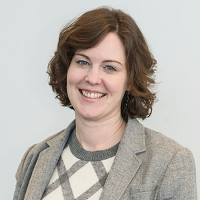 Welcome to the first installment of our “Where Historians Work: The View from Early America” series. Today, The Junto features a Q&A between Katy Lasdow and Dr. Emily Swafford, Manager of Academic Affairs for the American Historical Association in Washington, D.C.[1] Emily shares her experiences seeking out varied career options after graduate school. She also provides AHA resources for readers who wish to become more involved in the conversation about career diversity, whether as part of their own job searches, or within their graduate history departments.
Continue reading
Q&A, Marisa Fuentes, Dispossessed Lives
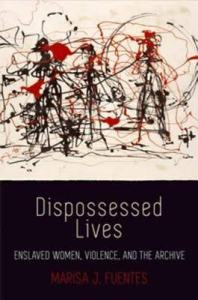 Marisa J. Fuentes is Associate Professor of Women’s and Gender Studies and History at Rutgers University, New Brunswick. Dispossessed Lives: Enslaved Women, Violence, and the Archives is her first book. Casey Schmitt previously reviewed Dispossessed Lives for The Junto. Continue reading
Q&A: Spencer McBride, author of Pulpit and Nation
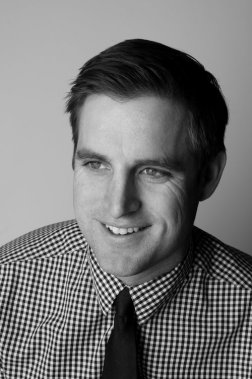 Following up on Jonathan Wilson’s review of Spencer McBride’s Pulpit and Nation: Clergymen and the Politics of Revolutionary America (Charlottesville: University of Virginia Press, 2017), we’re pleased today to post this Q&A with Spencer about his book and his future research. McBride is a historian and documentary editor at The Joseph Smith Papers. He earned a Ph.D. in History at Louisiana State University, and is currently working on several book projects, which you can read about more here. Continue reading
Q&A: Patrick Spero and Michael Zuckerman
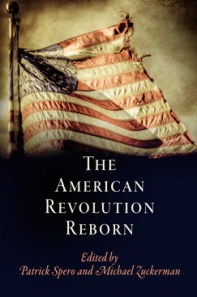 Following on from yesterday’s review of The American Revolution Reborn, The Junto was fortunate enough to get to ask a few questions of the volume’s editors. Both Patrick Spero, Librarian of the American Philosophical Society, and Michael Zuckerman, Professor of History Emeritus at the University of Pennsylvania, were instrumental in organizing the highly successful conference that led to the volume. In the Q&A below, the organizers/editors reflect back on both the conference and the volume, their effect on their own views of the Revolution, and their hopes for the legacy of both the conference and the volume. The Q&A is published here in its entirety. Continue reading
Q&A with Sowande’ Mustakeem
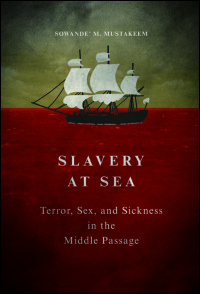 This is an interview with Sowande’ Mustakeem, who is an Assistant Professor in the departments of History and African and African American Studies at Washington University in St. Louis. Today she speaks with The Junto about her book, Slavery at Sea: Terror, Sex, and Sickness in the Middle Passage, which Casey Schmitt reviewed yesterday. Her previous work has appeared in journals such as Atlantic Studies and the Journal of African American History, and edited volumes such as Understanding and Teaching American Slavery, Teaching Lincoln: What Every K-12 Student Needs to Know, and Gender, Race, Ethnicity, and Power in Maritime America. Continue reading
 The Junto