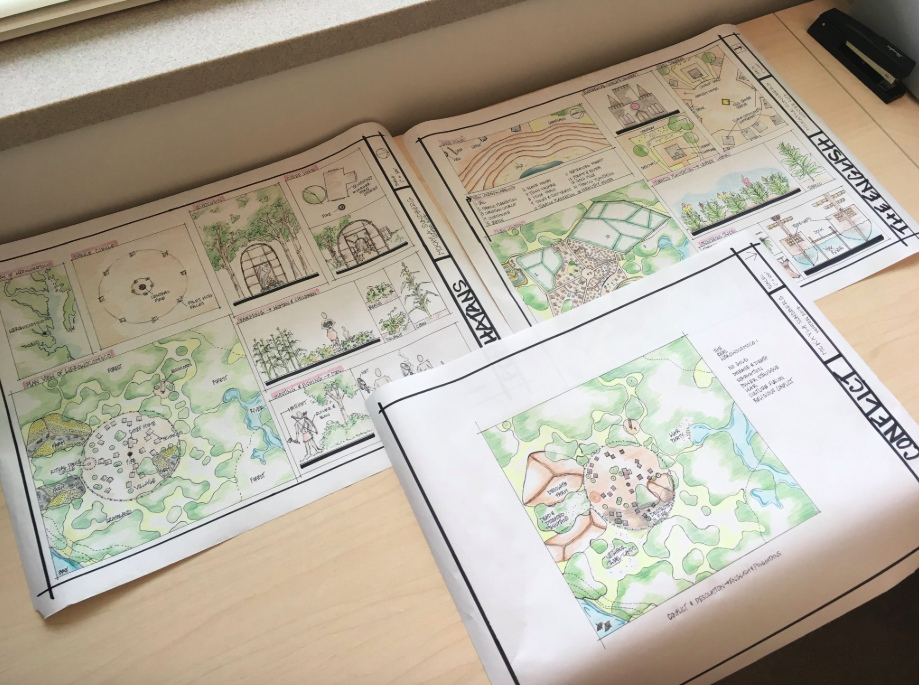
 Today is the first day of Native American Heritage Month, and our guest post comes from Jessica Taylor, Assistant Professor of Oral and Public History, and Edward Polanco, Assistant Professor of Latin American History, both at Virginia Tech. A graduate of the College of William and Mary, Taylor is currently working on her first book manuscript, which examines Native landscape in the colonial Chesapeake. Polanco is a graduate of the University of Arizona, and his current book manuscript examines 16th- and 17th-century Nahua healing ritual specialists in Central Mexico. The following are keys to success identified by Taylor and Polanco in their development of a course on Native History at Virginia Tech.
 Working through the first course proposal at a tenure-track job is intimidating, and more so when the topic is as enormous and fraught as “Native History.” To develop this course with care, we sought input and advice on and off campus as the process unfolded. These thoughts originated in a meeting between Virginia Tech’s Native students’ group, Native@VT, the American Indian and Indigenous Community Center on campus, and the Department of History. We wanted to share some of our ideas and strategies as we continue to develop our Native History class and advocate for a more visible Native presence on campus. This has put our Department’s and University’s commitment to diversity into action.
 Today I want to make an argument for doing something without knowing and without being able to ever know its full pedagogical value. Let me explain.
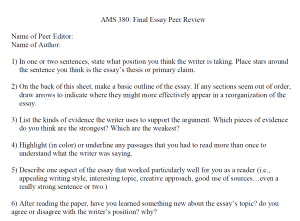
 With spring well underway, many of us are experiencing the satisfaction of marking the last grade on the final blue book of the semester, with an eye toward the approaching summer months and the freedom to work on our own research projects.
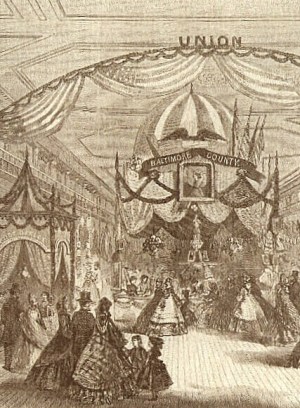 “We all declare for liberty,” Abraham Lincoln remarked in 1864, “but in using the same word we do not all mean the same thing.” That word gets thrown around a lot when we talk about, and especially when we commemorate, the early American republic. Since I started my job two years ago, I’ve been teaching a course on “the meaning of liberty” from Revolution to Civil War. In this post I want to reflect on the process of designing, teaching, and redesigning that course—a process of thinking through American “liberty” with my twenty-first century British students in mind.

 The Junto