The Week in Early American History…Now with Random Headings!

TWEAHOn to the links (and headings)…

Historical Happenings

Did Benjamin Franklin invent the mail-order catalog (on top of everything else)? Wendy Woloson investigates for Bloomberg’s Echoes blog.

Most of our readers know the radio show BackStory. This week, its eclectic “sister” show from the Virginia Foundation for the Humanities, With Good Reason, has posted the audio for an early American episode. “Red Ink” features Drew Lopenzina on Native American literacy, Turk McCleskey on law in the Virginia frontier, and Bonnie Gordon and Emily Gale on the music of early America.

According to the Boston Globe, amateur genealogist Nathaniel Sharpe has traced the word “scalawag” to an Anti-Mason in Batavia, New York, circa 1832.

When did America see its first St. Patrick’s Day parade? The N-YHS has a contender. Continue reading
After Democratization?

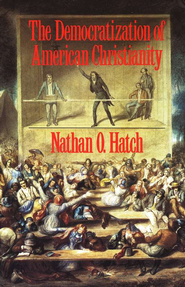
democratizationofamericanchristianityNext year marks the twenty-fifth anniversary of the publication of Nathan Hatch’s seminal The Democratization of American Christianity.[1] Few books have had as wide an influence and impact in my field of the cultural and political history of religiosity in the early American republic. In his masterwork Hatch achieves what most scholars yearn for throughout their entire careers. Democratization crystallized an interpretative scheme (the “democratization thesis”) and shoved its rival interpretation into the historiographical abyss. Continue reading

Reconsidering Edmund Morgan’s The Birth of the Republic, 1763-89

In line with Matt Karp’s look back on Eric Hobsbawm’s Age of Revolution from last month, I’d like to take this opportunity to reconsider a classic work in early American history, Edmund Morgan’s The Birth of the Republic, 1763-89, which has just recently made it to its fourth edition. I have a long relationship with this slim volume. For many years before I began my undergraduate work as a 30-year old non-trad, I had been reading early American history, particularly classic works in the historiography, which has fascinated me since the beginning. I spent years going through the New York and Brooklyn Public Libraries’ 970 shelves and one of the earliest books I read was Birth of the Republic. A decade later, I am now extremely fortunate to be doing my doctoral work at Yale University, where Morgan taught and worked for three decades. Though he has long since retired into reclusion (having just turned 97 last month), he still casts a large shadow over the department. Graduate students here (myself included) whisper about a rare Morgan sighting and get excited when they find one of his books at a book sale with his name (and/or marginalia) written in it. So I very much appreciate this opportunity to return to and reassess this work. Continue reading

The American Revolution: The TV Series

TV-test-patternA couple of weeks ago, the American History Guys at Backstory took on the issue of representations of history in film. Of most direct interest to those of us here at the Junto was the interview of Mark Peterson by Peter Onuf, asking why there were so few movies about the American Revolution, and why they were so terrible. The answer Peterson proffered was about patricide. The difficulty of evoking sympathy for the killing of a father figure that wasn’t manifestly evil led the British to be portrayed as caricatured villains – and even Hollywood audiences weren’t buying a tale so badly spun. Continue reading

The Historian’s Lunch

Congratulations, readers: you’ve made it to spring break! This post is written for everyone about to embark on short archival research trips (but that doesn’t mean you have to skip over it if you’re stuck in one place). I’ve always found that while I’m researching, it’s nice to have an idea of what food places are nearby for those lunchtime moments when I emerge, ravenous, from manuscript rooms around the country. Continue reading

The Week in Early American History

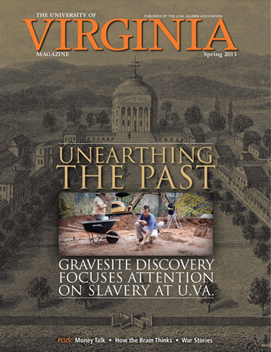
Unearthing the Past - UVA MagazineThis week brings a rich harvest of material on slavery, memory, and public history.

First, we have two fascinating filmed conversations. At the Graduate Center at CUNY, James Oakes talks to  Sean Wilentz about his new book, Freedom National: The Destruction of Slavery in the United States, 1861-1865. And at the New-York Historical Society,  Harold Holzer speaks with Tony Kushner on the subject of Lincoln (and, of course, Lincoln).

Next, we take a look into slavery at Jefferson’s university. In an article in University of Virginia Magazine and a blogpost for Encyclopedia Virginia, Brendan Wolfe contextualizes a recent archaeological discovery.

In the Washington Post, meanwhile, J. Freedom du Lac reports on Colonial Williamsburg’s difficulty recruiting slave interpreters. And how did 19th-century African American portray their own emancipations? Good interviews Deborah Willis and Barbara Krauthamer about their photographic history.

Continue reading

A Report from Savannah

This last weekend Juntoist Glenda Goodman and I attended the Society of Early Americanists’ biennial conference in Savannah.
First things first: have you been to Savannah? It’s lovely, and you should go immediately if you haven’t made it there yet. It’s eminently walkable, and everywhere you ramble you find pretty squares with statues, intersecting streets overhung with Spanish moss.

The walkability factor helped a lot, as there were quite a lot of great panels to capture my attention during the run of the conference; it was nice to be able to pop out for lunch, and to get back (mostly) in time for afternoon panels. Continue reading

Alexander Hamilton’s Originalism

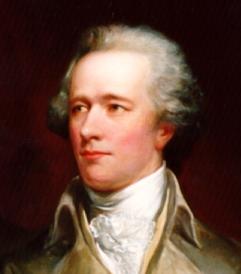
Hamilton_small-1

We should read each legal document according to the plain sense of the text: the sense that was understood by its authors, or perhaps by the people by whose authority it became law. The task of interpretation is, in essence, a historical one. It should be concerned with past realities, not present conjectures. That is as compelling a definition of originalism as I can muster.

I’m not going to get into originalism deeply here. I just wanted to share a few lines from the pen of Alexander Hamilton. There’s a point where the argument for originalism folds in upon itself logically: the point where originalist historians and lawyers want to show that the authors or ratifiers of the original text intended or understood it to be interpreted according to its original intent or meaning. Originalist historiography then becomes a historiography of originalism itself. Lawyers, in my small experience, tend to like this, because they like doing the history of other lawyers. Continue reading

Spring at the “History Harvest”

C & I Harvest

Currier & Ives, 1849

This week, we talk to University of Nebraska-Lincoln historians William Thomas and Patrick Jones, co-directors of History Harvest, a community-based approach to creating a new people’s history of America online using the real “stuff” of our past.

JUNTO: How did you get the idea (and support) for History Harvest? What are the goals of “community-based history,” and how is it a model for the profession?

THOMAS: The original idea for me goes all the way back to my work on The Valley of the Shadow Project in the mid-1990s with Ed Ayers and Anne Rubin. We ran a small community history harvest in that project, but neither the public awareness of digitization nor the technical infrastructure to do large scale digitization on site were available. Still ever since then, I have been interested in expanding the idea. And we have seen in every digital history project that the community often comes forward with materials to contribute. So in 2010 we started The History Harvest Project here at the University of Nebraska. Continue reading

With Malice Toward None: An Academic Blogging Manifesto

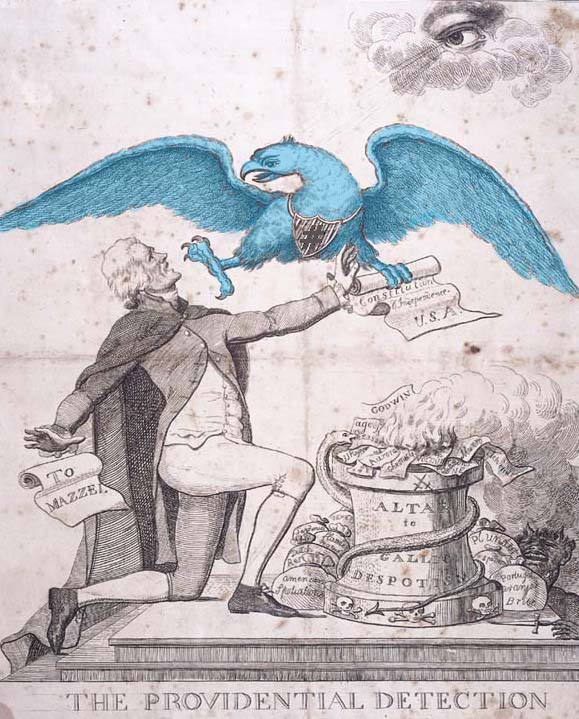
Jefferson-Providential-TwittectionOne of the reasons I am so enthusiastic about being a member of The Junto is that I have long thought blogging provides an excellent opportunity for the development of academic writing. While the typical forms of academic writing are highly formal, blogging (and other forms of digital media) provide a semi-formal arena in which historians can discuss and develop their ideas, taking advantage of an extended virtual community whilst simultaneously providing some structure and order to their thoughts.

Of course, it’s scarcely original to ponder the virtues and values of digital media within the academy. Nor would I want to be prescriptive about what sorts of blogging work and don’t work. After all, even in our own field of early American history, we have a variety of examples of how to blog—from John Fea’s diary-keeping style, to Historiann’s more political content, to J.L. Bell’s treasure trove of research notes. Indeed, it’s the informality and immediacy of blogging that provide the greatest opportunities for enterprising historians. Continue reading