
“A Lady & Children,” 1780 mezzotint, the British Museum.
Human reproduction is simultaneously unchanged and radically different over time and across cultures. This paradox has preoccupied me for over a year as I carried and gave birth to my first child one year ago today, and as I watched my sister follow the same path soon after. Throughout my pregnancy, delivery, and now early motherhood, I’ve found myself thinking often long-dead women and pondering how vastly different our experiences of the same condition must be.
Pregnancy and birth generate intense feelings. Most parents experience joy, hope, and fear. As a historian, I regularly identify with the women I encounter in the archive. The empathy born of our shared biological and emotional experiences generated two additional emotions that most new parents may not: gratitude, on the one hand, and anger on the other. Continue reading
 When
When  Working on material culture, my research has taken me to some interesting, if unexpected places. Last summer, it involved waiting outside Saint John’s Church in Portsmouth, New Hampshire, founded in 1732 as the Anglican Queen’s Chapel. I quickly ran inside to snap some pictures of a baptismal font between back-to-back Sunday services. The Saint John’s font is an impressive fixture, carved from marble in a Continental European baroque style. As a ritual object used in the sacrament of baptism, the font is hardly unusual, but its story is.
 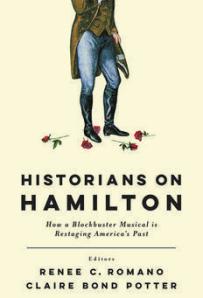 Early this morning, two hundred and fourteen years ago, Alexander Hamilton was shot in an infamous duel with rival Aaron Burr. Hamilton died the next day, Burr’s days as a legitimate political candidate were over, and both soon faded into relative historical obscurity. Some centuries later, their tale fell into the hands of Broadway force Lin Manuel Miranda, who was fresh off the success of his first full length production, In the Heights. Hamilton’s life and death were about to make an epic comeback, styled to powerhouse ballads, rap battles, and New York city fanfare.


 The Junto