Zara Anishanslin, Portrait of a Woman in Silk: Hidden Histories of the British Atlantic World. New Haven: Yale University Press, 2016.
 A silk worm begins wrapping itself round in a cocoon, encasing itself in its fiber. Faceless hands unravel the cocoon, turning it into a single linear thread, the thread then woven together with other linear threads unraveled by other faceless hands until all the threads, warped and wefted, form a connected fabric. Finally, completing the circle, a woman poses for a portrait, wrapped up in yard upon yard of silk, another body encased and shrouded.
It’s a fitting prologue and introduction to Zara Anishanslin’s Portrait of a Woman in Silk, a study in—literally and figuratively—the threads that connected and constructed the eighteenth-century British Atlantic Empire. Anishanslin’s book is not quite like any book that I’ve ever read before. It meanders—but with purpose: from Spitalfields Market in London, to an imagined college in Bermuda, to a parlor in Lancaster crowded with soldiers and military waggoners; from the inner mechanics of the loom, to the symbols within Milton’s Paradise Lost, to the aesthetics of colonial orchards and gardens; from cultural to intellectual to political to spatial to economic to material history. It defies traditional sub-disciplinary designations by design. Anishanslin’s ambitious first book draws inspiration from leading figures in material culture studies—Robert Blair St. George, T. H. Breen, Richard Bushman, Laurel Thatcher Ulrich, and others—but also draws inspiration from book historians like Robert Darnton, from economic historians, from religious historians, and from historians of transatlantic intellectual and epistolary networks. Continue reading
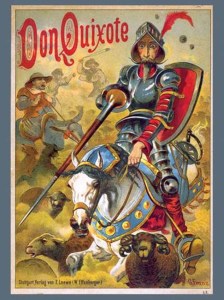 In a certain village of vast early America, whose name I do not recall, a book fell open. Then another. And another. By 1860, many generations’ worth of American readers had imbibed the two-volume work of Spain’s early modern master, Miguel de
 On December 8, 1747, Gov. George Clinton (1686–1761) told a British statesman that the Assembly of New York “treated the person of the Governor with such contempt of his authority & such disrespect to the noble family where he had his birth that must be of most pernicious example.” He thought he might have to “give it [i.e., his position] up to a Faction.” The extant copy of this letter, held within Clinton’s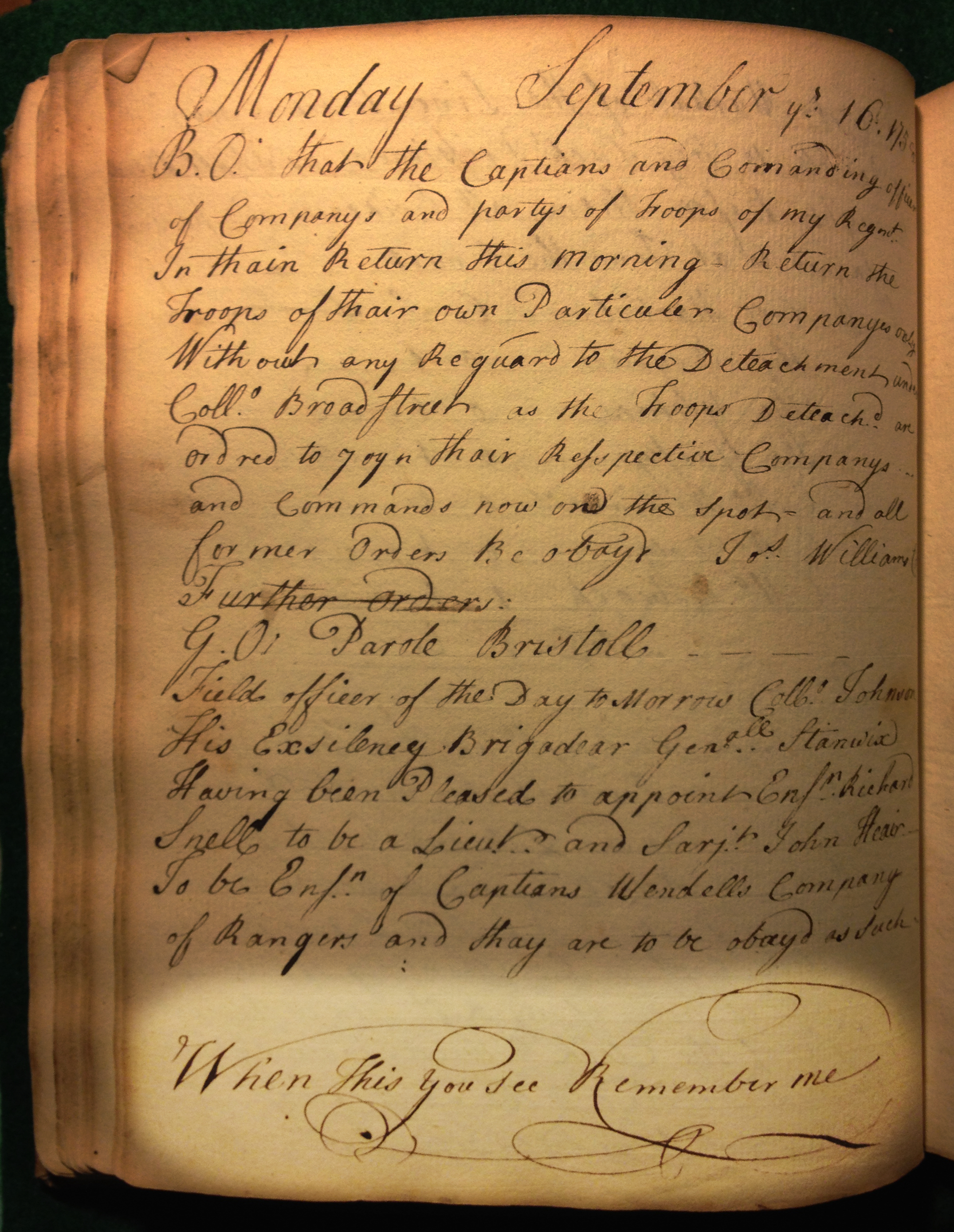


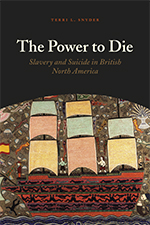 Terri Snyder is Professor of American Studies at California State University at Fullerton who specializes in slavery and gender. She received her PhD in 1992 from the University of Iowa. In 2003, Cornell University Press published her first book,
 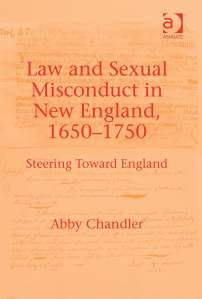 My forthcoming book,
  The brutality of military discipline in the British Army, which regularly sentenced enlisted soldiers to severe floggings of hundreds of lashes with the cat o’nine tails for relatively minor crimes—such as drunkenness or not wearing their uniforms properly—horrified civilian observers in Britain and America alike.
 The Junto