Hannah Bailey, a PhD candidate in History at the College of William & Mary, studies the interconnectivity between developing notions of race and the expansion of the African slave trade in the early modern French Atlantic. She graduated with honors from the University of Wisconsin-Madison in 2010, with degrees in History and French, and a minor in Gender and Women’s Studies. Her master’s thesis focused on how women like Eliza Jaquelin Ambler Brent Carrington remembered, defined, and recorded their experiences during the American Revolution for her master’s thesis. Her dissertation uses histories of West Africa written by individuals like Jean-Baptiste Labat to help explain why, in early eighteenth-century accounts of the region, the fiction of African inferiority began to supersede the fact of African political and economic dominance on the West African coast.
 I never learned the verb “rebobiner” in any of my nine years’ worth of French courses. I don’t blame my French teachers or professors for this. Neither they nor I had any idea that it would one day become an integral part of my vocabulary as I commenced my dissertation research in the Archives Nationales d’Outre-mer in Aix-en-Provence, France. As it happens, “rebobiner” means “to rewind the bobbin of microfilm that you spent twelve minutes learning how to load onto the microfilm reader, because microfilm is always complicated and is triply so when the directions are in a foreign language,” or…something like that. Despite my attempts to prepare myself for my time in the French archives, I experienced more “trials by fire” than I might care to admit. All of my listening to French radio, reading complex French secondary sources, and frantic scouring of French online archival inventories only got me so far. Despite the best efforts of the kindest and most helpful archival staff I’ve yet encountered, I often had to learn by doing, and that wasn’t always easy. It was, however, always worth it. Continue reading →
 We’re happy to bring you the thirteenth episode of “The JuntoCast.”
  I’ve admired Alfred Young’s wonderful, if unwieldy, Masquerade: The Life and Times of Deborah Sampson, Continental Soldier (New York: Knopf, 2004) since I first encountered the book in an undergraduate classroom a decade ago. Young’s biography of Sampson, which covers the life, career, and memory of this remarkable woman who “passed” as a man in the Continental Army for seventeen months, shares much in common with its intellectual sibling,

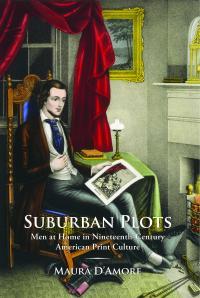 The world was a strange and startling place for Rip Van Winkle when he awoke from a twenty-year nap in New York’s Catskill Mountains. He had ventured to the woods to find a moment’s peace from “the labour of the farm and the clamour of his wife.”
 We at The Junto would like to thank everyone who read along with us for the
  Here’s our fall preview of new titles—share your finds in the comments!
  The Junto