 Dates: 22-24 May, 2019
Location: Cardiff University, Wales, United Kingdom
In the early modern world, no less than today, borders were contested spaces that fostered opportunity on one hand and anxiety on the other. New technologies expanded the reach and scale of maritime enterprises and empires even as control of coastlines and blue-water spaces remained elusive. European interest in a path to the “western sea” focused North and South American colonists’ attention westward to what turned out to be the landlocked interior of massive continents governed and defended by Native peoples already there. Marshes and mountains, estuaries and arid zones, lakes, rivers, fisheries, and forests shaped the movement, experiences, and encounters of Native Americans, Europeans, and Africans who lived in or entered particular spaces. Two distinct and usually separate lines of scholarship examine these spaces of border contest: inland “frontier” studies and maritime/Atlantic history. This conference invites participants to continue a conversation about the landed and aquatic frontiers of borderlands and maritime history to investigate in a broadly comparative framework how early modern actors defined, defied, and took advantage of borders, be they on land or on water. The organisers hope attendees will simultaneously consider how a variety of actors imagined, pictured, and mapped these spaces. This event provides a forum to explore topics including, but not limited to, port cities, divided, middle, and Native grounds, saltwater frontiers, migration, diaspora, epistemology, and settler colonialism. The co-organisers are historians of the Atlantic World, but welcome proposals from other geographies and fields. They are delighted that Dr Lissa Wadewitz, author of The Nature of Borders: Salmon, Boundaries, and Bandits on the Salish Sea, will deliver the keynote address. Continue reading
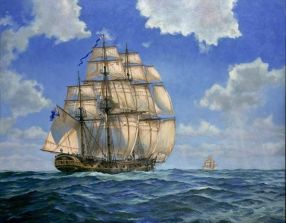 Black men in early America strived for masculine recognition in their society which did not provide many opportunities for Black men to publicly present themselves as men. In 2007, through The William and Mary Quarterly, maritime historian W. Jeffrey Bolster published “Letters by African American Sailors, 1799-1814,” which is useful in examining how Black men performed masculinity to not only provide for themselves and their families, but also to provide opportunities to be recognized as men. In my first post for The Junto, I decided to focus on the life of one of the Black sailors involved in the letters named Jacob Israel Potter. As an early nineteenth century impressed, or captured, Black sailor from Lewes, Delaware by the British Royal Navy, conceptually speaking, the parameters of freedom were far different for him as a person of African descent than someone white. Generally, Black freedom was always in tension with Black mobility. Scholars like Elizabeth Pryor examine this tension in the lives of Black antebellum activists from the late 1820s until just before the Civil War, but this post, in part, examines this tension with the added caveats of how Black masculinity and Black patriotism coincided with this tension as well.[1]

 Welcome to another addition of The Week in Early American History!
 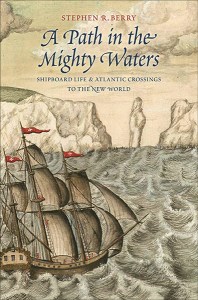 The following is an interview with Stephen R. Berry, an Associate Professor of History at Simmons College. My review of Berry’s recently-released book,
  The Junto