Today’s guest post comes from Caylin Carbonell, PhD Candidate at the College of William and Mary. Her research interests  include gender, family, and legal history in the colonial British Atlantic. Her dissertation looks at women’s everyday household authority in colonial New England. Prior to her doctoral work, Caylin graduated summa cum laude from Bates College in 2012. Caylin received her Master of Arts degree from the College of William and Mary in 2015. Her master’s thesis, titled “In noe wise cruelly whipped: Indentured Servitude, Household Violence, and the Law in Seventeenth-Century Virginia,” explores how early Virginians narrated their experiences with violence and authority. In a close examination of court records from Virginia’s Eastern Shore, Caylin argued that servant bodies and the sites where servants faced violence served as crucial evidence in determining the legitimacy of violence, as correction or abuse. Follow her on Twitter @caycarbs.
Most historians enter the archive with something they’re hoping to find. For me, that has always been women’s voices. Even as my dissertation project has evolved into a broader study of family, labor, and authority in early New England households, I remain firmly committed to bringing women’s stories front and center. Whenever I enter the archive, I am hopeful, if realistic, about what I might find in my efforts to bring women more squarely into the stories we tell about Vast Early America. Continue reading

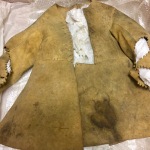
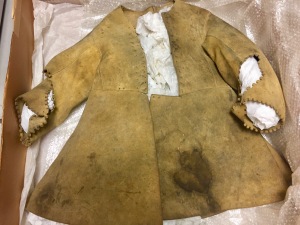



 Two weeks ago, 175 historians descended upon the Massachusetts Historical Society (MHS) in Boston for a three-day conference that considered the political, social, economic, and global parameters of the American Revolution. The conference consisted of eight panels (with pre-circulated papers), two keynotes, and some special presentations on digital projects. The conference proceedings were live-tweeted under #RevReborn2, and fellow Juntoist Joseph Adelman provided some
 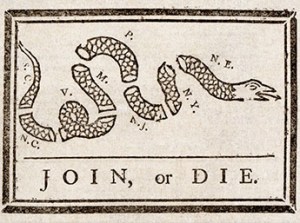 At the risk of overkill, I have thoughts about the “So Sudden an Alteration” conference hosted by the Massachusetts Historical Society, which I attended along with a number of my Junto colleagues. I’d like to pick up on the themes of the conference to discuss an underlying tension in the conversation that never quite reached the surface in explict terms.
 The Junto