What The Oatmeal Missed

NB: This post was originally published in 2013.

Oatmeal imageWhen did you realize Christopher Columbus was a jerk?[1]

I’m not sure if I actually received the “traditional,” Samuel Eliot Morrison and Daniel Boorstin-inflected education on Columbus, during my child and young adulthood.[2] I remember that my high school history course (c. the early 2000s) sped through Columbus and discussed a bit about his bad human rights record. My excellent college-level history courses, of course, provided the standard explaination, found in virtually every modern textbook of repute, of the Columbian Exchange unleashed by early European exploration and conquests in the Americas.[3] I imbibed, during my childhood, the general story about Columbus in American culture—that “he sailed the ocean blue in 1492” and “discovered” America—but, if there were any lies my teachers told me, it certainly wasn’t about the earliest encounters between Native Americans and Europeans in the Caribbean.[4]

Continue reading

Interviews with Historians: Brett Rushforth

Brett RushforthBrett Rushforth is Associate Professor of History at the College of William and Mary, where he teaches courses on the history of early America, American Indians, and comparative race and slavery. He is the co-editor, with Paul Mapp, of Colonial North America and the Atlantic World: A History in Documents (Pearson/Prentice-Hall, 2008), and he currently serves as Book Review Editor for the William and Mary Quarterly. His first monograph, Bonds of Alliance: Indigenous and Atlantic Slaveries in New France was published by University of North Carolina Press for the Omohundro Institute of Early American History and Culture in 2012, and has won several awards, including the 2013 Merle Curti Award in Social History (Organization of American Historians), 2013 FEEGI Biennial Book Prize (Forum on European Expansion and Global Interaction), and 2013 Mary Alice and Philip Boucher Prize (French Colonial Historical Society). It was also recently named a finalist for the 2013 Frederick Douglass Book Prize (Gilder Lehrman Center for the Study of Slavery, Resistance, and Abolition). Dr. Rushforth is currently at work, with Christopher Hodson, on a general history of the early modern French Atlantic. Under contract with Basic Books, its working title is Discovering Empire: France and the Atlantic World from the Crusades to the Age of Revolution. Continue reading

The Week in Early American History

TWEAHWelcome to another of The Junto‘s weekly round-ups of things that caught our eye in the rest of the Internet this week. Find the links after the jump! Continue reading

Epilogue or Prologue? The Royal Proclamation Turns 250

If you’ve heard of the Royal Proclamation of 1763, it’s probably in the form of the “Proclamation Line,” the imaginary line of masking tape across the Appalachian Mountains dividing English colonists along the coast from native populations in the interior of North America. According to a group of historians gathered at the Old State House in Boston this past Friday, it may have far greater significance. (Or not.)
Continue reading

Articles of Note: Spring and Summer 2013

Many months ago, I posted the first of what I hoped to be a quarterly series highlighting recent articles I enjoyed, and inviting readers to do the same. Sadly, life got in the way, and so I have a bit to make up. As a recap for this roundup’s purpose: there are so many journals publishing quality articles in the field of early American history that it is difficult, if not impossible, to keep up. So this list serves as a reminder that you need to catch up on new issues, a identify articles I found especially important, as well as a chance to highlight the work of young scholars and friends. Just because an article doesn’t make the list doesn’t mean I didn’t like it—in fact, I am way behind on my own reading—but it is an invitation to list your own favorite recent articles in the comments below.

The following articles were published between March and September, and obviously reflect my own interests and background. Also, remember the fantastic articles in the special WMQ issue on families and the Atlantic world that I highlighted a few months ago. Continue reading

Unorthodox Assignments

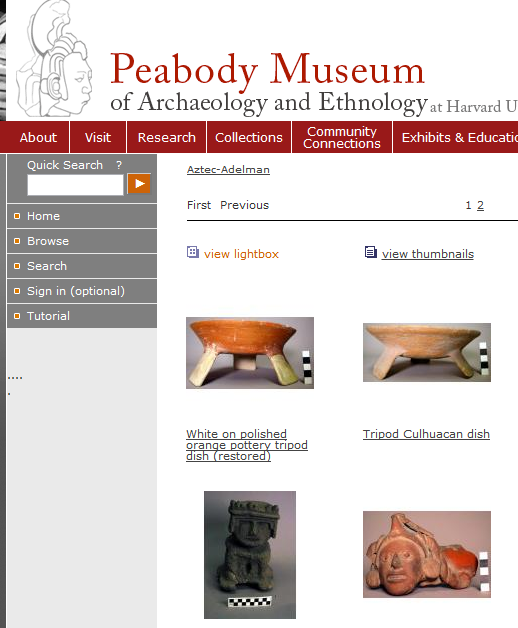
Peabody Online ExhibitA few weeks ago, I discussed the experience of teaching the comparative history of Native America this past spring. With syllabus-writing season well underway, I thought it would be useful to pick up on one thread I left dangling in that post on how I designed the assignments.

Continue reading

Beyond the Valley of Mexico

Expanding the boundaries of early America has been a hot topic of conversation this summer. At both the Omohundro Institute conference last month, and at SHEAR last weekend, plenary sessions discussed a broader view of the past. Having internalized the Atlantic turn, scholars are now turning their energies toward the interior, asking how we should integrate the trans-Appalachian and trans-Mississippian West into our stories and interpretations.

Continue reading

Land and Language Symposium: A Recap

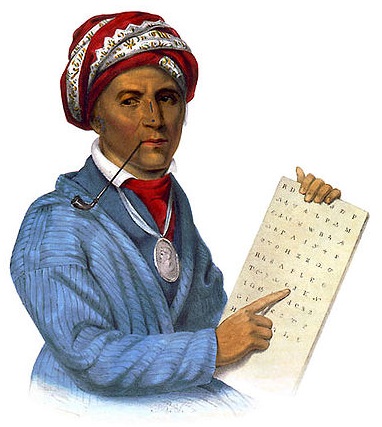
Sequoyah_CharlesBirdKing1830On April 26, Columbia University’s American Studies and Early American History Seminars organized the symposium “Rethinking Land and Language: Dialogues in Early American and Indigenous Studies.” Divided into two roundtables dedicated to land and language, the symposium brought together an array of scholars to discuss how new perspectives in Native American studies might influence work being done across fields in early American history. This post will recap a few of the key themes that emerged from the symposium.* Continue reading

The 10,000 B.C. Question: How to Start the Survey

Today’s post is in the vein of ProfHacker, which is to say that it’s part descriptive of my practices in the classroom, and part a request for others to help work through a common problem.

Having just completed two consecutive semesters teaching the first half of the U.S. survey, I’m hoping to spend a little time this summer mulling how to improve the design of the course. At Framingham State, it runs “from the Age of Discovery to Reconstruction,” according to the course catalog. For our Europeanist readers and colleagues, that may seem like a mere drop in the bucket, but it’s quite a lot of ground to cover in just fifteen weeks. As a survey, everything feels like it gets short shrift. This much I knew going in, but I’m looking forward to the opportunity to reflect. Continue reading