
“Valley of the Catawissa in Autumn,” Thomas Moran (ca. 1862)
Fall brings new early American titles to explore. Enjoy our Spring Reads 2015 list, too, and share your finds below!
“Valley of the Catawissa in Autumn,” Thomas Moran (ca. 1862)
Fall brings new early American titles to explore. Enjoy our Spring Reads 2015 list, too, and share your finds below!
Today’s guest post comes from Jordan Fansler, who received his Ph.D. from the University of New Hampshire at Durham in May 2015. The following is based on his dissertation, “A Serious and Jealous Eye: Federal Union in New England, 1775 – 1821.”
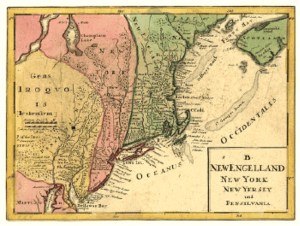 States’ rights looms large in discussions of both historical and contemporary American politics and its federal union. For good reason, the ante-bellum states’ rights movement of the South is often the first to come to mind, but such a narrow focus does not do justice to the topic as a dynamic historical phenomenon, nor does it provide adequate context for the more modern manifestations of states’ rights movements. In the early republic, New Englanders promoted their own brand of states’ rights, to protect a type of near-sovereignty they attributed to their legislatures, as the best way to promote their interests and shield individuals from distant oppression.
 Here in the United States, today is Memorial Day, a holiday originally created in the late 1860s to honor the Union Civil War dead, and now a time to commemorate all of America’s war dead. Because it’s also observed as a three-day weekend, we’re bringing you a special Monday holiday edition of The Week in Early American History. On to your morning reading…
 Every president has a past, and to his regret, John Adams did not save all of it for history’s sake. “Whatever you write preserve,” he directed his grandsons in 1815. “I have burned, Bushells of my Silly notes, in fitts of Impatience and humiliation, which I would now give anything to recover.” Continue reading
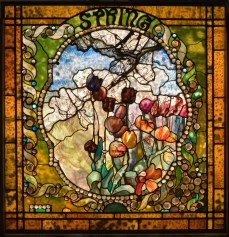 Here’s our seasonal roundup of new and forthcoming titles. Share your finds below! Continue reading
 At the beginning of February, Wake Forest University hosted a symposium marking the 25th anniversary of the publication of Nathan Hatch’s The Democratization of American Christianity (Yale University Press). The list of participants was a “who’s-who” of American religious history: Catherine Brekus, Sylvester Johnson, Mark Noll, Amanda Porterfield, Harry Stout, Grant Wacker (on more of a “who’s-that?” note, I was there, too, feeling honored but absurdly under-credentialed in that company). Each offered reflections on the book’s influence and reach, on his or her personal experience with it, on how its arguments have aged. Hatch, now the president of Wake Forest, offered an eloquent response. (Video of the event is available here.) Continue reading
 The past two weeks have been busy ones in Early American History! Continue reading
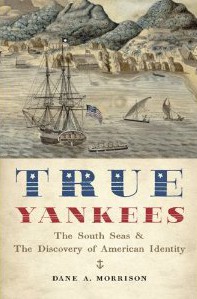
The following is an interview with Dane A. Morrison, about his recently-released book, True Yankees: The South Seas & the Discovery of American Identity (Baltimore: The Johns Hopkins University Press, 2014). Morrison is Professor of History at Salem State University (MA). Continue reading
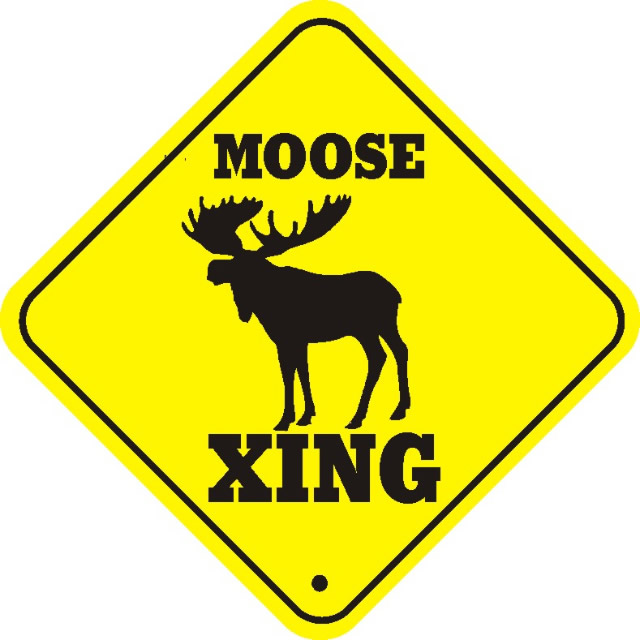 Southern Connecticut is not exactly moose country. So I had to hide my disbelief when one day my boss claimed that he sat in traffic after a car hit a moose on the Merritt Parkway. How lost would a moose have to be to find itself in suburban Connecticut? Turns out, my boss told the truth. I welcomed any distraction from that boring summer job and followed this story pretty intently. It was a sad story—the moose had to be put down after the accident—but also a memorable one. I thought so at least. (Anytime I give someone directions to take the Merritt, I still warn them to watch for moose). The accident received a bit of coverage in local newspapers, while some outlets reprinted the AP coverage.[1] Every so often a reporter discovers the story when they learn that Connecticut is home to a sizable moose population.[2] Mostly, though, the story is forgotten. Continue reading
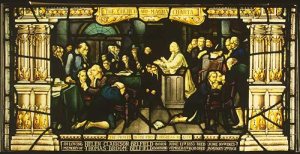 Joseph Yesurun Pinto, a 31 year-old Anglo-Dutch émigré in the autumn of 1760, had led New York’s Shearith Israel synagogue for barely a year when the second notice appeared in the papers. To re-commemorate the British conquest of Canada, all “Christian societies” and “houses of worship” would celebrate a day of thanksgiving on Thursday, October 23d. Over the past decade, New Englanders and their neighbors had held at least 50 fast days, many to lament God’s judgments against America, or to reform their wayward behavior. The proclamation of a thanksgiving day likely brought some measure of relief and joy.
 The Junto