 O March! You herald spring and blooms and sun!
But lest you fear a change too swift to speak,
I now present our tidings of the week. Continue reading
Tag Archives: teaching
The Great Writing and Editing Extravaganza of 2013
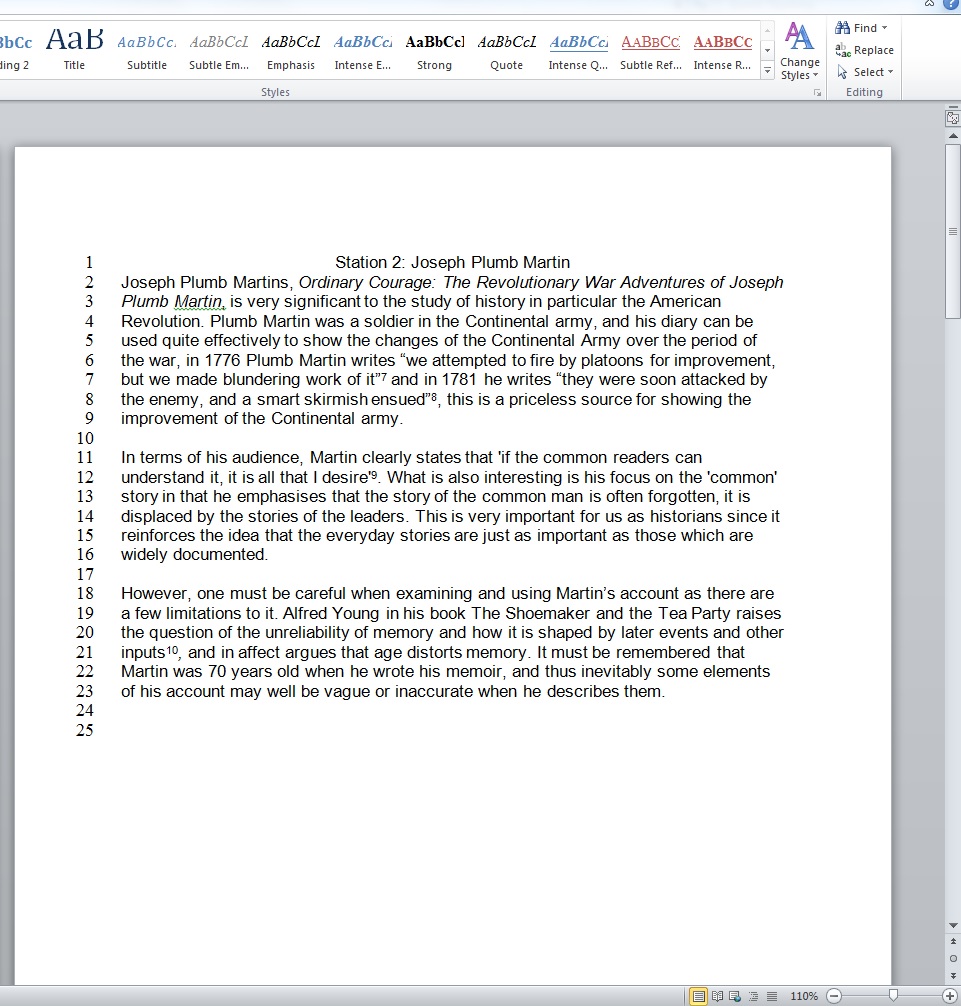 That moment in the semester had arrived. You know the one: the point at which, having received their grades from the first assignment of the term, students were beginning to panic about their final writing tasks. Even though I, as a historian, write quite a bit, I sometimes find it hard to teach writing because it’s difficult to articulate the rules I inherently know. I also think that it can be tricky to teach in an engaging way. Because I can be a competitive person, I decided to teach my first-year students about writing through a contest of sorts. Continue reading
On Undergraduate Writing
 I am currently in the midst of grading midterms and the process, as well as a recent piece by Marc Bousquet at CHE, has gotten me thinking about undergraduate writing and the debate of its value kicked off by Rebecca Schuman’s piece, “The End of the College Essay,” in Slate back in December. I want to use my post today to lay out some thoughts I have been having about undergraduate writing in lieu of the debate these articles have occasioned. Continue reading
The Week in Early American History
 On to this week’s links…
Learning While Distracted
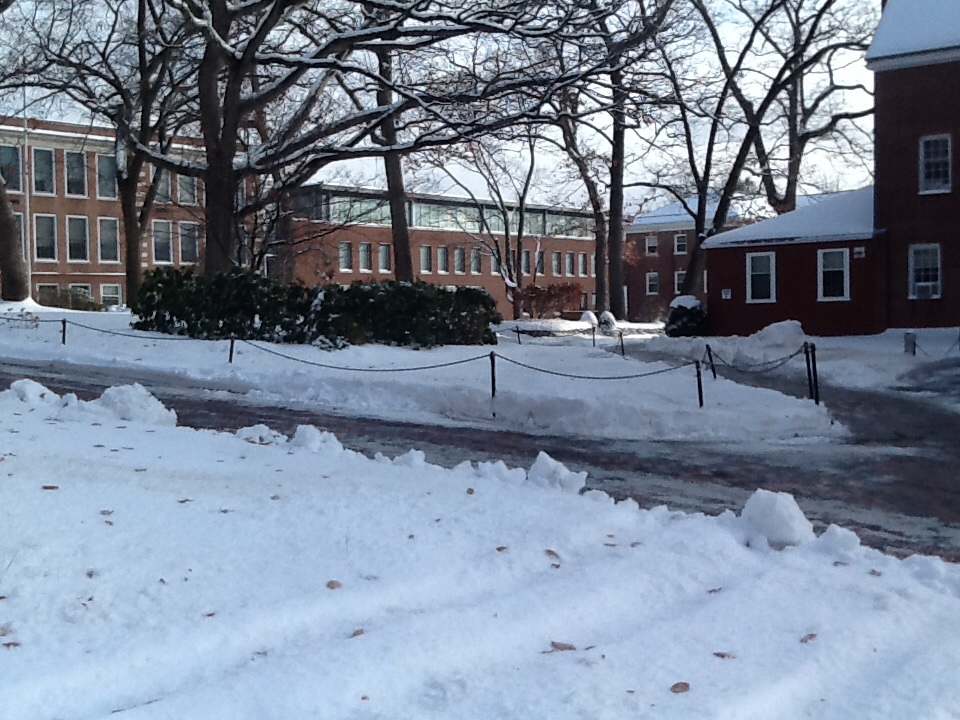
I don’t know about you, but my Twitter and Facebook feeds are overflowing with updates on how many schools, universities, and day care centers are closed today as the latest round of winter weather works its way up the East Coast. But some are open, with professors in the classroom trying to make headway on syllabi that are rapidly becoming useless as guides.
Introducing The History Carousel: Bringing the Past Full-Circle with the Present
 We at The Junto are very excited to announce the birth of a new podcast. “The History Carousel” will connect the past with the present, and will feature a rotating cast of Junto members and guests. It’s part of our equally-new podcast network, which is going to allow for all sorts of podcasting shenanigans—many thanks to Michael Hattem for helping to set it up. Continue reading
Using Local History in the Survey: City Streets
 A recent conversation with Joe, Ken, and Michelle Moravec has me thinking about ways to use local history in a US survey course. Right now, Michelle and I have it easy; we’re both teaching in greater Philadelphia. It doesn’t take a lot of creativity to find ways to call out local attractions in class. (I can even display a map showing my campus smack in the middle of the Battle of Germantown.) But what about local history in general? How can we demonstrate that history is experienced in particular places, and that every place, at least potentially, has a history?
Using Contraries in the Classroom: Thoughts on Choosing Reading Assignments
“Without Contraries there is no progression. Attraction and Repulsion,
Reason and Energy, Love and Hate are necessary to Human existence.
From these contraries spring what the religious call Good & Evil.
Good is the passive that obeys Reason. Evil is the active springing
from Energy. Good is Heaven. Evil is Hell.”
-William Blake, The Marriage of Heaven and Hell
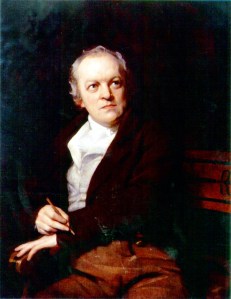
I doubt that the mercurial poet William Blake had American historiography on his mind when he penned these famous lines from his most famous poem, but I am going to use them for such a purpose anyhow. And who knows—Blake was indeed known as a visionary. Continue reading
As the Semester Looms

January has been a busy month for many of us here at The Junto, and we’re sure for many of our readers, as we have been preparing for the semester about to begin (except, of course, for Rachel, who will be grading first-term exams for weeks to come). Over the thirteen months the blog has been active, we’ve actually now written quite a few posts on teaching and pedagogy, and we’d like to point out a few highlights as you prepare your syllabi and first weeks of classes.
Teaching Through Primary Sources: Henry Drax’s Plantation Instructions
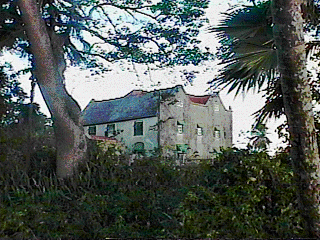 Primary sources form an important part of the assignments for any of my undergraduate classes. As with any set readings, some of these sources work more successfully than others. One source that has proven reliably successful is Henry Drax’s instructions on running a sugar plantation in seventeenth-century Barbados. Back in my graduate student days, I prepared an initial transcription of the instructions as a research assistant. Thankfully, my students don’t have to grapple with some of the more eccentric approaches to handwriting in the original copy, and can instead read the 2009 William and Mary Quarterly “Sources and Interpretations” piece written by Peter Thompson. [1]
 The Junto