A year ago today, I introduced the world to The Junto.

For those who care, chocolate is the official Junto birthday cake flavor. Duh.
Since then, my admittedly lofty goals of success have been dramatically achieved by our cast of bloggers. I aimed to gather some of the brightest young minds in the field, and I have been pleased with the consistent quality and quantity of posts throughout the year. We have had posts nearly every weekday, along with our popular “This Week in Early American History” roundup every Sunday, which totaled 292 posts for the year. It would be impossible and unfair to highlight the “best” posts because there have been so many quality posts that, quite frankly, probably belong in a more professional setting than a blog. Some of our most popular include Michael Hattem’s overview of Assassin’s Creed III (thanks, Reddit!), the multi-author roundtable on Walter Johnson’s River of Dark Dreams, Rachel Herrmann’s response to new(!) cannibalism developments, and Matt Karp’s reviews of Django Unchained and Twelve Years a Slave. And our academia-related posts have also been highly popular, as the response to posts on digital workflow and creating a CV attest. And who can forget our epic March Madness Tournament? Indeed, the quality of the content is reflected in the fact that The Junto has been featured in the American Historical Association’s “What We’re Reading” seven times. Continue reading

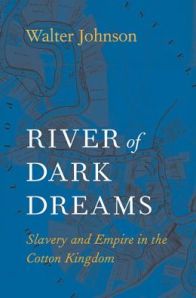 This week at The Junto, we are pleased to offer a roundtable review on Walter Johnson’s recent
 I planned on doing another “Articles of Note” post for today since it’s been a few months since the last one, and lots of new articles are indeed noteworthy, but I’m feeling lazy today. Plus, as a more legitimate excuse, the William and Mary Quarterly just put out an issue that is worth highlighting by itself. What originated as a conference sponsored by the OIEAHC and the Institute for Historical Studies at the University of Texas at Austin, “Centering Families in Atlantic History” addresses an important (and often neglected) issue in the vibrant, popular, yet often uneven field of study based around the Atlantic Ocean. In brief, two of the lessons that stood out the most to me were 1) the importance of family connectedness within an era usually dominated by an emphasis on empires and states, and 2) the much-needed diversification that encompasses much more than just Anglo-America (perhaps the biggest problem with the “Atlantic History” field.)

 The Junto