This contribution to the forum comes from Justin Leroy, an Assistant Professor in the Department of History at UC-Davis. Prior to joining UC Davis in 2016, he was a postdoctoral fellow in global American studies at Harvard University. He is at work on his first book, Freedom’s Limit: Racial Capitalism and the Afterlives of Slavery.
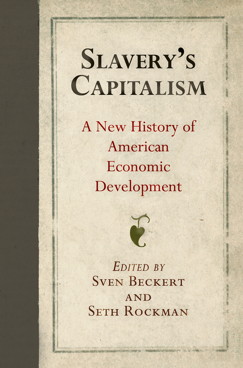 Slavery’s Capitalism offers a tremendous amount of evidence to support what scholars of slavery have long known—that slavery underwrote nearly every aspect of American economic development for over two centuries. These essays provide unprecedented detail about the precise workings of slavery’s role in the rise of American capitalism and will inspire many future research projects. Beckert and Rockman’s introduction is an ambitious piece of historiography, drawing together a diverse array of subfields and intellectual debates. Work such as Cedric Robinson’s Black Marxism and Ian Baucom’s Specters of the Atlantic, while key texts for interdisciplinary scholars working on questions of racial capitalism, are not often acknowledged by historians of the “new history of capitalism.” The introduction’s scope makes it an excellent primer for specialists and non-specialists alike. It is the most comprehensive of the recent review essays on slavery and capitalism, yet the breadth of this introduction is not matched by the essays within. Continue reading
 Following on from
  At a time when political events seem to place the very meaning of American democracy under the microscope, it is perhaps unsurprising that so many recent works have looked to re-evaluate the American Founding. Books focusing on the mid-1770s in general have included Kevin Philips’s 1775, Richard Beeman’s Our Lives, Our Fortunes, & Our Sacred Honor, and Joseph Ellis’s American Quartet. Recent books that have looked more specifically at the Declaration of Independence itself include Danielle Allen’s Our Declaration. Robert Parkinson’s The Common Cause, too, has called for a re-evaluation of what motivated those who fought for Independence, though his work calls for a much less celebratory conclusion. Such a list demonstrates the importance of the mid-1770s to America’s national identity. With The Heart of the Declaration, Steven Pincus throws his hat into the ring, too.
 A silk worm begins wrapping itself round in a cocoon, encasing itself in its fiber. Faceless hands unravel the cocoon, turning it into a single linear thread, the thread then woven together with other linear threads unraveled by other faceless hands until all the threads, warped and wefted, form a connected fabric. Finally, completing the circle, a woman poses for a portrait, wrapped up in yard upon yard of silk, another body encased and shrouded.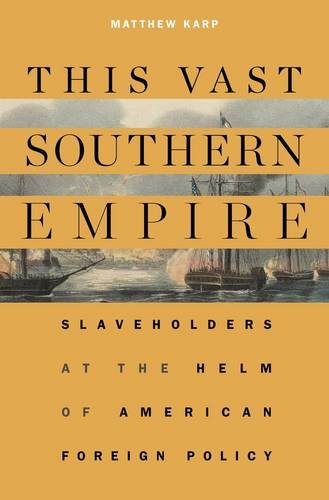
 On December 8, 1747, Gov. George Clinton (1686–1761) told a British statesman that the Assembly of New York “treated the person of the Governor with such contempt of his authority & such disrespect to the noble family where he had his birth that must be of most pernicious example.” He thought he might have to “give it [i.e., his position] up to a Faction.” The extant copy of this letter, held within Clinton’s
 The Junto