
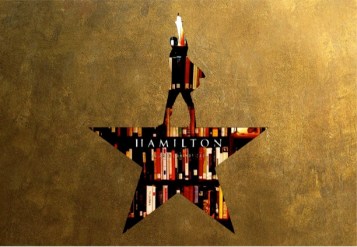
 With Hamilton’s sweep at the Tonys last night, this year’s phenomenal tide of Hamilton-mania has hit the high-water mark. You’ve cheered each much-deserved award and accolade, you’ve memorized every word of the soundtrack, you’ve devoured the #Hamiltome. Perhaps you’ve kept up with professional historians’ wide range of responses to Lin-Manuel Miranda’s blockbuster. Maybe you’re even one of the lucky few who’ve managed to score tickets to the show itself. But now, fans of the musical (and folks who are simply surrounded by them) might well find themselves asking, #WhatComesNext?
The Junto has the answer! Tomorrow afternoon, when you lose the daily ticket lottery yet again, why not start lookin’ for a mind at work? Grab a great history book and drown your sorrows in a flagon of sweet American Revolution knowledge. Here are some picks, creatively paired with favorite characters from the musical. Continue reading
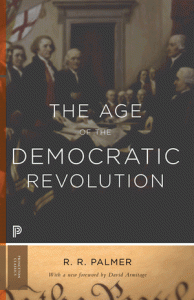 This past semester I taught a course on “18th Century Atlantic Revolutions: America, France, and Haiti,” which included both undergraduate and graduate students. (I wrote about the assigned readings at
 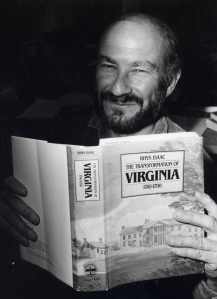 As a local representative of American Empire in Melbourne, Australia, and fifteen years after Michael McGerr and Ian Tyrrell’s spirited exchange in the pages of the American Historical Review, in which they wrestled with the potential gains and losses of a transnational American history, I thought it was time, in the spirit of Alistair Cooke, to send a “Letter to America,” checking in on the topic of American Exceptionalism and the viability of the transnational historical project in Oceania.
 “Slavery and Freedom” is an article about Puritans, even though it doesn’t mention them at all; it’s about what happens when you try to colonize a place without them.
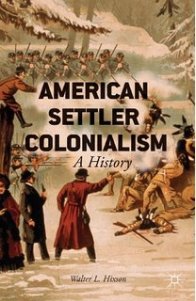 One of the trending themes in Native American history is “Settler Colonialism.” From Patrick Wolfe’s foundational essay, to recent works by historians and literary scholars—Bethel Saler, Jodi Byrd, Gregory Smithers, David Preston, and Lisa Ford, for instance—this theoretical model has attracted significant attention within the field.
 Revolutions:
 The Junto