 American colonists’ protest against the 1773 Tea Act involved more than just the Boston Tea Party; and it was provoked by more than just a tax. What sharpened the edge of colonial frustration was the short shrift given to American business interests in the balancing-act of imperial administration—and the triumph, by contrast, of the East India Company. American merchants and smugglers were the big losers in a larger effort to bail out the struggling corporation. As John Dickinson put it in his second “Letter from the Country,” the British policy aimed “not only to enforce the Revenue Act but to establish a monopoly for the East India Company, who have espoused the cause of the ministry; and hope to repair their broken fortunes by the ruin of American freedom and liberty!”[1] Continue reading
Category Archives: Recent Scholarship
Guest Post: The Problem of Loyalism before the American Revolution
Today’s guest poster is Christopher Minty, a PhD candidate at the University of Stirling. His dissertation focuses on Loyalists in New York.

Over the past four years, I’ve been fortunate enough to work on a group of colonists who would go on to become Loyalists in the American Revolution. My dissertation examines 9,341 future Loyalists during the imperial crisis, 1763–1775, in New York and, essentially, tries to follow their collective paths to either voluntarily signing their name to a declaration, petition and/or subscription list affirming their continued allegiance to the prevailing political order or taking the oath of allegiance. Continue reading
Articles of Note: Spring and Summer 2013
Many months ago, I posted the first of what I hoped to be a quarterly series highlighting recent articles I enjoyed, and inviting readers to do the same. Sadly, life got in the way, and so I have a bit to make up. As a recap for this roundup’s purpose: there are so many journals publishing quality articles in the field of early American history that it is difficult, if not impossible, to keep up. So this list serves as a reminder that you need to catch up on new issues, a identify articles I found especially important, as well as a chance to highlight the work of young scholars and friends. Just because an article doesn’t make the list doesn’t mean I didn’t like it—in fact, I am way behind on my own reading—but it is an invitation to list your own favorite recent articles in the comments below.
The following articles were published between March and September, and obviously reflect my own interests and background. Also, remember the fantastic articles in the special WMQ issue on families and the Atlantic world that I highlighted a few months ago. Continue reading
Land and Language Symposium: A Recap
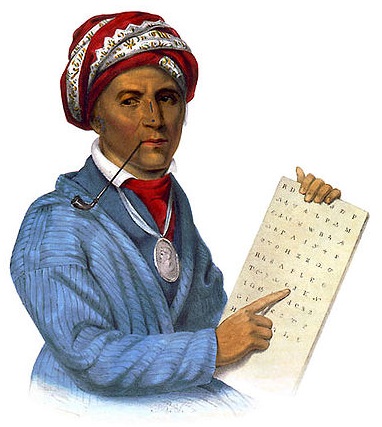 On April 26, Columbia University’s American Studies and Early American History Seminars organized the symposium “Rethinking Land and Language: Dialogues in Early American and Indigenous Studies.” Divided into two roundtables dedicated to land and language, the symposium brought together an array of scholars to discuss how new perspectives in Native American studies might influence work being done across fields in early American history. This post will recap a few of the key themes that emerged from the symposium.* Continue reading
Revolution Not Dead
If “The American Revolution Reborn” conference proved anything, it’s that the Revolution is in no danger of getting old. So much is still left to be told. Topics that few Revolutionary narratives have fully considered—ambivalence, religious dissent, hindsight connections to Scotland’s union with England in 1707, and future links to the Latin Americas—beg for further research. And those are only the issues that were discussed on the first day.
#RevReborn, Periodization, and the American Revolution
Two weeks ago, anticipating the McNeil Center’s “The American Revolution Reborn” conference, I wrote a post about my own thoughts on the place (and future) of the American Revolution in the historiography of early America. In that piece, I pointed out that issues relating to causality had gone largely unexplored for a few decades now as attention in the field shifted to the early republic. Both during and after the conference, there has been a substantial amount of internet chatter, from live-tweeting the conference to storifying those tweets to in-depth, panel-by-panel blog recaps. Off the top of my head, I cannot think of another theme-specific historical conference that has gotten this level of internet coverage, though I’m sure some have done. But almost all of the coverage has been about recounting the ideas and themes that came out of the conference, with not much attention given to commenting on them. In this piece, I’d like to comment on one of the most fundamental themes that hung in the air over the entire conference: periodization. Continue reading
Science, Meet Slavery: “River of Dark Dreams” and the Future of Slavery Scholarship
 I bet few graduate students these days haven’t read, or at least seen referenced, Walter Johnson’s essay “On Agency.” Published a decade ago, the essay was prompted by what had become hackneyed trope in slavery scholarship. Everyone seemed to ascribe slaves a role in shaping their lives—“agency”—despite the power asymmetries inherent in the slave-master relationship. Johnson famously called for an end to this kind of writing. But one of his subtler points may have been lost amid his overarching argument. It wasn’t that slave agency was unimportant, but that it had lost its contemporary relevance. Finding agency mattered in the Civil Rights Era, the years in which the scholarship flourished, because it bolstered African Americans’ claims on the nation’s past, and thus its future. Continue reading
To See The World In A Bale of Cotton
 The promise of a tie between the local and the global—a thread to join the dense fiber of individual life to the vast patterns of human interaction—has long lingered at the edge of the historian’s vision. “The hours should be instructed by the ages, and the ages explained by the hours,” wrote Emerson in “History.” “Each new fact in . . . private experience flashes a light on what great bodies of men have done.” Even the less Transcendental among us are lured by a link between the intimate and the infinite: every globalist, no matter how ambitious, must find their ground-level characters and illustrative anecdotes; the best microhistorians train their lenses to reveal not just cell particles but a whole cosmos. Few recent works in early American history, however, are so explicit in their equal pursuit of the local and the global, the hours and the ages, as Walter Johnson’s River of Dark Dreams (Cambridge: Belknap Press of Harvard University Press, 2013). Continue reading
The Return of the American Revolution
 Looking forward to attending one of the largest conferences on the American Revolution in a generation this week in Philadelphia, I thought I would take a moment to reflect on the title of the conference—”The American Revolution Reborn“—and its historiographical purchase.
New Journal Launch: J19: The Journal of Nineteenth-Century Americanists
 Though chronologically speaking only half of their content is relevant to The Junto, we are thrilled to welcome a new journal into the fray: J19: The Journal of Nineteenth-Century Americanists. What originated as an email list and loosely-based organization emerged to host two fabulous (from what I hear) conferences, and now what promises to be a solid journal. Continue reading
 The Junto