Guest Post: Review of Bassi, An Aqueous Territory

Today’s review is by James Hill, who received his Ph.D. from the College of William & Mary in 2016 and is currently an Assistant Professor of History at the University of the Bahamas. He has published articles in Early American Studies (Winter 2014) and the Florida Historical Quarterly (Fall 2014). His dissertation, “Muskogee Internationalism in an Age of Revolution, 1763-1818,” analyzes Creek and Seminole diplomacy. This will be followed tomorrow by a Q&A with the author.

Ernesto Bassi, An Aqueous Territory: Sailor Geographies and New Granada’s Transimperial Greater Caribbean World (Durham: Duke University Press, 2016).
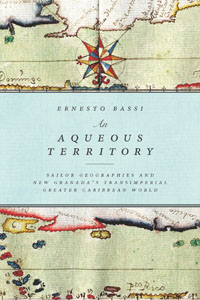
For decades, the historiographies of the Caribbean and the mainland Americas largely remained separate, with the modern constructions of nation-states influencing how scholars have framed the geographical parameters of their works, with some notable exceptions (New Spain, Guyana, Suriname). In recent years this has begun to change in the case of North America’s early modern ties to the Caribbean. Scholars such as Jane Landers, J. R. McNeil, and Shannon Lee Dawdy have emphasized transnational and transimperial connections between various Caribbean islands and the territories that eventually encompass the United States. Continue reading
Guest Post: Cotton Mather and the Enlightenment in New England: Redefining the Holy Spirit

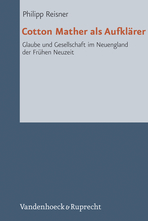
Philipp Reisner received his PhD from and teaches as a lecturer in the American Studies  Department at Heinrich Heine University in Düsseldorf, Germany. He approaches research multidisciplinarily and is particularly interested in New English and American literature, cultures, and theologies. His first book, Cotton Mather als Aufklärer. Glaube und Gesellschaft im Neuengland der Frühen Neuzeit, deals with the theological role that the New English theologian Cotton Mather (1663–1728) played in the context of early modern society and was published in the Reformed Historical Theology series with Vandenhoeck & Ruprecht in 2012.

1008508

My book Cotton Mather als Aufklärer. Glaube und Gesellschaft im Neuengland der Frühen Neuzeit examines Cotton Mather’s writings, identifying him as participating in Enlightenment thought through his various societal roles as pastor, physician, politician, and scientist. Mather studies have become an important part of early modern studies, not least because they touch on so many disciplines—such as natural and life sciences, philosophy, history, philology, and theology—and the ways these disciplines were transformed throughout the early eighteenth century. His oeuvre is currently undergoing revision, attention being drawn to his theology through the first publication of his Bible commentary Biblia Americana; this revision tends to reinterpret him as an early evangelical. It has not been fully recognized to what extent this reinterpretation depends on his pneumatology. In my book, I examine his pneumatology in his Bible commentary and his many publications in order to show how Mather’s redefinition of the Holy Spirit posits itself in relation to the unfolding of Enlightenment thought. Continue reading

Q&A, Marisa Fuentes, Dispossessed Lives

FuentesMarisa J. Fuentes is Associate Professor of Women’s and Gender Studies and History at Rutgers University, New Brunswick. Dispossessed Lives: Enslaved Women, Violence, and the Archives is her first book. Casey Schmitt previously reviewed Dispossessed Lives for The Junto. Continue reading

“Meditations on Archival Fragments”: Review of Dispossessed Lives

“Meditations on Archival Fragments”: Review of <i>Dispossessed Lives</i>

FuentesIt should go without saying that the historical profession depends on archives. Near or far, we need those repositories to craft historical narratives about past worlds. There is also no shortage of books and articles critical of the construction of colonial archives, perhaps the most famous among them being historian Ann Laura Stoler’s Along the Archival Grain. Despite the popularity of that book, however, historians still rarely discuss their archival methodology. Monographs always provide a list of consulted repositories, which for early American history can often read like a top ten greatest hits of national and state archives. And yet, try looking for the word “archive” or “archival knowledge” in the index of most books and the result might be surprising. Continue reading

Guest Post: French Imposters, Diplomatic Double Speak, and Buried Archival Treasures

Guest Post: French Imposters, Diplomatic Double Speak, and Buried Archival Treasures

Today’s guest post is by Cassandra Good, Associate Editor of The Papers of James Monroe at the University of Mary Washington, and author of Founding Friendships: Friendships Between Women and Men in the Early American Republic (New York: Oxford University Press, 2015). Follow her @CassAGood. 

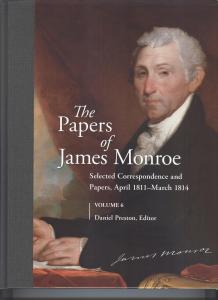
Monroe 1The latest volume of The Papers of James Monroe covers a short but important period in Monroe’s life and career: April 1811 to March 1814. Monroe became Secretary of State in April 1811 and was tasked with trying to repair relations with both Great Britain and France. After war with Britain began in June 1812, his focus broadened to military affairs and included a stint as interim Secretary of War. The bulk of the volume, then, is focused on the War of 1812. However, there are a number of other stories revealed here that will be of interest to a range of historians. Continue reading

“Mixing the Sacred Character, With That of the Statesman”: Review of Pulpit and Nation

“Mixing the Sacred Character, With That of the Statesman”: Review of <em>Pulpit and Nation</em>

Spencer W. McBride, Pulpit and Nation: Clergymen and the Politics of Revolutionary America (Charlottesville and London: University of Virginia Press, 2016).

pulpit-and-nationThe relationship between Christianity and the American founding is a topic of obvious contemporary political relevance in the United States. It is also a field in which historians during the last few years have labored with great energy.[1] In Pulpit and Nation: Clergymen and the Politics of Revolutionary America, Spencer McBride adds to that labor with a book that is—at first glance—less politically charged than some other contributions have been. Yet Pulpit and Nation advances what may be a subversive claim. Continue reading
Q&A: Patrick Spero and Michael Zuckerman

15598Following on from yesterday’s review of The American Revolution RebornThe Junto was fortunate enough to get to ask a few questions of the volume’s editors. Both Patrick Spero, Librarian of the American Philosophical Society, and Michael Zuckerman, Professor of History Emeritus at the University of Pennsylvania, were instrumental in organizing the highly successful conference that led to the volume. In the Q&A below, the organizers/editors reflect back on both the conference and the volume, their effect on their own views of the Revolution, and their hopes for the legacy of both the conference and the volume. The Q&A is published here in its entirety. Continue reading
Q&A with James Alexander Dun

dangerous-neighborsJames Alexander (Alec) Dun is an Assistant Professor of History at Princeton University. He has published articles in the William and Mary Quarterly and the Pennsylvania Magazine of History and Biography, as well as a number of chapters in edited volumes on race and identity, radicalism and revolution, slavery and antislavery. His first book, Dangerous Neighbors: Making the Haitian Revolution in Early America (University of Pennsylvania Press, 2016), appeared last year. We are grateful that he took the time to answer some of our questions. Continue reading

Guest Post: Jeremy C. Young, “James Rush and the Invention of Personal Magnetism”

Jeremy C. Young is an assistant professor of history at Dixie State University and the author of The Age of Charisma: Leaders, Followers, and Emotions in American Society, 1870-1940 (Cambridge University Press, 2017).

youngToo often, as American historians, we imagine the Civil War as an impenetrable barrier between eras—as if American history simply stopped in 1861 and an entirely new nation, filled with new people, came to replace it. In reality, of course, people who cast their first ballots for Andrew Jackson cast their last for William Jennings Bryan; people born into slavery died after the advent of talking motion pictures. Nevertheless, professionally speaking, we’re often tacitly discouraged from placing the antebellum and postbellum worlds in conversation with one another. This way of thinking disadvantages historians of the modern era in particular, I think, in that it makes us less likely to investigate the early American roots of the phenomena we study. In my case, it explains why it took me so long to realize that the story I was telling about the 1920s actually began in the 1820s. I want to tell you about that moment of discovery, about how my reluctance to look at early American history almost caused me to miss the most explosive revelation in my book—and about what I found when I finally pulled back the curtain to reveal the early-American origins of my narrative. Continue reading

Guest Post: Spencer McBride, Benjamin Rush and the Divine Right of Republics

We are thrilled to have another guest post from Spencer McBride, a historian and editor with the Joseph Smith Papers Project. You can read Spencer’s previous two posts here and here. More importantly, you can order his hot-off-the-press book, Pulpit & Nation: Clergymen and the Politics of Revolutionary America (UVA Press) here. You can look forward to a review and Q&A later this month. -BP

pulpit-and-nationIn researching and writing my book, Pulpit & Nation, I became keenly interested in the religious language employed by participants in the ratification debates of 1787-88. Not only did it illuminate the role of religion and clergymen in the politics of Revolutionary America, but it seemed particularly relevant to the almost canonical way in which so many twenty-first century politicians and pundits view the Constitution. Of course, when—or if—these individuals ever consult that document’s history, they rarely bother to question what political motivations drove so many of the seemingly religious expressions made by early national leaders. And there are many such statements. Yet, amid the numerous examples of Federalists and Anti-Federalists employing (and exploiting) providential language and Old Testament Biblicism in arguing for ratification, one example stands out as particularly complex in its motives and implications: the argument Benjamin Rush made for ratification in the Pennsylvania ratifying convention. Continue reading