 Last weekend, the world of early Americanists transferred itself to Canada, for the Omohundro Institute’s annual conference. Hosted by Dalhousie and St Mary’s Universities, Halifax (Nova Scotia) provided the backdrop to the academic festivities. Though it was a long and arduous journey to Halifax (at one point I thought I might have to Skype my paper from Philadelphia airport), and though the weather frequently failed to shine (to this Brit, it was very reminiscent of summer), the conference was a tremendously well-organized feast of academic camaraderie. What follows is necessarily only a partial recap, but one that I hope gives a flavor of what was on offer. If you have other reminiscences—not least on the many panels I missed!—please do share them in the comments. Continue reading
Announcing the Missouri Regional Seminar on Early American History
 Seminar series have been a popular facet of the early American history culture across the country, from Philadelphia and New York across to the Rocky Mountains and the Bay Area. In this post, we’re introducing another regional seminar to the mix, based around Missouri and the greater St Louis area (extending into central Illinois, and interest from eastern Kansas, southern Iowa, or northern Arkansas is most welcome). We’re hoping to foster a sense of community among those working on early American topics in the region, and to provide a supportive environment for graduate students and faculty to test out preliminary findings of their research. Continue reading
Summer Book Club, Week 2
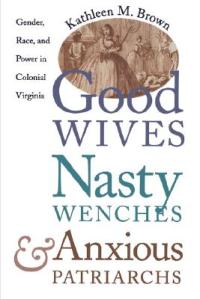 Welcome to the second installment of the Junto Summer Book Club! We discussed the introduction and first chapter of Kathleen Brown’s Good Wives, Nasty Wenches, and Anxious Patriarchs during Week 1. This week we’ll consider Chapters 2 and 3. With these chapters, Brown transports us across the Atlantic Ocean, shifting her focus from early modern Britain to the early years of English settlement in Virginia.
The Problem with Big Books; Or, Alan Taylor’s Biggest Sin
[Headlines are supposed to draw readers, right?]
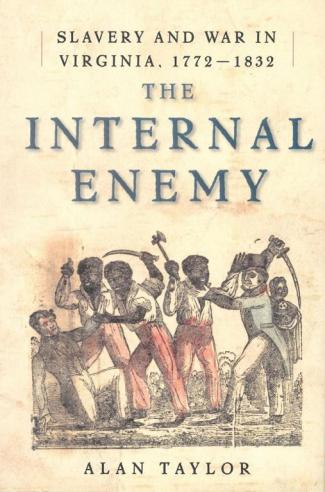 One of the first things I did after finishing my dissertation a couple of months back (other than sleeping for an entire week, of course), was reading Alan Taylor’s latest tome, An Internal Enemy: Slavery and War in Virginia, 1776-1832 (New York: W. W. Norton, 2013), which recently won the Pulitzer Prize. (One could argue that Taylor’s biggest sin, other than the one I’m about to discuss, is hogging all the major book awards.) As one would expect given Taylor’s track record, I was floored by the book’s exhaustive research and lyrical prose. I made a mental note that this would be a great book to assign to students. Now that I’m prepping for this fall, when I’ll be teaching a Jeffersonian America course, I gave the idea more serious consideration. However, I soon realized the biggest problem, which more seasoned teachers probably already know.
The book is just too big.
Benjamin Franklin and “our Seamen who were Prisoners in England”
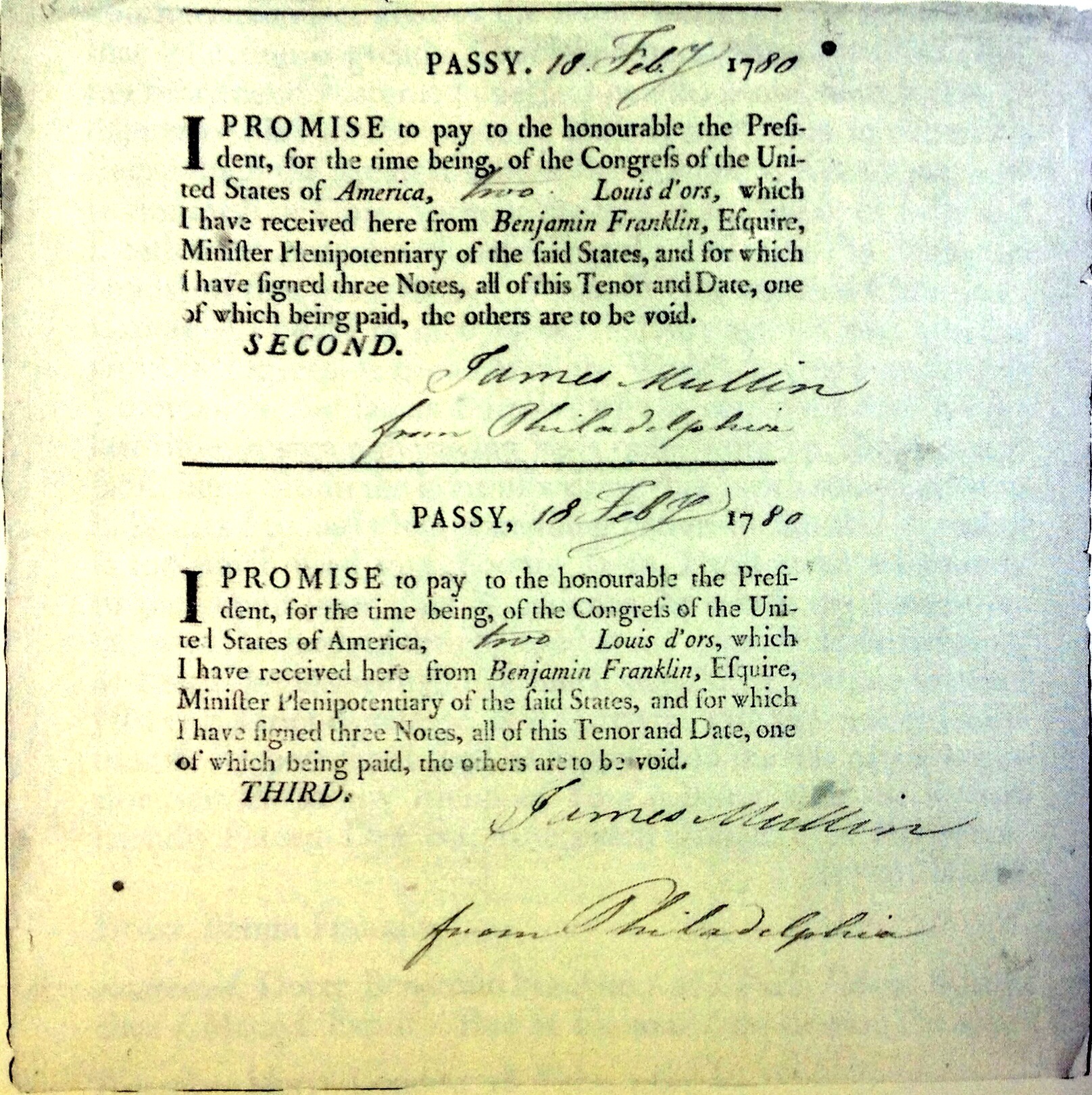 Earlier this week, I found myself sitting at my desk at the Franklin Papers faced with photostat copies of an “Alphabetical List of Escaped Prisoners” and a huge pile of promissory notes printed in triplicate by Franklin himself on the press he kept at his home in Passy, a suburb outside Paris. While I was going through them, I could not help but think back to the recent events surrounding the return of U.S. Army Sergeant, Bowe Bergdahl, the last remaining prisoner of the nation’s longest continuous period of war since the American Revolution. Politics aside, the Bergdahl affair speaks to the importance placed on coming to the aid of Americans detained in wartime. And what I had before me at my desk spoke to the same during the War for Independence. These men—largely privateersmen who had been captured on the high seas by the British and transported to English prisons—were among the very first Americans imprisoned on foreign soil during wartime and these documents reveal an often untold story about how the United States government and Benjamin Franklin dealt with this new problem.
The Week in Early American History
 Welcome to another exciting week in early American history, where all the women are strong, all the men are strong, all the children are strong, and all the historians are above average. This week, we can report: Continue reading
Summer Book Club, Week 1

Welcome to the Junto Summer Book Club, where over the next six Fridays we will be reading and discussing Kathleen Brown’s 1996 book, Good Wives, Nasty Wenches, & Anxious Patriarchs. Each week, a Junto representative will write a brief post on that week’s chapters to offer a few opening remarks and raise some questions to get the discussion started. We will then open up the comments section for you to address any topic related to the book—its argument, Brown’s use of sources, the historiography, using it in the classroom or in a public setting, to name just a few. We look forward to a lively conversation and to seeing how it develops over the next several weeks.
This week, we begin our conversation with the Introduction and Chapter 1, “Gender and English Identity on the Eve of Colonial Settlement.”
The Details Matter: On Ta-Nehisi Coates and Reparations
 The attention Ta-Nehisi Coates’ essay on reparations has received is remarkable and welcome. But like most of the folks he’s directly appealing to—educated, mainstream liberals who read The Atlantic—I approached his essay skeptically, assuming reparations was an impractical, even irresponsible way to redress the crimes of slavery and the way its legacy, racism, continues to disadvantage all African Americans today. But by the end of it, I was convinced. A major reason why is because by reparations Coates, or at least the leading advocates for reparations he quotes in approval, aren’t arguing for simple payouts to African Americans. Coates knows too well that, lacking a more rigorous understanding of our nation’s history with slavery, and the continuing problems of institutionalized racism, cash payouts risk becoming little more than “hush-money.” Continue reading
Putting “Republicanism” in Its Place
 “By 1990,” wrote Daniel Rodgers, the concept of republicanism in American historiography “was everywhere and organizing everything, though perceptibly thinning out, like a nova entering its red giant phase.” A quarter of a century later, it can seem barely more than a dull glow—and in part, we have Rodgers’ essay to thank for dimming the lights. If republicanism’s 1970s high-water-mark was followed by a decade of furious debate over republicanism-versus-liberalism, scholarship after 1990 often framed itself as moving beyond precisely that anachronistic question. There was, apparently, no such conflict in the minds of revolutionary-era Americans. The problems that troubled them were different ones entirely.[1] Continue reading
Slavery and Reparations: A Voice from Barbados and a Report from Ghana
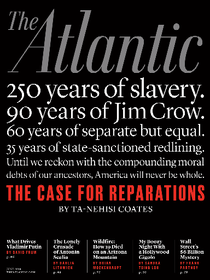 You’ve probably heard about Ta-Nehisi Coates’s powerful Atlantic cover essay, “The Case for Reparations,” which appeared two weeks ago and has ignited a nationwide political conversation about the legacy of slavery and racial oppression in the United States. The level of debate among Coates’s many academic admirers and critics—including political commentators on both the Left and the Right—has been very high. Continue reading
 The Junto