The American Revolution Reborn, ed. Patrick Spero and Michael Zuckerman (Philadelphia: University of Pennsylvania Press, 2016).
 Between May 30 and June 1, 2013, hundreds of historians, teachers, and students came together in Philadelphia to discuss twenty-first-century perspectives on the American Revolution at a landmark conference, “The American Revolution Reborn.” That conference, which received and receives regular shout-outs here at The Junto, forms the basis for The American Revolution Reborn, an edited collection of essays designed to “upset the patterns of history inquiry that have defined scholarship for the past generation” (3). Much like The Oxford Handbook on the American Revolution (New York: Oxford University Press, 2012), The American Revolution Reborn seeks to regenerate interest in the Revolution with “new perspectives” that, the editors and contributors hope, “will produce new interpretations of the past that move our understanding forward in new directions” (5). Continue reading

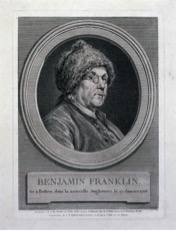


 In researching and writing my book, Pulpit & Nation, I became keenly interested in the religious language employed by participants in the ratification debates of 1787-88. Not only did it illuminate the role of religion and clergymen in the politics of Revolutionary America, but it seemed particularly relevant to the almost canonical way in which so many twenty-first century politicians and pundits view the Constitution. Of course, when—or if—these individuals ever consult that document’s history, they rarely bother to question what political motivations drove so many of the seemingly religious expressions made by early national leaders. And there are many such statements. Yet, amid the numerous examples of Federalists and Anti-Federalists employing (and exploiting) providential language and Old Testament Biblicism in arguing for ratification, one example stands out as particularly complex in its motives and implications: the argument Benjamin Rush made for ratification in the Pennsylvania ratifying convention.
  Following on from
  At a time when political events seem to place the very meaning of American democracy under the microscope, it is perhaps unsurprising that so many recent works have looked to re-evaluate the American Founding. Books focusing on the mid-1770s in general have included Kevin Philips’s 1775, Richard Beeman’s Our Lives, Our Fortunes, & Our Sacred Honor, and Joseph Ellis’s American Quartet. Recent books that have looked more specifically at the Declaration of Independence itself include Danielle Allen’s Our Declaration. Robert Parkinson’s The Common Cause, too, has called for a re-evaluation of what motivated those who fought for Independence, though his work calls for a much less celebratory conclusion. Such a list demonstrates the importance of the mid-1770s to America’s national identity. With The Heart of the Declaration, Steven Pincus throws his hat into the ring, too.
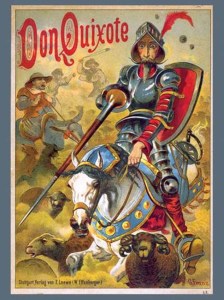 In a certain village of vast early America, whose name I do not recall, a book fell open. Then another. And another. By 1860, many generations’ worth of American readers had imbibed the two-volume work of Spain’s early modern master, Miguel de
 The Junto