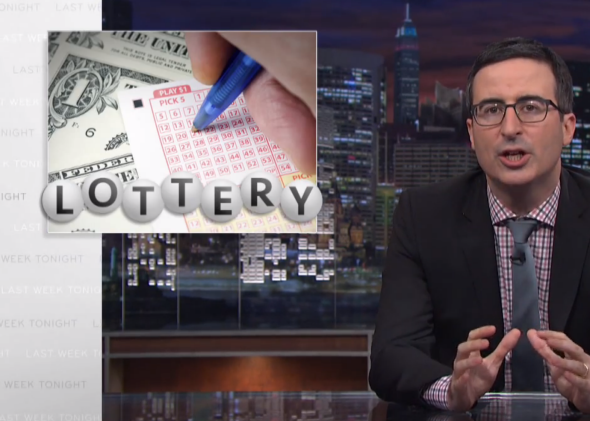
 I originally planned to title this post: “Do I have to thank John Oliver in my dissertation acknowledgments?” In the first season finale of his HBO show, Last Week Tonight, Oliver did a segment on state lotteries (NSFW, crude language), many of which fund education. In the final chapter of my dissertation, I devote a decent chunk of space discussing lotteries to fund schools in the critical period and early republic. If anything makes my research cool to non-academics, it’s that I can relate some of it to this John Oliver bit. Continue reading
Tag Archives: Early Republic
Guest Post: Will the Real Paul Cuffe Please Stand Up?
Today’s guest poster, Jeffrey A. Fortin, is an Assistant Professor of History at Emmanuel College, Boston. He is currently finishing up a book on Paul Cuffe, an African-American Quaker and merchant in the early republic.
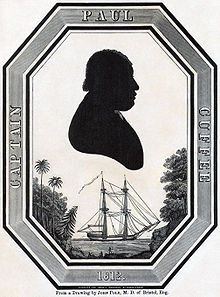 Credit cards, electronic banking, online shopping, and a host of other modern forms of commerce did not exist at the turn of the nineteenth century. Merchants throughout the Atlantic relied on reputation and good character when determining a customer’s credit worthiness. Not exactly a foolproof way to do business but seemingly less risky than our fully electronic world of money and banking in twenty-first century America. Yet, identity theft and fraud were still a part of doing business.
Retelling “A Tale”: An Interview with Richard S. Dunn
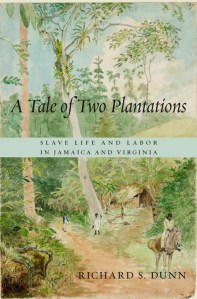 Wrapping up our roundtable review of A Tale of Two Plantations, The Junto chats with Richard S. Dunn about microhistory as a “healthy antidote to top-down history,” and the archival surprises that reshaped his work. If you are near Harvard University on February 5th, come and hear more about the project. Continue reading
Reviewing Digital History
 Today, The Junto interviews Dr. Jeffrey W. McClurken, Professor of History and American Studies & Special Assistant to the Provost for Teaching, Technology, and Innovation at University of Mary Washington. McClurken (Ph.D., John Hopkins University, 2003) is Contributing Editor for Digital History Reviews, Journal of American History. Continue reading
The Week in Early American History
 Happy 2015 to our Junto readers! Continue reading
The Spy Who Came in from the Confederacy
![1862_LON_14_1862_NPL_P385[SVC1]](https://earlyamericanists.com/wp-content/uploads/2014/12/1862_lon_14_1862_npl_p385svc1.jpg?w=550) He was, at first, another young shadow hurrying through Westminster Hall. He carried flimsier credentials than most, papers hastily sent by a new nation called the Confederate States of America. It was November 1862, and, since spring, he had stretched expenses to accommodate the bare $750 granted to fund his secretive mission. Still, regular sightings of the worn, 29 year-old Swiss-American stranger, who had shipped to London via the fiery newsrooms of Richmond and Mobile, caused a flutter of concern among British peers. Within weeks, the constant American shadow near Parliament became a very real worry. “He is but a private gentleman, it is true,” one M.P. fretted, “yet he may leave his card at the Foreign Office, and possibly find his way upstairs.” Continue reading
He was, at first, another young shadow hurrying through Westminster Hall. He carried flimsier credentials than most, papers hastily sent by a new nation called the Confederate States of America. It was November 1862, and, since spring, he had stretched expenses to accommodate the bare $750 granted to fund his secretive mission. Still, regular sightings of the worn, 29 year-old Swiss-American stranger, who had shipped to London via the fiery newsrooms of Richmond and Mobile, caused a flutter of concern among British peers. Within weeks, the constant American shadow near Parliament became a very real worry. “He is but a private gentleman, it is true,” one M.P. fretted, “yet he may leave his card at the Foreign Office, and possibly find his way upstairs.” Continue reading
The Week in Early American History
The past two weeks have been busy ones in Early American History! Continue reading
Q&A with Kyle T. Bulthuis, Author of Four Steeples over the City Streets
 The following is an interview with Kyle Bulthuis, an assistant professor of history at Utah State University. Jonathan Wilson’s review of Kyle’s recently-released book, Four Steeples over the City Streets: Religion and Society in New York’s Early Republic Congregations, appeared on the blog yesterday. Kyle agreed to sit down and answer a few follow up questions about the book and his future research plans, which we are happy to post today. Continue reading
Winter Reads
Just in time for your holiday shopping list, here’s our preview of new titles—share your finds in the comments! Continue reading
Guest Post: Teaching Toilets in an Age of American Ebola
K.A. Woytonik is a PhD Candidate in the Department of History at the University of New Hampshire. In 2013-2014, she was a Research Associate at the McNeil Center for Early American Studies. Her dissertation is a cultural history of the Pennsylvania Hospital in Early Republic Philadelphia.
 A bevy of esteemed scholars across fields have established the devastating effects of early modern epidemics, from Europe’s plagues to the decimation of Native American populations in North America. Epidemics occupied the minds of colonists, who, depending on region and demographics, participated in prevention strategies including quarantine, the destruction of soiled linens belonging to sick individuals, days of fasting and prayer, and immunity-building efforts such as inoculation and changes in diet. In today’s academy, epidemics offer historians avenues of interdisciplinary discussion, as the impact of contagious disease can be read not only in the archive, but in literature, in artwork, and in archaeological findings.
 The Junto