 Southern Connecticut is not exactly moose country. So I had to hide my disbelief when one day my boss claimed that he sat in traffic after a car hit a moose on the Merritt Parkway. How lost would a moose have to be to find itself in suburban Connecticut? Turns out, my boss told the truth. I welcomed any distraction from that boring summer job and followed this story pretty intently. It was a sad story—the moose had to be put down after the accident—but also a memorable one. I thought so at least. (Anytime I give someone directions to take the Merritt, I still warn them to watch for moose). The accident received a bit of coverage in local newspapers, while some outlets reprinted the AP coverage.[1] Every so often a reporter discovers the story when they learn that Connecticut is home to a sizable moose population.[2] Mostly, though, the story is forgotten. Continue reading
Tag Archives: Print Culture
Winter Reads
Just in time for your holiday shopping list, here’s our preview of new titles—share your finds in the comments! Continue reading
Telling the Story of Women in Printing
 Today is Ada Lovelace Day, an international celebration of women in STEM fields (Science, Technology, Engineering, and Mathematics) both past and present named after the early nineteenth-century British mathematician. Here in our corner of early American studies, I want to mark the occasion by working through a question that I’ve worked on in my own writing for years: how do we effectively integrate women into the history of printing in early America?
Making the Adams Papers
 Nearly a quarter of a million manuscript pages, and almost fifty volumes to show for it: As we mark the 60th anniversary of production at the Adams Papers editorial project, here’s an inside look at our process, from manuscript to volume. Continue reading
Edinburgh’s Early Americans
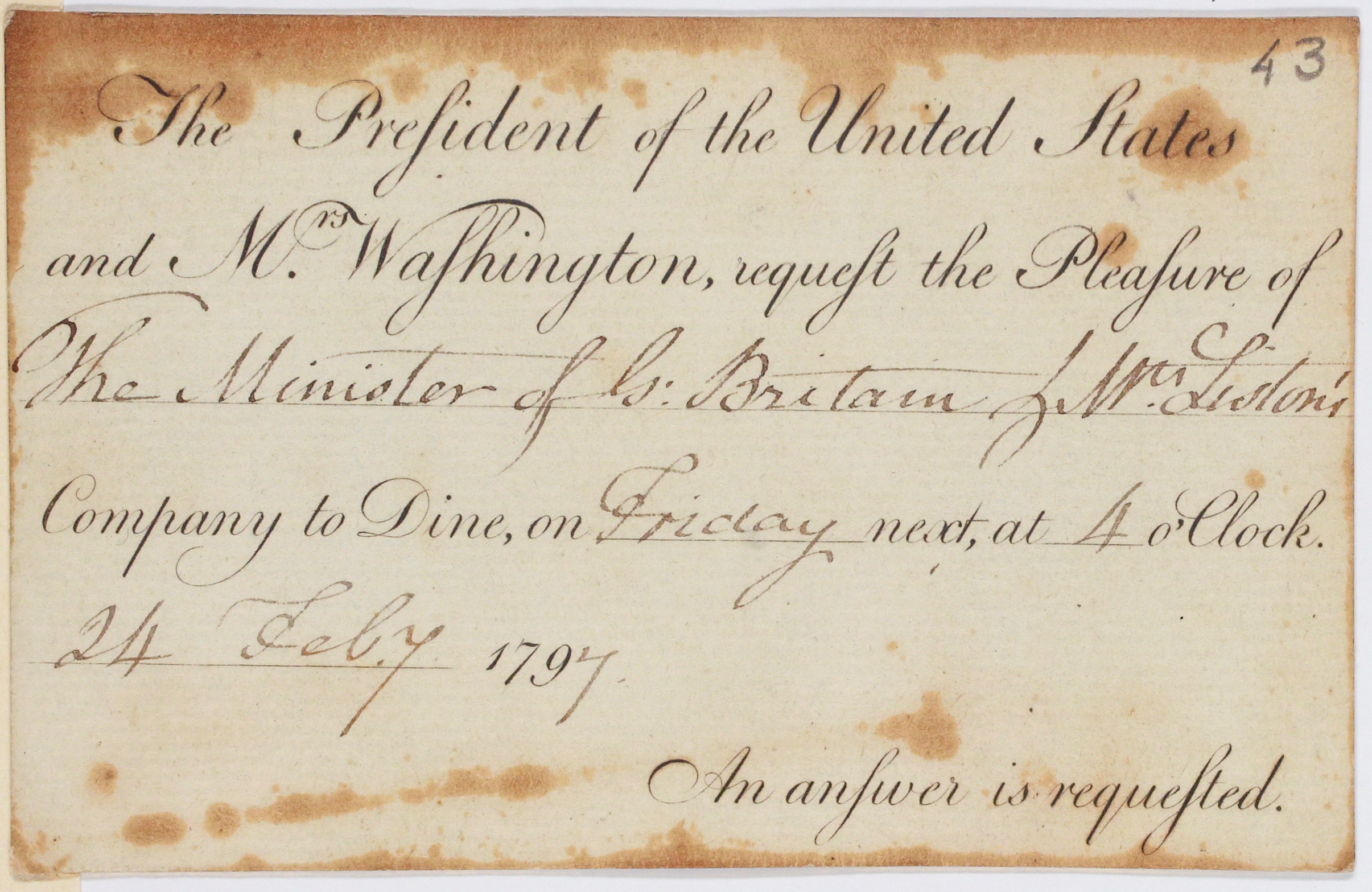
Invitation from the President of the United States to Robert and Henrietta Liston, 1797 (NLS shelfmark: MS.5590 f. 43)
With all eyes on Scotland this week, The Junto chats with Dora Petherbridge, International Collections Curator (U.S. & Commonwealth) at the National Library of Scotland. To learn about George Washington’s Edinburgh connection, and how NLS is “collecting the Referendum” for history, read on. Continue reading
Autumn Reads
 Here’s our fall preview of new titles—share your finds in the comments! Continue reading
Taking Print from Print Culture & Leaving the Public Sphere Behind
Or how to make a causal argument about print, media, and communication in the eighteenth century
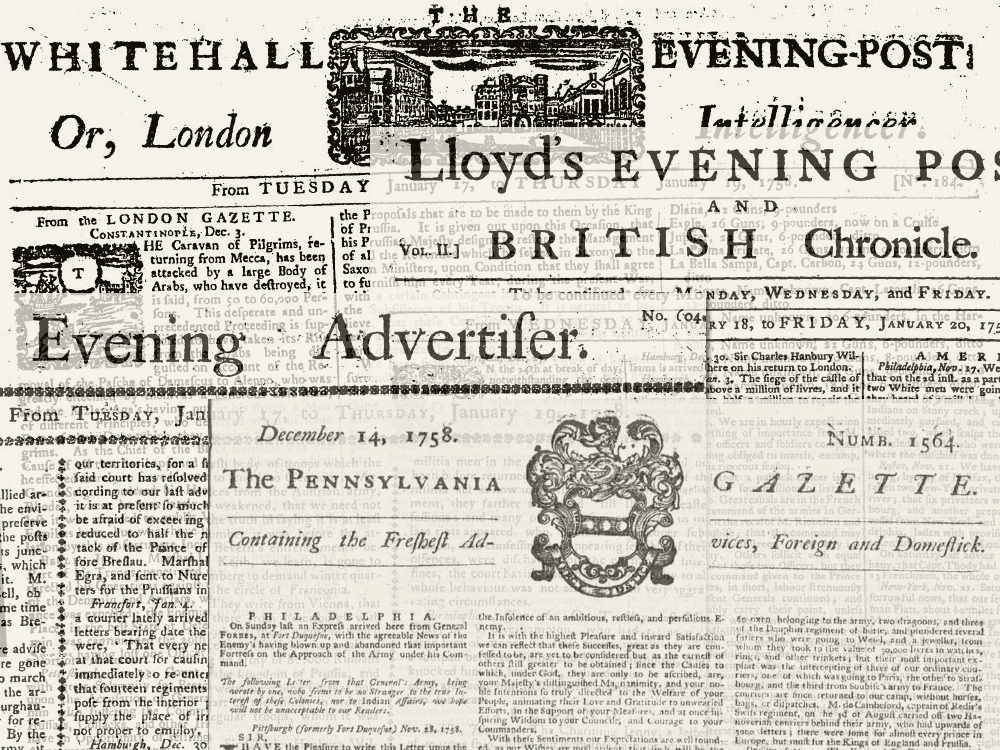 This post began as a brief response to Tom’s recent piece on the public sphere and to the conversation it generated in the comments section. As it turns out, brevity is not my strong suit, and I’ve got a few bones to pick. So all cards on the table: I’m more than a little invested in the importance of communication; I have a hard time watching print be stripped of its mechanistic or causal role; and I don’t believe we can possibly ever argue that changes in media didn’t cause social and political change.[1] Continue reading
Archiving Abolition
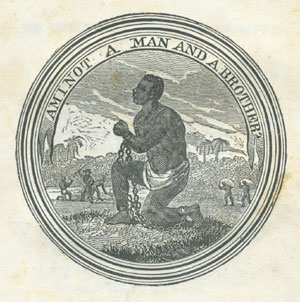 Today, we chat about making digital history with Lauren Klein, Assistant Professor in the School of Literature, Media, and Communication at the Georgia Institute of Technology. Her writing has appeared in Early American Literature and American Quarterly, with a piece forthcoming in 2014 in American Literature. She is currently at work on two book projects: the first on the relationship between eating and aesthetics in the early republic, and a second that provides a cultural history of data visualization from the eighteenth century to the present. Continue reading
Locating the Literati: Charles Brockden Brown in Philadelphia
 It’s hard to write about early American print culture or intellect without thinking a lot about geography. Scholars like Trish Loughran, Richard John, John Fea, John Brooke, and Mary Kelley have suggested, in all sorts of ways, that it’s often wise to understand “the” early American public as a web of fundamentally local reading and writing publics. Intellectual culture meant something different from what it means in an age of mass media. But tricky questions come up when you try to write a local history of ideas or culture. Just how local can we reasonably go? How much detail can we actually use in an intellectual map of the early United States without getting lost in coincidences and irrelevance?
Guest Post: Rediscovering the Pamphlisphere
Today’s guest poster is Ariel Ron, who earned his PhD in history at the University of California, Berkeley, and is currently a visiting research associate at the McNeil Center for Early American Studies.
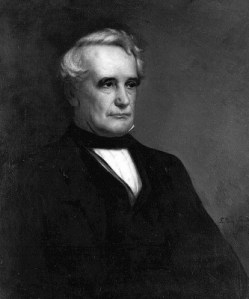
Three or four years ago, while doing research at the University of Pennsylvania’s Rare Book & Manuscript Library, I stumbled upon a lost cache of some ten-thousand pamphlets. I had been browsing the papers of Stephen Colwell, a nineteenth-century ironmaster and writer, when archivist John Pollack called me into the closed stacks behind the reading room. There he showed me Colwell’s personal pamphlet library, neatly bound into hundreds of volumes. The collection also included three thousand works from the library of Colwell’s friend, Henry C. Carey (see picture to right), without question the most important American political economist of the mid-nineteenth century. The sheer size of the corpus floored me. Continue reading
 The Junto