 We’re happy to bring you the fourteenth episode of “The JuntoCast.” Continue reading
Q&A with Dane Morrison, Author of True Yankees
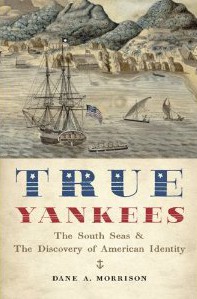
The following is an interview with Dane A. Morrison, about his recently-released book, True Yankees: The South Seas & the Discovery of American Identity (Baltimore: The Johns Hopkins University Press, 2014). Morrison is Professor of History at Salem State University (MA). Continue reading
Welcoming The Junto‘s Newest Member
 We’re very pleased to announce yet another addition to The Junto and to welcome Hannah Bailey as our newest contributor. Continue reading
A Junto Birthday Party: Whitefield at 300 Roundtable
Today’s guest poster, Thomas S. Kidd, is professor of history at Baylor University and the author, most recently, of George Whitefield: America’s Spiritual Founding Father (New Haven: Yale University Press, 2014).
A Long Afterlife (Jessica Parr)
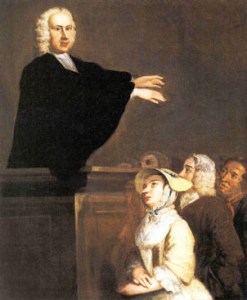 Those familiar with the first great awakening will undoubtedly recognize George Whitefield as a key figure of eighteenth century evangelical culture in Britain and its American colonies. Like many associated with the Methodist movement in Whitefield’s time, the prolific preacher and publisher saw himself as an Anglican in discussion with the Church of England about reform and an allowance for a broader religious experience. However, his theology, the new birth doctrine, the gathered church, etc., all alienated Whitefield from the Anglican hierarchy within the first few years of his missionary career.
Guest Post: Strange Constitutional Bedfellows: The First and Third Amendments in the Mormon Quest for Religious Liberty
Today’s guest post comes from Spencer W. McBride, who has blogged with us before. Dr. McBride received his PhD at Louisiana State University in 2014 and is now a historian and documentary editor at the Joseph Smith Papers. His research examines the politicization of clergymen during the American Revolution and in the early American republic.
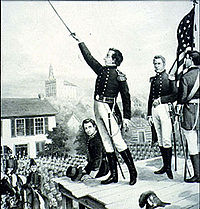 Of the ten amendments that comprise the United States Bill of Rights, the third amendment is arguably the least controversial. Go ahead, think back to your high school civics class and try to remember what rights are protected by the third amendment. Can’t remember? Don’t feel too bad. It is rarely invoked by politicians and political activists, it does not often spark heated debates in the media, and the U.S. Supreme Court has never heard a case in which it was the primary basis. Let’s face it, since the adoption of the first ten amendments to the Constitution, Americans have not been overly concerned that the government will quarter troops in the homes of private citizens without their consent. Continue reading
Q&A with Kyle T. Bulthuis, Author of Four Steeples over the City Streets
 The following is an interview with Kyle Bulthuis, an assistant professor of history at Utah State University. Jonathan Wilson’s review of Kyle’s recently-released book, Four Steeples over the City Streets: Religion and Society in New York’s Early Republic Congregations, appeared on the blog yesterday. Kyle agreed to sit down and answer a few follow up questions about the book and his future research plans, which we are happy to post today. Continue reading
Review: Kyle T. Bulthuis, Four Steeples over the City Streets
Kyle T. Bulthuis, Four Steeples over the City Streets: Religion and Society in New York’s Early Republic Congregations. New York: New York University Press, 2014.
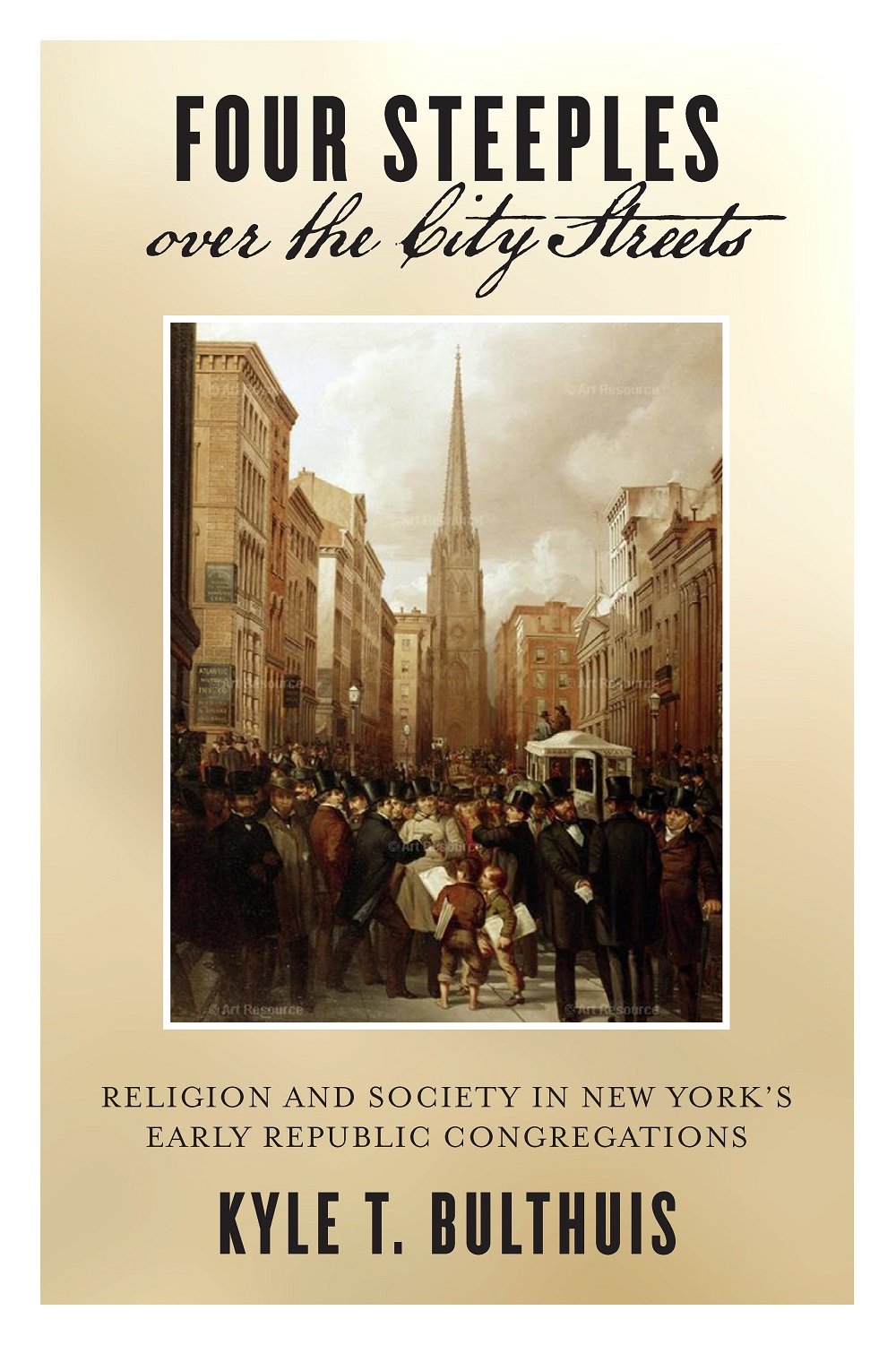 In many respects, Four Steeples over the City Streets is a story about different ways of being Anglican in New York City. It’s also a story about how external social changes influenced and threatened a vision of social order without destroying it. And it’s a story about how different kinds of New Yorkers in the early republic–black and white and male and female–experienced their community in religious terms. Continue reading
The Junto Enters the Terrible Twos!
I acknowledge the generous help of Michael Hattem in gathering all the statistics and relevant information for this post. And just as he is the real puppeteer behind the curtain of the post, he serves a similar function for the entire blog in general; appreciation is herein expressed, once again, to him.
 Two years ago today, The Junto announced its entrance into the academic blogging world. When I originally conceived of the idea for the blog and pitched it to three fellow grad students (Michael Blaakman, Katy Lasdow, and Eric Herschthal) in an uptown Manhattan coffee shop in September(ish) 2012, I merely wanted to come up with a small community that could alleviate my alone-ness of studying American history while living in the UK. A few months later, the blog was born; two years later, our empire expands. It is becoming fairly common to meet people at an academic conference and, after I share my name, the person replies, “Oh, you’re Ben Park from The Junto?” It makes me smile every. single. time. I could have hardly conceived of where the blog has gone since our humble beginnings. Yet here we are. What follows is a general report of what has taken place since we last celebrated our blog’s birthday. Continue reading
Teaching Hipster History: Ending the Semester on an Ironic Note
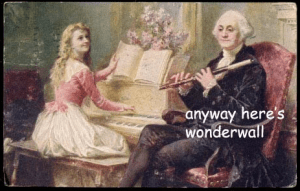 Conclusions are hard, I find, and no less so in teaching than in writing. Both at the end of a book and at the end of a course, really great endings add a bit of spice—something just new or unexpected enough to cast what’s come before in a different light, something that makes it exciting to reflect back across the material you’ve just learned.
I aim for student-driven discussions, and at semester’s end in previous seminars and discussion sections, I’ve struggled to coax students into producing the final chord that resonates in all registers of a course’s architecture. I’ve had students free-write (and then discuss) to summarize, as succinctly as possible, the change over time they’ve learned about in the course, and I’ve asked students to identify what one idea from the class they hope they’ll remember forty years from now. Both exercises have produced good-enough results. But since they didn’t ask students to see the courses’ material anew in any way, I’ve found myself wanting more.
But my students’ final discussion this semester was so invigorating that I just had to write a blog post about it. Continue reading
The Great Moose Massacre
 Southern Connecticut is not exactly moose country. So I had to hide my disbelief when one day my boss claimed that he sat in traffic after a car hit a moose on the Merritt Parkway. How lost would a moose have to be to find itself in suburban Connecticut? Turns out, my boss told the truth. I welcomed any distraction from that boring summer job and followed this story pretty intently. It was a sad story—the moose had to be put down after the accident—but also a memorable one. I thought so at least. (Anytime I give someone directions to take the Merritt, I still warn them to watch for moose). The accident received a bit of coverage in local newspapers, while some outlets reprinted the AP coverage.[1] Every so often a reporter discovers the story when they learn that Connecticut is home to a sizable moose population.[2] Mostly, though, the story is forgotten. Continue reading
 The Junto