 Welcome to another Week in Early American History, wherein I try to catch us up from last week’s post-Thanksgiving lapse. We’ve got drunk New Yorkers, scholarly young ladies, and an entrepreneurial George Washington for you this week, along with Jill Lepore, Albert Einstein, Moses, and many more! Continue reading
The Problem of Southern Indians’ Allegiance in the American Revolution
 So you know what’s hilarious? Trying to revise your dissertation into a book during the semester. I will admit that I am in the middle of editing my worst dissertation chapter, and am yelling out of a metaphorical pit of despair that’s been dug by a combination of bad prose and end-of-the-semester angst. Part of these struggles have to do with the fact that even after writing the chapter, submitting it, and defending it, I’m still not really sure what this chapter’s argument needs to say. This problem is directly tied to the fact that I found (and continue to find) myself befuddled by late-eighteenth-century Southern Indian affairs. So many factions! So much switching of sides! So many different ways I manage to mis-type Scots-Creek go-between Alexander McGillivray’s last name![1] Continue reading
Winter Reads
Just in time for your holiday shopping list, here’s our preview of new titles—share your finds in the comments! Continue reading
The Value of Storytelling: Recap
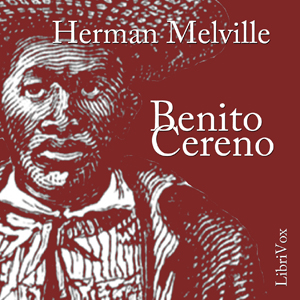 With just days left in the semester and students scrambling to finish papers and prepare for exams, I thought it would be a perfect time to reflect on an idea I raised in my first post here at The Junto. Back in September, I declared my intentions to assign the Librivox.org recording of Herman Melville’s Benito Cereno. The prospects of assigning audio content in a classroom situation seemed the ideal solution to unrealistic weekly reading word counts while doing to double duty of engaging students in early American history through storytelling. And then I got cold feet. Could I really make it mandatory for 37 students to sit back and listen to several hours worth of recordings simply for the pedagogical payoff of connecting them in a more real way to the nineteenth-century world inhabited by the slave ship Tryal and Captain Amasa Delano? As the semester wore on, and more and more students realized how long the recordings would take to listen to, my trepidation only increased. Continue reading
Guest Post: Teaching Toilets in an Age of American Ebola
K.A. Woytonik is a PhD Candidate in the Department of History at the University of New Hampshire. In 2013-2014, she was a Research Associate at the McNeil Center for Early American Studies. Her dissertation is a cultural history of the Pennsylvania Hospital in Early Republic Philadelphia.
 A bevy of esteemed scholars across fields have established the devastating effects of early modern epidemics, from Europe’s plagues to the decimation of Native American populations in North America. Epidemics occupied the minds of colonists, who, depending on region and demographics, participated in prevention strategies including quarantine, the destruction of soiled linens belonging to sick individuals, days of fasting and prayer, and immunity-building efforts such as inoculation and changes in diet. In today’s academy, epidemics offer historians avenues of interdisciplinary discussion, as the impact of contagious disease can be read not only in the archive, but in literature, in artwork, and in archaeological findings.
Contested Rites
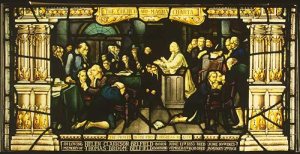 Joseph Yesurun Pinto, a 31 year-old Anglo-Dutch émigré in the autumn of 1760, had led New York’s Shearith Israel synagogue for barely a year when the second notice appeared in the papers. To re-commemorate the British conquest of Canada, all “Christian societies” and “houses of worship” would celebrate a day of thanksgiving on Thursday, October 23d. Over the past decade, New Englanders and their neighbors had held at least 50 fast days, many to lament God’s judgments against America, or to reform their wayward behavior. The proclamation of a thanksgiving day likely brought some measure of relief and joy.
The Story of “Evacuation Day”
 A century after the end of the War for Independence, New Yorkers continued to celebrate a holiday known as “Evacuation Day,” commemorating the leaving of the last British troops from New York City on November 25, 1783. It marked the end of a seven-year occupation by the British army who used the city as the headquarters for its North American operations during the war. But it also marked the beginning of a holiday that would be enthusiastically celebrated by New Yorkers for a century to come. On this anniversary, I offer the following narrative account of a day that played a large role in the city’s historical memory of the Revolution for more than a century, but was eventually displaced when it became incompatible with contemporary circumstances. Continue reading
A Beginner’s Guide to Mapping Early America with Basic GIS
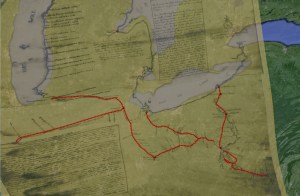 Over the past couple years, friends have asked me a lot about maps and mapping software—questions I probably have no business fielding. I’m not truly formally trained in GIS, I’ve picked up a lot of things online, from books, in workshops, but mostly through trial-and-error, and half the time I still prefer to draw my maps by hand. (Yes, I like to draw.) It’s sort of like the four-eyed leading the blind.
There’s a reason, though, that my friends have few other places to turn. Workshops at universities, as well as many guides online, are still largely geared towards those working on more contemporary history, and to those looking to manipulate census and other large data sets. For those of us working on colonial America—especially those working on frontiers, borderlands, and native grounds—our materials rarely support this kind of work.
As I thought about my post the last couple days, I realized I wanted to write something less to those also working on spatial-intensive projects, and something more for those—like my friends—looking to find quick and simple ways to add maps to presentations and papers. In other words, those who aren’t about to download ArcGIS, run windows on their mac, enroll in a series of workshops, lose days (weeks and months) to inputting vector and raster data, and become geospatial pros. Those who are more interested in manipulating a historic map than creating a new one from historic data. Casual mappers and prospective weekend warriors of geohistorical analysis, this is for you. Continue reading
The Week in Early American History
 Whether writing or grading term papers has kept you from all things early American, here’s a quick recap of some of the top news stories of the week(s)!
On to the links! Continue reading
Guest Post: Keeping the “Human” in the Humanities
Hannah Bailey is a PhD candidate in History at the College of William & Mary, where her research examines the interconnectivity between developing notions of race and the expansion of the African slave trade in the early modern French Atlantic. This is her second guest post at The Junto. Be sure and read her earlier post on French archives and entangled histories here.
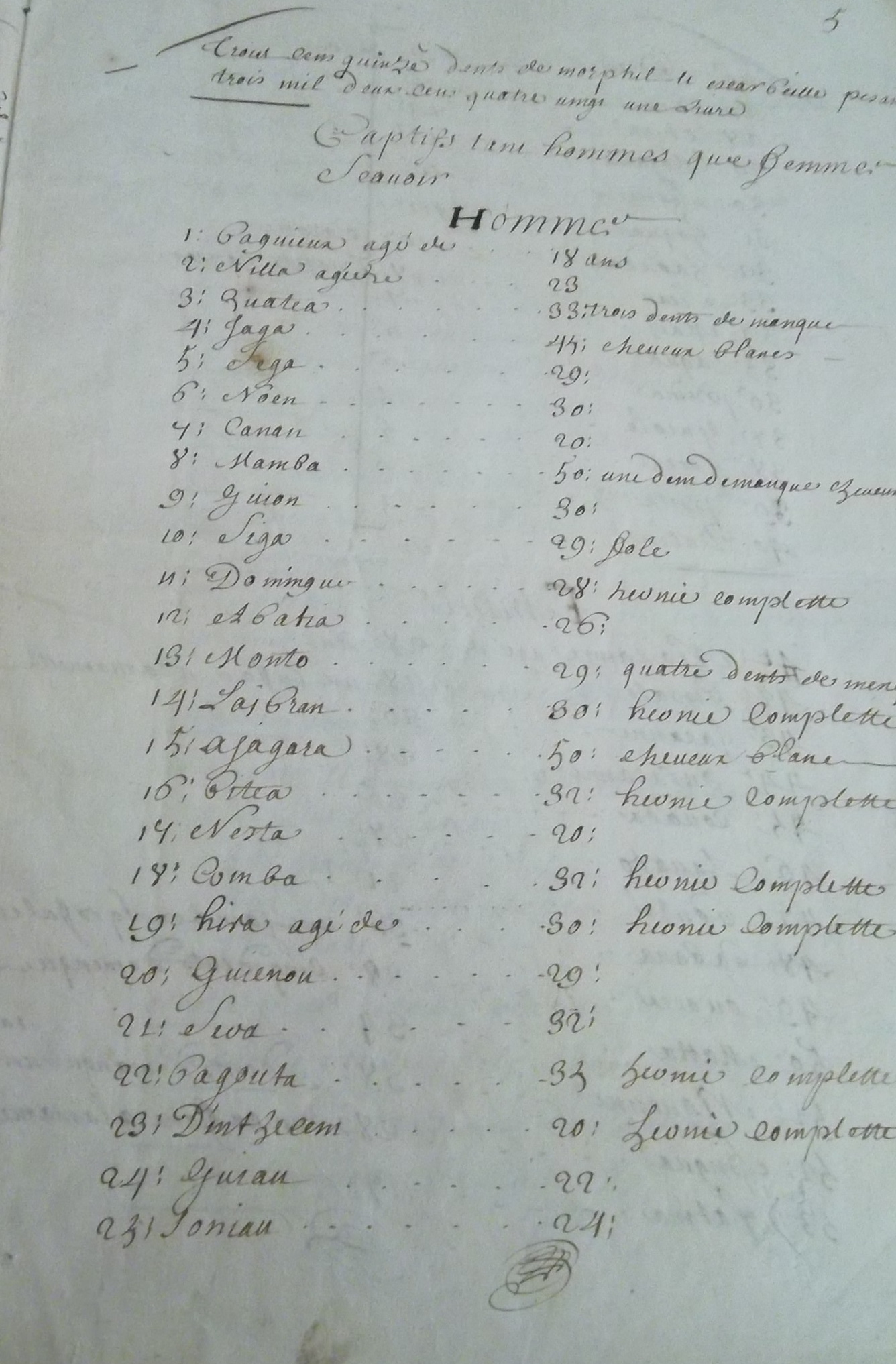 As someone who is also leaping into an entirely new historiography in preparation for dissertation writing, I could commiserate with Casey Schmitt’s brilliantly astute post on the costs and benefits of comparative projects. It can be terrifying to move from a historiography with which one is relatively comfortable to, as she puts it, “a [new] field where innumerable scholars have dedicated entire careers.” I took one undergraduate class on West African history (which was a survey course that occurred five years ago), and yet my dissertation focuses heavily on early modern histories of West Africa and the Atlantic networks of knowledge (and ignorance) that shaped them. The body of exemplary secondary source material on West Africa is vast, and working with it for the first time is more than a little daunting. Continue reading
 The Junto